Hey there! As a supplier of Fan Filter Units (FFUs), I've seen firsthand how temperature can play a huge role in their performance. So, let's dig into what the impact of temperature on the performance of a Fan Filter Unit really is.
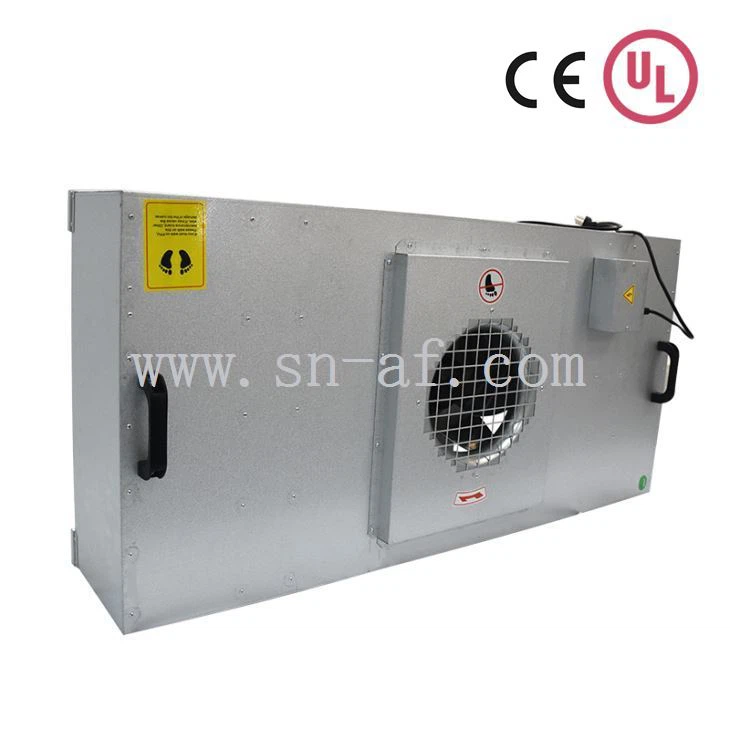
First off, what's a Fan Filter Unit? Well, it's a device that combines a fan and a filter. You can check out more about it here: Fan Filter Unit. FFUs are used in a bunch of places like cleanrooms in semiconductor manufacturing, pharmaceutical labs, and even some hospitals. They're crucial for maintaining clean air by sucking in dirty air, filtering out contaminants, and then blowing out clean air.
Now, let's talk about temperature. Temperature can affect an FFU in several ways. One of the most obvious impacts is on the fan motor. Fan motors generate heat when they're running. In normal conditions, they're designed to handle a certain amount of heat and dissipate it effectively. But when the ambient temperature goes up, things can get a bit tricky.
High temperatures can cause the motor to overheat. When a motor overheats, its efficiency drops. It has to work harder to keep the same speed and airflow. This not only uses more energy but also shortens the lifespan of the motor. You see, the insulation materials in the motor can start to break down at high temperatures. This can lead to electrical shorts and eventually motor failure.
Let's say you're running an FFU in a cleanroom where the temperature is around 25°C (77°F). The motor operates smoothly, and it can maintain a consistent airflow rate. But if the temperature in that cleanroom rises to 35°C (95°F), the motor has to deal with the extra heat. It might start to slow down, and the airflow rate will decrease. This is a big problem because in a cleanroom, a consistent airflow is essential for maintaining the required level of cleanliness.
On the flip side, low temperatures can also have an impact. In cold environments, the lubricants in the motor bearings can thicken. This increases the friction in the bearings, making the motor work harder. Just like in high - temperature situations, this leads to increased energy consumption and can also cause premature wear of the bearings. If the temperature drops too low, some of the plastic components in the FFU can become brittle. This makes them more prone to cracking, which can compromise the structural integrity of the unit.
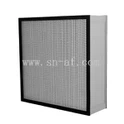
Another aspect affected by temperature is the filter. The filters in FFUs, such as Gel Seal Terminal HEPA / ULPA Module and Roomside Replaceable HEPA Box, are made of different materials. High temperatures can cause the filter media to expand. This can change the pore size of the filter, which might affect its filtration efficiency. If the pores become too large, some of the contaminants that the filter is supposed to catch can pass through.
Low temperatures, on the other hand, can make the filter media more rigid. This can reduce its flexibility and make it less effective at capturing particles. Also, in very cold conditions, moisture can condense on the filter. When this happens, the filter can become clogged more easily, and the airflow resistance will increase. This means the fan has to work harder to push the air through the filter, again leading to higher energy consumption and potentially reduced airflow.
The performance of the FFU's control system can also be affected by temperature. Most modern FFUs have electronic control systems that regulate the fan speed and other functions. High temperatures can cause the electronic components in these control systems to malfunction. The resistors, capacitors, and integrated circuits can become less stable at high temperatures. This can lead to inaccurate speed control or even complete failure of the control system.

Low temperatures can also cause problems for the control system. The solder joints in the electronic circuits can become brittle in cold conditions. This can lead to loose connections and intermittent operation of the control system.
So, what can you do to mitigate these temperature - related issues? Well, proper ventilation is key. In high - temperature environments, make sure there's enough airflow around the FFU to help dissipate the heat. You can also use cooling systems like air conditioners in the room where the FFU is installed. This will keep the ambient temperature within the acceptable range for the FFU.
In cold environments, you might need to insulate the FFU or use heating systems to keep the temperature from dropping too low. You can also choose FFUs that are designed to operate in extreme temperatures. Some manufacturers offer units with special motors and materials that can withstand a wider range of temperatures.
As a supplier, I know how important it is to have FFUs that perform well in different temperature conditions. That's why we're constantly working on improving our products to be more temperature - resistant. We test our FFUs in various temperature environments to ensure they meet the highest standards of performance and reliability.
If you're in the market for Fan Filter Units and want to learn more about how they'll perform in your specific temperature conditions, don't hesitate to reach out. We're here to help you choose the right FFU for your needs and ensure that it operates at its best. Whether you're running a small lab or a large - scale manufacturing facility, we've got the solutions for you. Contact us to start a conversation about your FFU requirements and let's find the perfect fit together.
References
- ASHRAE Handbook - HVAC Systems and Equipment. This handbook provides comprehensive information on heating, ventilation, and air - conditioning systems, including the impact of temperature on equipment performance.
- Manufacturer's technical documentation for Fan Filter Units. These documents often contain detailed information about the temperature limits and performance characteristics of the units.