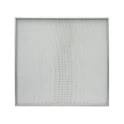
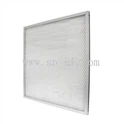
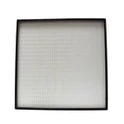
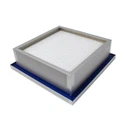
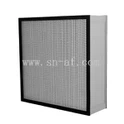
As a supplier of H14 Mini-Pleat HEPA Filters, I'm often asked about how these remarkable filters work. In this blog post, I'll delve into the science behind the H14 Mini-Pleat HEPA Filter, explaining its structure, filtration mechanism, and why it's a top choice in various industries.
Structure of the H14 Mini-Pleat HEPA Filter
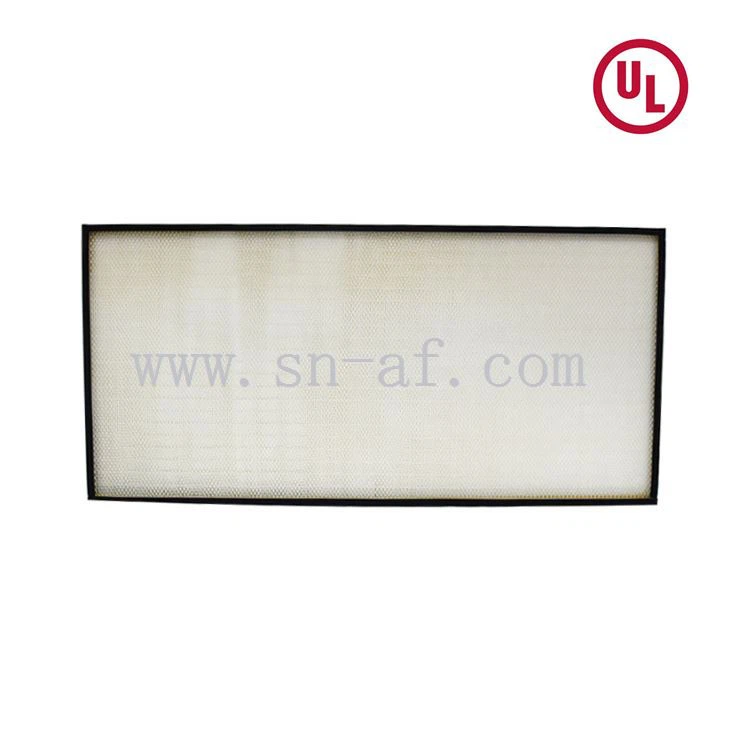
The H14 Mini-Pleat HEPA Filter is designed with a series of pleats. These pleats are created by folding the filter media multiple times. The pleating process serves several important purposes. Firstly, it significantly increases the surface area of the filter media. A larger surface area allows for more contact between the air and the filter, enhancing the filtration efficiency.
The filter media itself is made of a fine, fibrous material. This material is carefully selected and engineered to have specific properties that are crucial for effective filtration. The fibers are arranged in a way that creates a complex maze-like structure. This structure is what traps the particles as the air passes through the filter.
The frame of the H14 Mini-Pleat HEPA Filter provides support and stability to the pleated filter media. It is typically made of a durable material such as aluminum or plastic. The frame also helps to ensure a proper seal when the filter is installed in an air handling system. This is important to prevent any unfiltered air from bypassing the filter.

Filtration Mechanism
The H14 Mini-Pleat HEPA Filter operates based on several filtration mechanisms, including interception, impaction, and diffusion.
Interception
Interception occurs when a particle following the air stream comes into direct contact with the fibers of the filter media. As the air flows through the maze of fibers, larger particles are more likely to be intercepted. These particles adhere to the fibers due to van der Waals forces, which are weak attractive forces between molecules.
Impaction
Impaction is another important filtration mechanism. When the air containing particles changes direction as it passes through the filter media, larger and heavier particles have more inertia. This means that they are less likely to follow the curved path of the air and instead collide with the fibers of the filter. Once they hit the fibers, they are trapped.
Diffusion
Diffusion is particularly effective for capturing very small particles. Small particles, such as those in the sub-micron range, are constantly in motion due to Brownian motion. This random movement causes them to collide with the fibers of the filter media, where they are then captured.
The combination of these three filtration mechanisms allows the H14 Mini-Pleat HEPA Filter to achieve a high level of filtration efficiency. In fact, H14 filters are capable of removing at least 99.995% of particles with a size of 0.3 microns or larger from the air passing through them.
Applications of the H14 Mini-Pleat HEPA Filter
The high efficiency of the H14 Mini-Pleat HEPA Filter makes it suitable for a wide range of applications.
Healthcare Facilities
In hospitals, clinics, and other healthcare settings, maintaining a clean and sterile environment is crucial. The H14 Mini-Pleat HEPA Filter can effectively remove harmful particles such as bacteria, viruses, and dust from the air. This helps to prevent the spread of infections and provides a safe environment for patients and healthcare workers.
Pharmaceutical Industry
The pharmaceutical industry requires strict control over the air quality in manufacturing facilities. The H14 Mini-Pleat HEPA Filter can be used to remove contaminants from the air, ensuring that the pharmaceutical products are not contaminated during the manufacturing process.
Electronics Manufacturing
In the electronics manufacturing industry, even the smallest particle can cause defects in electronic components. The H14 Mini-Pleat HEPA Filter can be used to create a cleanroom environment, where the air is free from dust and other particles. This helps to improve the quality and reliability of the electronic products.
Comparison with Other Filters
When compared to other filters, such as the H11 Mini-Pleat Filter, the H14 Mini-Pleat HEPA Filter offers a higher level of filtration efficiency. While H11 filters are also effective at removing particles from the air, they are not as efficient as H14 filters. H11 filters are typically capable of removing at least 95% of particles with a size of 0.3 microns or larger, whereas H14 filters can remove at least 99.995% of such particles.
Another type of filter is the Gel Seal HEPA Filter. Gel seal filters are designed to provide a very tight seal, which helps to prevent any air leakage around the filter. While the H14 Mini-Pleat HEPA Filter also has a good seal due to its frame design, gel seal filters may be preferred in applications where an extremely high level of airtightness is required.
Maintenance and Replacement
Proper maintenance and replacement of the H14 Mini-Pleat HEPA Filter are essential to ensure its continued performance. Over time, the filter will become clogged with particles, which can reduce its efficiency and increase the pressure drop across the filter. This can lead to increased energy consumption and reduced airflow in the air handling system.
It is recommended to regularly inspect the filter for signs of clogging. If the filter appears dirty or if the pressure drop across the filter has increased significantly, it is time to replace the filter. The frequency of replacement will depend on several factors, such as the operating conditions and the level of air pollution.
Conclusion
The H14 Mini-Pleat HEPA Filter is a highly effective air filtration solution that works based on a combination of interception, impaction, and diffusion mechanisms. Its pleated design provides a large surface area for efficient filtration, and its high filtration efficiency makes it suitable for a wide range of applications, including healthcare, pharmaceutical, and electronics manufacturing.
If you are in need of high-quality H14 Mini-Pleat HEPA Filters for your air handling system, I encourage you to contact us for more information and to discuss your specific requirements. Our team of experts is ready to assist you in finding the right filter solution for your needs.
References
- "Fundamentals of Air Filtration" by Lawrence K. Wang and Norman C. Wang
- "Air Filtration: An Integrated Approach to the Theory and Application of Fibrous Filters" by Peter K. Wypych