Hey there! As a supplier of HEPA filters, I've always been fascinated by their history. HEPA filters are everywhere these days, from our homes to hospitals, but where did they come from? Let's take a deep - dive into the story of HEPA filters.
The Birth of HEPA Filters
The story of HEPA filters starts during World War II. The U.S. government was facing a big problem in the Manhattan Project, which was all about developing the atomic bomb. The process of uranium enrichment produced tons of radioactive particles. These tiny particles were extremely dangerous if inhaled, and they needed a way to keep the air clean and safe for the workers.
Scientists at the time came up with a solution: a high - efficiency air filter that could trap these harmful particles. They developed a filter that was capable of removing 99.97% of particles that were 0.3 microns in diameter. This was a huge breakthrough! The filter was initially called the "high - efficiency particulate air filter," which is where the name HEPA comes from.
The Post - War Era and Commercialization
After the war ended, the technology behind HEPA filters didn't stay in the military and government labs. In the 1950s and 1960s, the technology started to be commercialized. Industries that needed clean air, like the pharmaceutical and electronics industries, were the first to adopt HEPA filters.
In the pharmaceutical industry, HEPA filters were used to keep the manufacturing environment free from contaminants. This was crucial for producing drugs that were safe and effective. In the electronics industry, clean air was necessary to prevent dust and other particles from damaging delicate electronic components during the manufacturing process.
As the demand for clean air increased in these industries, the HEPA filter market started to grow. More companies began to produce HEPA filters, and the technology continued to improve.
Advancements in HEPA Filter Technology
Over the years, there have been many advancements in HEPA filter technology. One of the biggest improvements has been in the filter media. Initially, the filter media was made of glass fibers. These glass fibers were arranged in a way that created a maze - like structure for the air to pass through. As the air flowed through, the particles would get trapped in the fibers.
However, the early glass fiber filters had some drawbacks. They were relatively thick and had a high resistance to air flow, which meant that more energy was needed to push the air through the filter. To address this issue, scientists developed new types of filter media.
Today, many HEPA filters use synthetic fibers, which are thinner and more efficient. These synthetic fibers can be arranged in a more complex way, allowing for better particle capture with less resistance to air flow. This means that modern HEPA filters can trap more particles while using less energy, which is great for both the environment and the user's electricity bill.
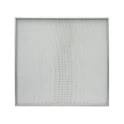
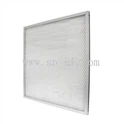
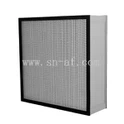
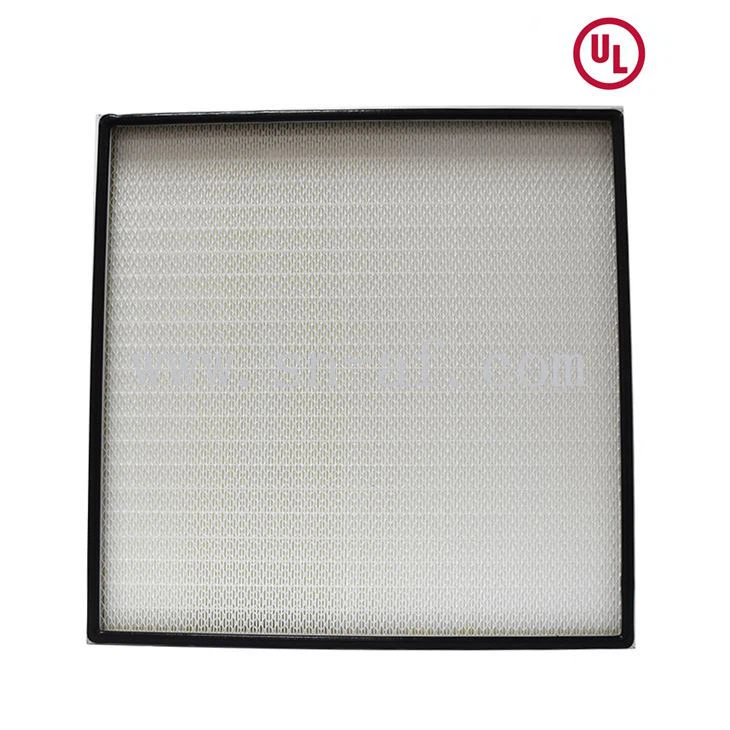
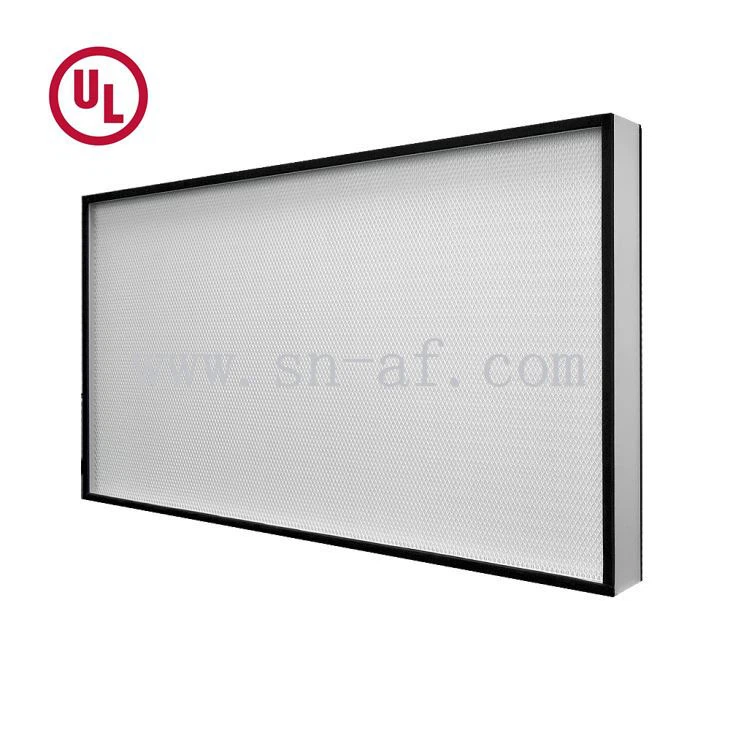
Another advancement is in the design of the filters. For example, the H13 Mini - Pleat HEPA Filter features a mini - pleat design. This design increases the surface area of the filter, which allows for more particles to be trapped. The pleats are also designed in a way that helps to evenly distribute the air flow across the filter, improving its overall efficiency.
HEPA Filters in the Consumer Market
In the 1970s and 1980s, HEPA filters started to make their way into the consumer market. The growing awareness of air pollution and its health effects led to an increased demand for air purifiers in homes and offices.
Consumers were looking for ways to improve the air quality in their living and working spaces. HEPA filters were a natural choice because of their high efficiency in removing particles from the air. They could trap dust, pollen, pet dander, and even some bacteria and viruses.
Today, you can find all sorts of consumer products that use HEPA filters. Air purifiers are one of the most popular. These devices are designed to clean the air in a room by pulling it through a HEPA filter and then blowing the clean air back into the room. Vacuum cleaners with HEPA filters are also common. These vacuum cleaners can trap the dust and dirt that they pick up, preventing it from being released back into the air.
Specialized HEPA Filters
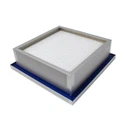
As the demand for HEPA filters has grown, so has the need for specialized filters. For example, the Gel Seal HEPA Filter is designed for applications where a tight seal is required. The gel seal helps to prevent air from leaking around the edges of the filter, ensuring that all the air passes through the filter media.
This type of filter is often used in cleanrooms, where even the smallest amount of contamination can be a problem. Cleanrooms are used in industries such as semiconductor manufacturing, biotechnology, and aerospace.
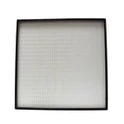
Another specialized filter is the H14 Mini - Pleat HEPA Filter. The H14 classification means that the filter has an even higher efficiency than the standard H13 filters. It can remove 99.995% of particles that are 0.3 microns in diameter. These high - efficiency filters are used in applications where the air quality needs to be extremely clean, such as in operating rooms and some research laboratories.
The Future of HEPA Filters
The future of HEPA filters looks bright. With the increasing concerns about air pollution, climate change, and the spread of infectious diseases, the demand for clean air is only going to grow.
Scientists are already working on further improving HEPA filter technology. They are looking for ways to make the filters even more efficient at trapping smaller particles, including viruses. There is also a focus on developing more sustainable filter materials and manufacturing processes.
As a HEPA filter supplier, I'm excited to be part of this industry. We are constantly working to provide our customers with the best - quality filters that meet their specific needs.
Why Choose Our HEPA Filters?
If you're in the market for HEPA filters, whether it's for your home, office, or industrial application, we've got you covered. Our filters are made with the latest technology and high - quality materials. We offer a wide range of filters, including the H13 Mini - Pleat HEPA Filter, Gel Seal HEPA Filter, and H14 Mini - Pleat HEPA Filter.
We understand that every customer has different requirements, so we can also customize filters to fit your specific needs. Whether you need a filter with a specific size, efficiency rating, or design, we can work with you to create the perfect solution.
If you're interested in learning more about our HEPA filters or want to discuss your specific needs, don't hesitate to reach out. We're here to help you find the best HEPA filter for your situation. Contact us today to start the conversation about your HEPA filter procurement.
References
- "The History of HEPA Filters" - Journal of Air Filtration Technology
- "Advancements in HEPA Filter Technology" - International Journal of Clean Air and Environmental Sciences
- "HEPA Filters in the Consumer Market" - Consumer Air Quality Research Report