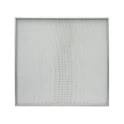
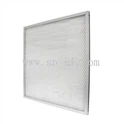
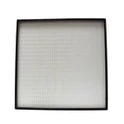
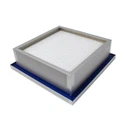
Air density is a crucial yet often overlooked parameter that significantly influences the performance of V - Bank Filters. As a V - Bank Filter supplier, I've witnessed firsthand how variations in air density can lead to different outcomes in filtration systems. In this blog, we will explore the intricate relationship between air density and V - Bank Filter performance.
Understanding Air Density
Air density refers to the mass of air per unit volume, and it is affected by several factors, including temperature, altitude, and humidity. At a higher temperature, air molecules move more vigorously and spread out, resulting in lower air density. Conversely, as the temperature drops, the air becomes denser. Altitude also plays a major role; at higher altitudes, the atmospheric pressure decreases, and the air is less dense compared to sea - level conditions. Humidity, on the other hand, can add water vapor to the air, which is lighter than dry air. So, more humid air is generally less dense than dry air at the same temperature and pressure.
Impact on Airflow and Velocity
One of the primary ways air density affects V - Bank Filter performance is through its impact on airflow and velocity. In a filtration system, fans are typically used to draw air through the filters. The volumetric flow rate of air is usually set by the fan's design. However, when air density changes, the mass flow rate of air also changes.
For instance, when the air is less dense, as in high - temperature or high - altitude conditions, the same volumetric flow rate of air contains less mass of air. This means that the fan has to work harder to maintain the desired level of filtration efficiency. In a V - Bank Filter system, the reduced mass flow rate can lead to a lower velocity of air passing through the filter media. A lower air velocity may seem beneficial at first glance, as it can potentially reduce the pressure drop across the filter. However, it can also result in a less effective removal of particulate matter. The particles may not be carried through the filter media as efficiently, and some may be more likely to bypass the filter, reducing the overall filtration efficiency.
Conversely, in denser air conditions such as cold and dry air, the mass flow rate of air is higher for the same volumetric flow rate. This can increase the air velocity through the V - Bank Filter. A higher air velocity can enhance the capture of particulate matter, but it also has its drawbacks. Higher velocities can cause an increase in the pressure drop across the filter. As the air rushes through the filter media at a faster pace, it encounters more resistance, which can strain the fan in the system and increase energy consumption.
Effects on Filter Loading and Service Life
Air density also affects the filter loading and service life of V - Bank Filters. When the air is less dense, the number of particles carried by the air in a given volume is relatively lower. This can lead to a slower rate of filter loading. The filter may take longer to reach its maximum pressure drop limit, which in turn extends its service life. However, as mentioned earlier, the reduced efficiency in particle capture due to lower air velocity may result in a less clean air output.
In contrast, denser air can carry a larger number of particles per unit volume. This means that the V - Bank Filter will be exposed to a higher concentration of particulate matter, leading to a faster rate of filter loading. Filters may need to be replaced more frequently, increasing the maintenance cost and downtime of the filtration system. It's essential to balance the benefits of increased particle capture efficiency with the disadvantages of shorter filter life when operating in high - density air conditions.
Considerations in Different Applications
V - Bank Filters are used in a wide range of applications, from commercial HVAC systems to industrial processes. In commercial buildings located at high altitudes, such as mountain resorts or high - rise buildings in elevated areas, the lower air density must be taken into account. The HVAC systems need to be designed to compensate for the reduced mass flow rate of air. This may involve using more powerful fans or adjusting the filter configuration to ensure adequate filtration.
In industrial settings, where the air quality can vary greatly depending on the manufacturing processes, air density becomes even more critical. For example, in a foundry where high - temperature processes are involved, the air is often less dense. The V - Bank Filters need to be selected and installed in a way that can still maintain high - level filtration despite the challenging air conditions.
The Role of Mini Pleat V - Bank Filter
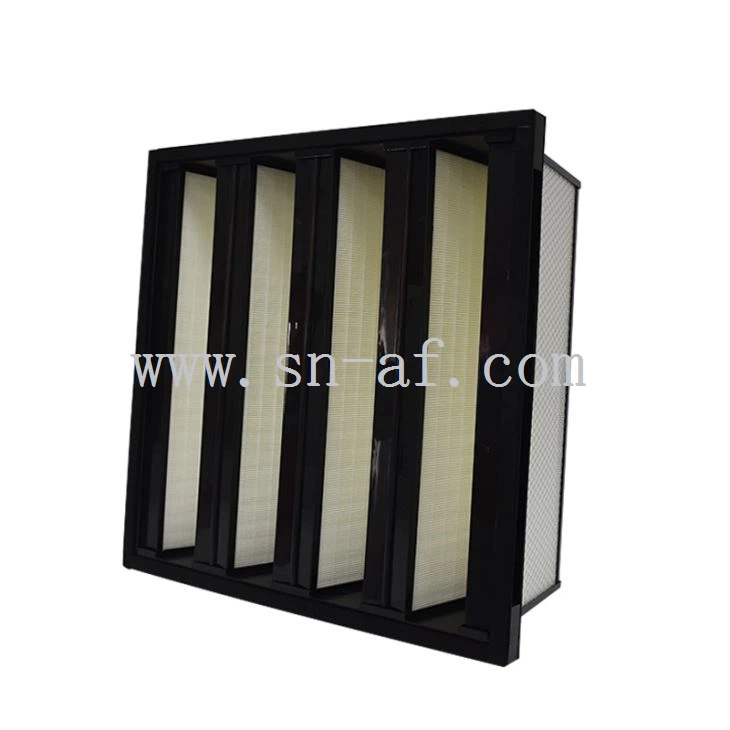
When dealing with the challenges posed by different air densities, Mini Pleat V - Bank Filter can be an excellent solution. These filters are designed with a high surface area due to their mini - pleated structure. This high surface area allows for efficient particle capture even at lower air velocities associated with low - density air. In high - density air conditions, the filter can handle the increased mass flow rate and higher particle concentrations more effectively, thanks to its large filtration area.
Optimization Strategies for V - Bank Filters and Air Density
To optimize the performance of V - Bank Filters under different air density conditions, several strategies can be employed. Firstly, filter selection is crucial. Different filter media have different efficiencies and pressure drop characteristics. For low - density air, filters with finer media may be more appropriate to compensate for the reduced particle capture efficiency. In high - density air scenarios, filters with a higher dust - holding capacity are preferred to extend the service life.

Secondly, system design and operation need to be adjusted according to air density. Variable - speed fans can be used to adjust the airflow based on the actual air density. When the air is less dense, the fan speed can be increased to maintain the desired mass flow rate, and vice versa. Additionally, regular monitoring of air density and filter performance parameters, such as pressure drop and particle count, is essential. This allows for timely adjustments to be made to ensure the efficient operation of the filtration system.
Contact for Procurement and Consultation
If you are in the market for high - quality V - Bank Filters and need guidance on how to optimize your filtration system considering air density, we are here to help. Our team of experts can provide you with detailed product information, customized solutions, and technical support. Whether you are a small business owner, a large - scale industrial operator, or an HVAC contractor, we have the right V - Bank Filters to meet your specific needs. Reach out to us for procurement and to engage in in - depth discussions about your filtration requirements.
References
- ASHRAE Handbook: Fundamentals. This comprehensive handbook provides in - depth knowledge about air properties, including density, and their impact on HVAC systems.
- Filtration Industry Standards and Guidelines. These industry - specific resources offer detailed information on filter performance under different operating conditions, including variations in air density.
- Manufacturer's Technical Literature. The product - specific literature from V - Bank Filter manufacturers can provide valuable insights into the design and performance of filters in relation to air density.