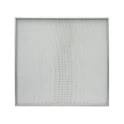
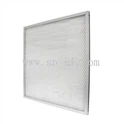
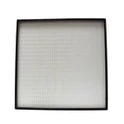
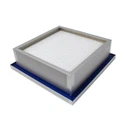
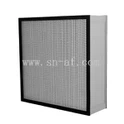
Hey there! As a supplier of HEPA filters, I've seen firsthand how air velocity can have a huge impact on the performance of these essential filtration devices. In this blog post, I'm going to break down the relationship between air velocity and HEPA filter performance, and explain why it's so important to get this balance right.
First off, let's quickly go over what a HEPA filter is. HEPA stands for High-Efficiency Particulate Air, and these filters are designed to trap at least 99.97% of particles that are 0.3 microns in diameter. They're used in a wide range of applications, from industrial settings to home air purifiers, to remove dust, pollen, mold spores, and other harmful particles from the air.
Now, let's talk about air velocity. Air velocity refers to the speed at which air moves through a filter. It's typically measured in feet per minute (FPM) or meters per second (m/s). When it comes to HEPA filters, air velocity plays a crucial role in determining how well the filter can capture particles.
How Air Velocity Affects Particle Capture
One of the key factors in a HEPA filter's ability to capture particles is the principle of diffusion. Diffusion is the random movement of particles in the air, and it's how smaller particles (less than 0.1 microns) are captured by the filter. When air moves through a HEPA filter at a lower velocity, the particles have more time to diffuse and come into contact with the filter fibers. This increases the chances of the particles being trapped by the filter.

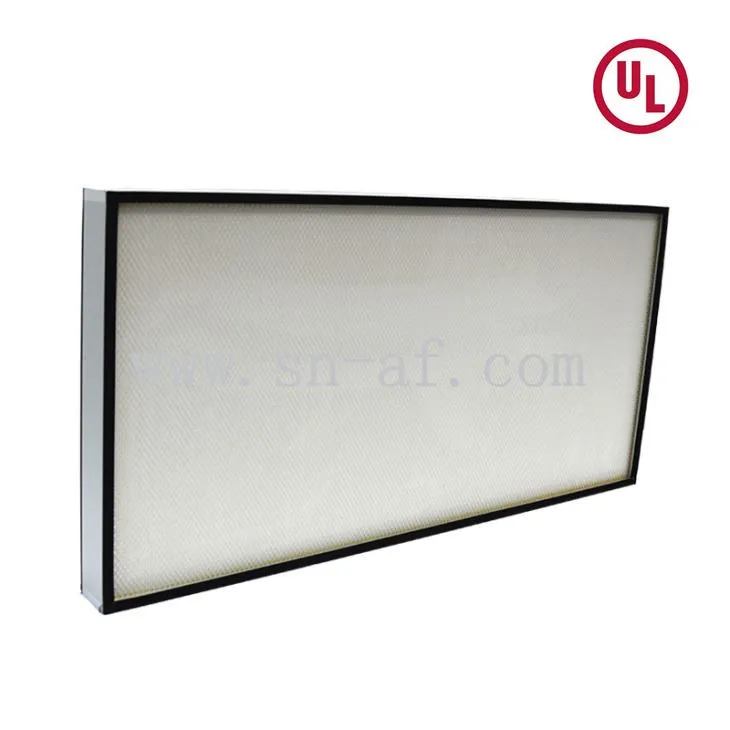
On the other hand, when the air velocity is too high, the particles move through the filter too quickly. They don't have enough time to diffuse and are more likely to pass through the filter without being captured. This means that the filter's efficiency in capturing smaller particles decreases as the air velocity increases.
For larger particles (greater than 0.5 microns), the main mechanism of capture is interception. Interception occurs when a particle follows the streamline of the air and comes into contact with a filter fiber. At higher air velocities, the inertia of the larger particles can cause them to deviate from the streamline and hit the filter fibers more easily. However, if the air velocity is extremely high, the particles may have too much momentum and bounce off the filter fibers instead of being captured.
Pressure Drop and Air Velocity
Another important aspect to consider is the pressure drop across the filter. Pressure drop is the difference in air pressure between the upstream and downstream sides of the filter. As air moves through a HEPA filter, it encounters resistance from the filter fibers, which causes a decrease in pressure.
The pressure drop across a HEPA filter is directly related to the air velocity. As the air velocity increases, the pressure drop also increases. This is because at higher velocities, more air molecules are forced through the filter in a given amount of time, resulting in more resistance and a greater pressure drop.
A high pressure drop can have several negative effects. First, it requires more energy to push the air through the filter. This means that the fan or blower used to move the air has to work harder, which can increase energy consumption and operating costs. Second, a high pressure drop can also cause the filter to become more prone to damage. The increased stress on the filter fibers can lead to premature wear and tear, reducing the filter's lifespan.
Finding the Optimal Air Velocity
So, how do you find the optimal air velocity for a HEPA filter? Well, it depends on several factors, including the specific application, the type of particles you're trying to capture, and the design of the filter.
In general, most HEPA filters are designed to operate at an air velocity of around 100 - 200 FPM (0.5 - 1 m/s). This range provides a good balance between particle capture efficiency and pressure drop. At these velocities, the filter can effectively capture both small and large particles while keeping the energy consumption and pressure drop within acceptable limits.
However, for some applications, such as cleanrooms or medical facilities, a lower air velocity may be required to ensure the highest level of particle capture. In these cases, the air velocity may be as low as 50 - 100 FPM (0.25 - 0.5 m/s). On the other hand, for applications where a high volume of air needs to be filtered quickly, such as in industrial ventilation systems, a higher air velocity may be acceptable, as long as the filter is designed to handle it.
Different Types of HEPA Filters and Air Velocity
At our company, we offer a variety of HEPA filters, each designed to meet different needs and applications. Let's take a look at how air velocity affects the performance of some of our popular filter types.
Gel Seal HEPA Filter
The Gel Seal HEPA Filter is known for its excellent sealing properties, which prevent air leakage around the filter edges. This type of filter is commonly used in applications where a high level of air purity is required, such as in cleanrooms and pharmaceutical manufacturing.
For Gel Seal HEPA Filters, it's important to maintain a relatively low air velocity to ensure optimal performance. A lower air velocity helps to minimize the pressure drop across the filter and reduces the risk of air leakage. It also allows the filter to capture particles more effectively, especially smaller particles that rely on diffusion for capture.
Separator HEPA Filter
The Separator HEPA Filter uses separators to keep the filter media pleats apart, which increases the surface area of the filter and allows for better air flow. This type of filter is often used in industrial applications where a high volume of air needs to be filtered.
Separator HEPA Filters can generally handle higher air velocities compared to other types of filters. The separators help to maintain the shape of the pleats and prevent them from collapsing under the pressure of the air flow. However, it's still important to monitor the air velocity to ensure that the filter's efficiency and lifespan are not compromised.
H14 Mini-Pleat HEPA Filter
The H14 Mini-Pleat HEPA Filter is a high-efficiency filter that uses a mini-pleat design to increase the surface area of the filter media. This allows for a higher air flow rate and a lower pressure drop compared to traditional pleated filters.
H14 Mini-Pleat HEPA Filters are designed to operate at a wide range of air velocities. The mini-pleat design helps to distribute the air flow evenly across the filter media, which improves the filter's overall performance. However, like all HEPA filters, it's important to choose the right air velocity based on the specific application to ensure optimal particle capture and energy efficiency.
Conclusion
In conclusion, air velocity plays a critical role in the performance of a HEPA filter. It affects both the filter's ability to capture particles and the pressure drop across the filter. Finding the optimal air velocity is essential for ensuring the filter's efficiency, lifespan, and energy consumption.
As a HEPA filter supplier, we're here to help you choose the right filter for your application and ensure that it operates at the optimal air velocity. Whether you're looking for a Gel Seal HEPA Filter, a Separator HEPA Filter, or an H14 Mini-Pleat HEPA Filter, we have the expertise and products to meet your needs.
If you're interested in learning more about our HEPA filters or have any questions about air velocity and filter performance, please don't hesitate to contact us. We'd be happy to discuss your requirements and help you find the best solution for your filtration needs.
References
- "High-Efficiency Particulate Air (HEPA) Filters: A Technical Overview" by the American Society of Heating, Refrigerating and Air-Conditioning Engineers (ASHRAE)
- "Air Filtration: Principles and Applications" by Klaus Willeke and Paul A. Baron