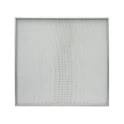
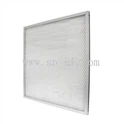
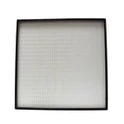
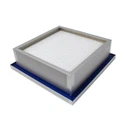
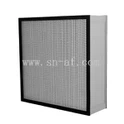
As a trusted supplier of H11 Mini - Pleat Filters, I am excited to share with you the working principle of this remarkable filtration device. In this blog, we will delve into the science behind its operation, explore its unique features, and understand why it is a popular choice in various industries.
1. Introduction to H11 Mini - Pleat Filters
H11 Mini - Pleat Filters are high - efficiency air filters designed to remove a wide range of airborne particles from the environment. They are commonly used in commercial, industrial, and residential settings to improve air quality. The "H11" classification indicates a specific level of filtration efficiency according to international standards. These filters are known for their compact design, high dust - holding capacity, and excellent performance.
2. Basic Filtration Mechanisms
The working principle of H11 Mini - Pleat Filters is based on several fundamental filtration mechanisms, including mechanical interception, inertial impaction, diffusion, and electrostatic attraction.
Mechanical Interception
Mechanical interception occurs when particles larger than the pores of the filter media are physically blocked as they try to pass through the filter. The pleated design of the H11 Mini - Pleat Filter increases the surface area available for filtration. As air flows through the filter, larger particles such as dust, pollen, and lint get trapped on the surface of the filter media.
Inertial Impaction
When air containing particles changes direction suddenly, larger particles with higher inertia tend to continue moving in their original path and collide with the filter fibers. This is known as inertial impaction. In the H11 Mini - Pleat Filter, the complex pleated structure causes the air to change direction multiple times. As a result, particles that are too large to follow the air stream are captured by the filter media.
Diffusion
Smaller particles, especially those in the sub - micron range, exhibit a random motion called Brownian motion. Due to this random movement, these particles are more likely to come into contact with the filter fibers and get trapped. Diffusion is an important mechanism for capturing very fine particles that may not be effectively removed by mechanical interception or inertial impaction.
Electrostatic Attraction
Many H11 Mini - Pleat Filters are treated with an electrostatic charge. This charge creates an attractive force between the filter media and charged or polarizable particles in the air. Particles such as smoke, bacteria, and some chemical aerosols can be attracted to the charged filter fibers, enhancing the filter's overall efficiency in capturing these small and difficult - to - remove particles.
3. The Role of the Pleated Design
The pleated design is one of the key features of the H11 Mini - Pleat Filter. By folding the filter media into pleats, the surface area of the filter is significantly increased compared to a flat filter of the same size. A larger surface area allows for more particles to be captured and provides a longer service life for the filter.
The pleats also help to maintain a relatively low pressure drop across the filter. Pressure drop is the difference in air pressure between the upstream and downstream sides of the filter. A low pressure drop means that the filter requires less energy to push air through it, which is important for reducing the energy consumption of the ventilation system in which the filter is installed.
4. Construction of H11 Mini - Pleat Filters
H11 Mini - Pleat Filters typically consist of a filter media, a frame, and sometimes a separator.
Filter Media
The filter media is the core component of the filter. It is usually made of synthetic fibers such as glass fiber or polyester. These materials are chosen for their high filtration efficiency, durability, and resistance to moisture and chemicals. The filter media is designed to have a specific pore size and structure to optimize the capture of particles within the target size range.
Frame
The frame provides structural support for the filter media. It is typically made of materials such as aluminum, galvanized steel, or plastic. The frame ensures that the filter can be easily installed and removed from the ventilation system. It also helps to maintain the shape of the pleated filter media and prevents air bypass around the edges of the filter.
Separator
Some H11 Mini - Pleat Filters may use a separator to keep the pleats evenly spaced. The separator can be made of materials such as cardboard, aluminum foil, or plastic. It helps to maintain the integrity of the pleated structure and ensures that air flows evenly through the filter media. You can learn more about separator - equipped filters on our Separator HEPA Filter page.


5. Applications of H11 Mini - Pleat Filters
H11 Mini - Pleat Filters are widely used in various applications where high - quality air filtration is required.
Commercial Buildings
In commercial buildings such as offices, shopping malls, and hotels, H11 Mini - Pleat Filters are used in the HVAC (Heating, Ventilation, and Air Conditioning) systems to remove dust, pollen, and other airborne contaminants. This helps to create a comfortable and healthy indoor environment for occupants.
Industrial Facilities
Industrial facilities often generate a large amount of dust, fumes, and other pollutants. H11 Mini - Pleat Filters are used in industrial ventilation systems to protect workers' health and prevent damage to equipment. They can be found in manufacturing plants, pharmaceutical facilities, and food processing plants.
Residential Use
In residential settings, H11 Mini - Pleat Filters can be installed in home air purifiers or HVAC systems to improve indoor air quality. They can help to reduce the presence of allergens, dust, and smoke, providing a cleaner and healthier living environment.
6. Comparison with Other Filter Types
When compared to other filter types, H11 Mini - Pleat Filters offer several advantages.
Compared to Coarse Filters
Coarse filters have a lower filtration efficiency and are mainly used to remove large particles such as dust and lint. H11 Mini - Pleat Filters, on the other hand, can capture much smaller particles, including fine dust, bacteria, and some viruses.
Compared to Higher - Efficiency Filters like H14 Mini - Pleat HEPA Filter
While H14 Mini - Pleat HEPA Filters have a higher filtration efficiency than H11 filters, H11 Mini - Pleat Filters offer a good balance between filtration performance and cost. They are often more suitable for applications where extremely high - efficiency filtration is not required, or where the initial cost and energy consumption are important considerations.
Compared to Gel Seal HEPA Filter
Gel seal HEPA filters are designed for applications where a high - level of airtightness is required, such as in cleanrooms. H11 Mini - Pleat Filters are more versatile and can be used in a wider range of applications. They are also generally more cost - effective for non - critical applications.
7. Maintenance and Replacement
Proper maintenance and timely replacement of H11 Mini - Pleat Filters are essential to ensure their optimal performance.
Monitoring Pressure Drop
One of the key indicators of filter performance is the pressure drop across the filter. As the filter captures more particles, the pressure drop increases. By monitoring the pressure drop, you can determine when the filter needs to be replaced. When the pressure drop reaches a certain threshold, it is a sign that the filter is becoming clogged and is no longer functioning efficiently.
Regular Inspections
Regular visual inspections of the filter can also help to identify any signs of damage or excessive dust accumulation. If the filter appears to be damaged or heavily soiled, it should be replaced immediately.
8. Contact for Procurement
If you are interested in purchasing H11 Mini - Pleat Filters or have any questions about our products, please feel free to contact us. Our team of experts is ready to assist you in selecting the right filter for your specific needs. We offer high - quality H11 Mini - Pleat Filters at competitive prices and can provide you with excellent after - sales service.
References
- "Fundamentals of Air Filtration" by the American Filtration and Separations Society.
- "HVAC Systems Design Handbook" by the American Society of Heating, Refrigerating and Air - Conditioning Engineers (ASHRAE).