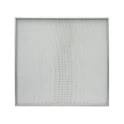
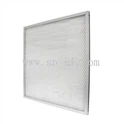
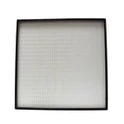
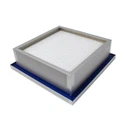
Hey there! I'm a supplier of FFU (Fan Filter Unit) and HEPA BOX, and today I wanna chat about something super important in our line of work: the pressure drop of FFU and HEPA BOX.
First things first, let's understand what pressure drop is. In simple terms, pressure drop is the decrease in air pressure as air moves through a system. In the case of FFUs and HEPA BOXes, it's the difference in air pressure between the inlet and the outlet of these units. Why does this matter? Well, a proper understanding of pressure drop helps in designing an efficient air - filtration system. It can affect the energy consumption, airflow rate, and overall performance of the system.
Pressure Drop in FFU
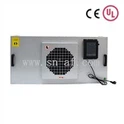
Let's start with FFUs. An Fan Filter Unit is a self - contained unit that combines a fan and a filter. The fan draws in air from the surrounding environment and pushes it through the filter. As the air passes through the filter media, it encounters resistance, which causes the pressure drop.
The pressure drop in an FFU can be influenced by several factors. One of the main factors is the filter efficiency. Higher - efficiency filters, like HEPA (High - Efficiency Particulate Air) filters, have smaller pores that can capture more particles. But those smaller pores also mean more resistance to airflow, resulting in a higher pressure drop. For example, a standard HEPA filter that can remove 99.97% of particles at 0.3 microns will have a greater pressure drop compared to a less - efficient pre - filter.
Another factor is the airflow rate. As you increase the airflow rate through the FFU, the pressure drop also increases. This is because more air is forced through the filter in a given amount of time, and the filter media has to work harder to allow the air to pass through. Think of it like rushing more people through a narrow door; there's more resistance and a slow - down in the flow.
The age and condition of the filter also play a role in pressure drop. Over time, as the filter captures more and more particles, it becomes clogged. A clogged filter has a higher resistance to airflow, which, in turn, leads to an increased pressure drop. That's why regular filter replacement or cleaning (depending on the type of filter) is crucial to maintain the performance of the FFU.
Pressure Drop in HEPA BOX
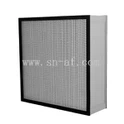
Now, let's move on to the HEPA BOX. A Roomside Replaceable HEPA Box is a device that houses a HEPA filter. It's often used in cleanroom applications to provide a high - level of air filtration. Similar to FFUs, the pressure drop in a HEPA BOX is mainly caused by the resistance of the HEPA filter to airflow.
The design of the HEPA BOX can also impact the pressure drop. The shape and size of the inlet and outlet, as well as the internal structure of the box, can affect how smoothly the air flows through the unit. A well - designed HEPA BOX will have a more uniform airflow distribution, which can help reduce the pressure drop. For example, if the inlet is too small or has sharp corners, it can cause turbulence in the airflow, increasing the resistance and thus the pressure drop.


Just like in FFUs, the efficiency of the HEPA filter in the HEPA BOX is a key determinant of pressure drop. A higher - rated HEPA filter, such as a ULPA (Ultra - Low Penetration Air) filter, which can remove up to 99.999% of particles at 0.12 microns, will have a higher pressure drop compared to a standard HEPA filter.
Measuring and Managing Pressure Drop
Measuring the pressure drop in FFUs and HEPA BOXes is essential. You can use pressure gauges to measure the air pressure at the inlet and the outlet of the units. By comparing these two values, you can calculate the pressure drop. Regular monitoring of the pressure drop allows you to detect changes in the performance of the filters and the units themselves.
If the pressure drop is too high, it can have several negative consequences. It can lead to increased energy consumption because the fan has to work harder to push the air through the filter. It can also reduce the airflow rate, which may compromise the air - filtration efficiency in the cleanroom or the area where the unit is installed.
To manage the pressure drop, proper filter selection is crucial. You need to balance the required filtration efficiency with the acceptable pressure drop. For applications where energy consumption is a major concern, you might choose a slightly less - efficient filter with a lower pressure drop. And don't forget about regular maintenance. As I mentioned earlier, replacing or cleaning clogged filters on time can help keep the pressure drop in check.
The Role of Gel Seal Terminal HEPA / ULPA Module
Now, let me introduce you to the Gel Seal Terminal HEPA / ULPA Module. This is a specialized type of HEPA or ULPA filter module that uses a gel seal to ensure a tight seal between the filter and the housing. The benefit of a gel - seal system is that it can reduce air leakage, which can affect the pressure drop.
When there is air leakage in a filter system, it can disrupt the normal airflow pattern and lead to an inconsistent pressure drop. The gel seal in these modules helps to prevent such leakage, ensuring a more stable and predictable pressure drop. This is especially important in critical cleanroom environments where even a small change in the airflow or pressure can have a big impact on the manufacturing process or the experimental results.
Why It Matters for Your Business
As a customer, understanding the pressure drop of FFUs and HEPA BOXes is vital for your business. If you're running a cleanroom for semiconductor manufacturing, pharmaceutical production, or any other industry that requires high - quality air filtration, a proper pressure - drop management can save you a lot of money in the long run.
By choosing the right FFU and HEPA BOX with an appropriate pressure - drop characteristic, you can reduce energy costs. You'll also avoid unexpected downtime due to filter failures or inefficient airflow. And in industries where product quality depends on a clean environment, a well - managed pressure drop ensures the consistency and quality of your products.
Let's Talk
If you're in the market for FFUs and HEPA BOXes, I'd love to have a chat with you. Whether you're looking for advice on pressure - drop management, need help with product selection, or just want to know more about what we offer, I'm here to assist. Feel free to reach out, and let's start a conversation to see how we can meet your air - filtration needs.
References
- ASHRAE Handbook - HVAC Systems and Equipment
- Cleanroom Technology Handbook
- Manufacturer's specifications for FFUs and HEPA BOXes