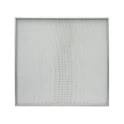
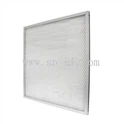
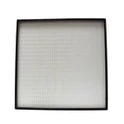
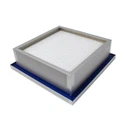
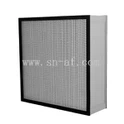
As a trusted supplier of Separator HEPA Filters, one of the most frequently asked questions I encounter is: What is the particle size that a Separator HEPA Filter can capture? In this blog, I will delve into the details of particle size capture capabilities of Separator HEPA Filters, providing you with a comprehensive understanding of their performance and efficiency.
Understanding HEPA Filters
Before discussing the specific particle size capture of Separator HEPA Filters, it's essential to have a basic understanding of HEPA filters in general. HEPA stands for High-Efficiency Particulate Air. A HEPA filter is designed to trap a high percentage of airborne particles, making it a crucial component in many air purification systems.
HEPA filters are classified according to their efficiency in capturing particles of different sizes. The standard for HEPA filters requires that they can capture at least 99.97% of particles that are 0.3 microns in diameter. This measurement of 0.3 microns is significant because particles of this size are often considered the most penetrating particle size (MPPS) through a filter.
Particle Size Capture by Separator HEPA Filters
Sub - Micron Particles
Separator HEPA Filters are highly efficient at capturing sub - micron particles. Particles smaller than 1 micron are especially important to filter out as they can easily be inhaled deep into the lungs and may cause various health problems. These filters can effectively capture particles as small as 0.1 microns with a high level of efficiency.
The filtration mechanism for sub - micron particles involves several processes. One of the main mechanisms is diffusion. Small particles are constantly in motion due to Brownian motion. As they move around, they collide with the fibers of the filter and get trapped. Additionally, electrostatic attraction can also play a role. The filter media may have an electrostatic charge that attracts charged sub - micron particles, increasing the capture efficiency.
0.3 - Micron Particles
As mentioned earlier, 0.3 - micron particles are the MPPS. Separator HEPA Filters are designed to meet the strict 99.97% efficiency standard for capturing particles of this size. This high efficiency is achieved through the careful design of the filter media and the arrangement of the filter fibers. The fibers in the filter are arranged in a way that creates a tortuous path for the air to flow through. As the air passes through this complex structure, the 0.3 - micron particles are more likely to come into contact with the fibers and get trapped.
Larger Particles


For particles larger than 0.3 microns, Separator HEPA Filters have an even higher capture efficiency. Particles in the range of 1 - 10 microns, such as dust, pollen, and some mold spores, are easily captured. These larger particles are mainly captured through interception and impaction. When a larger particle is flowing through the filter with the air stream, if it gets close enough to a filter fiber, it will be intercepted and adhered to the fiber. In the case of impaction, larger particles have more inertia. When the air stream changes direction around the filter fibers, the large particles continue in their original path and collide with the fibers, getting trapped.
Applications Based on Particle Size Capture
The ability of Separator HEPA Filters to capture particles of different sizes makes them suitable for a wide range of applications.
Medical and Healthcare Facilities
In hospitals, clinics, and operating rooms, maintaining clean air is crucial to prevent the spread of airborne pathogens. Separator HEPA Filters can effectively capture bacteria and viruses, which are often in the sub - micron to a few - micron size range. For example, the influenza virus has a size of approximately 0.08 - 0.12 microns, and the Separator HEPA Filter's high - efficiency capture of sub - micron particles helps to reduce the risk of virus transmission in these facilities.
Microelectronics Manufacturing
The microelectronics industry requires a dust - free environment to ensure the quality of semiconductor chips and other electronic components. Particles as small as 0.1 microns can cause defects in microelectronic devices. Separator HEPA Filters are used in cleanrooms to filter out these tiny particles, maintaining the ultra - clean environment necessary for manufacturing.
Residential and Commercial HVAC Systems
In homes and commercial buildings, Separator HEPA Filters can improve indoor air quality by capturing dust, pollen, pet dander, and other allergens. For people with allergies or respiratory problems, these filters can provide a significant improvement in the quality of the air they breathe.
Comparison with Other Types of HEPA Filters
While Separator HEPA Filters are highly effective, it's worth comparing them with other types of HEPA filters, such as Gel Seal HEPA Filters and H14 Mini - Pleat HEPA Filters.
Gel Seal HEPA Filters
Gel Seal HEPA Filters are known for their excellent sealing properties. The gel seal ensures that there is minimal bypass of air around the filter, which can enhance the overall filtration efficiency. However, in terms of particle size capture capabilities, they are similar to Separator HEPA Filters. Both are designed to meet the 99.97% efficiency standard for 0.3 - micron particles and have high efficiency for sub - micron and larger particles. The main advantage of Gel Seal HEPA Filters lies in their sealing, which can be crucial in applications where air leakage around the filter is a concern.
H14 Mini - Pleat HEPA Filters
H14 Mini - Pleat HEPA Filters are designed with a high density of pleats. This design allows for a larger surface area of the filter media, which can increase the dust - holding capacity of the filter. In terms of particle size capture, they also have a high efficiency for capturing particles in the sub - micron to larger size ranges. The mini - pleat design can sometimes result in a lower pressure drop across the filter compared to Separator HEPA Filters, which can be beneficial in some applications where energy consumption is a concern.
Choosing the Right Filter Based on Particle Size Requirements
When selecting a HEPA filter, it's important to consider the specific particle size requirements of your application. If you are dealing with a high concentration of sub - micron particles, such as in a pharmaceutical manufacturing cleanroom, the capture efficiency of sub - micron particles should be a top priority.
In some cases, a combination of different types of HEPA filters may be used to achieve the best results. For example, in a large - scale HVAC system in a commercial building, a pre - filter can be used to remove larger particles first, followed by a Separator HEPA Filter to capture the remaining sub - micron and 0.3 - micron particles.
Conclusion
In conclusion, Separator HEPA Filters are capable of capturing a wide range of particle sizes, from sub - micron particles as small as 0.1 microns to larger particles in the 1 - 10 - micron range. Their high - efficiency capture of 0.3 - micron particles meets the strict HEPA filter standards. These filters are suitable for various applications in medical, industrial, and residential settings.
If you are in need of a reliable HEPA filter solution and want to discuss your specific particle size requirements, please don't hesitate to contact us. We are here to provide you with the best - suited Separator HEPA Filters for your application and ensure the highest level of air purification.
References
- "Air Filtration: Principles and Applications" by Lawrence K. Norbury
- "High - Efficiency Particulate Air (HEPA) Filters" by American Society of Heating, Refrigerating and Air - Conditioning Engineers (ASHRAE)
- "Particle Filtration in the Pharmaceutical Industry" by Pharmaceutical Technology Publications