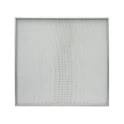
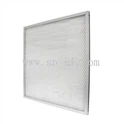
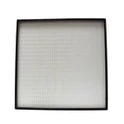
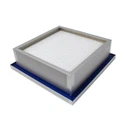
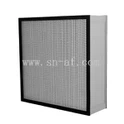
As a supplier of H14 Mini-Pleat HEPA Filters, I often get asked about the minimum particle size these filters can capture. It's a crucial question, especially for industries and applications where air quality is of utmost importance. In this blog post, I'll delve into the science behind H14 Mini-Pleat HEPA Filters and explain the minimum particle size they can effectively capture.
Understanding HEPA Filters
HEPA stands for High-Efficiency Particulate Air. These filters are designed to remove a high percentage of airborne particles from the air. The efficiency of a HEPA filter is determined by its ability to capture particles of a specific size. The H14 classification is one of the highest standards for HEPA filters, indicating an extremely high level of efficiency.
How HEPA Filters Work
HEPA filters work through a combination of three main mechanisms: interception, impaction, and diffusion.
- Interception: When a particle follows a streamline around a fiber in the filter and comes within one radius of the fiber, it is intercepted and captured.
- Impaction: Larger particles have more inertia and are unable to follow the streamline around the fibers. Instead, they collide with the fibers and are captured.
- Diffusion: Smaller particles are subject to Brownian motion, which causes them to move randomly. This random movement increases the likelihood of them coming into contact with the fibers and being captured.
Minimum Particle Size Captured by H14 Mini-Pleat HEPA Filters
The H14 Mini-Pleat HEPA Filter is designed to capture particles as small as 0.3 microns with an efficiency of at least 99.995%. However, it's important to note that these filters are also effective at capturing particles both larger and smaller than 0.3 microns.
- Larger Particles: Particles larger than 0.3 microns are typically captured through impaction and interception. The pleated design of the H14 Mini-Pleat HEPA Filter provides a large surface area for these particles to be trapped, increasing the filter's overall efficiency.
- Smaller Particles: Particles smaller than 0.3 microns are captured through diffusion. Although these particles are more difficult to capture, the high density of fibers in the H14 Mini-Pleat HEPA Filter increases the probability of them coming into contact with a fiber and being captured.
Applications of H14 Mini-Pleat HEPA Filters
The ability to capture particles as small as 0.3 microns makes H14 Mini-Pleat HEPA Filters suitable for a wide range of applications, including:


- Medical Facilities: In hospitals, clinics, and laboratories, H14 Mini-Pleat HEPA Filters are used to maintain a clean and sterile environment. They help to remove harmful pathogens, such as bacteria and viruses, from the air, reducing the risk of infection.
- Pharmaceutical Industry: In pharmaceutical manufacturing facilities, H14 Mini-Pleat HEPA Filters are used to ensure the purity of the air. They help to prevent contamination of drugs and other pharmaceutical products, ensuring their safety and effectiveness.
- Electronics Manufacturing: In cleanrooms used for electronics manufacturing, H14 Mini-Pleat HEPA Filters are used to remove dust and other particles that could damage sensitive electronic components.
- Food Processing Industry: In food processing facilities, H14 Mini-Pleat HEPA Filters are used to maintain a clean and hygienic environment. They help to prevent the contamination of food products by airborne particles, ensuring their safety and quality.
Comparison with Other HEPA Filters
When compared to other types of HEPA filters, such as the Separator HEPA Filter and the Gel Seal HEPA Filter, the H14 Mini-Pleat HEPA Filter offers several advantages.
- Higher Efficiency: The H14 classification indicates a higher level of efficiency compared to other HEPA filters. This means that the H14 Mini-Pleat HEPA Filter can capture a greater percentage of airborne particles, providing better air quality.
- Compact Design: The mini-pleat design of the H14 Mini-Pleat HEPA Filter allows for a higher surface area in a smaller space. This makes it ideal for applications where space is limited.
- Lower Pressure Drop: The H14 Mini-Pleat HEPA Filter has a lower pressure drop compared to other HEPA filters. This means that it requires less energy to operate, resulting in lower operating costs.
Another Similar Product: H13 Mini-Pleat HEPA Filter
In addition to the H14 Mini-Pleat HEPA Filter, we also offer the H13 Mini-Pleat HEPA Filter. While the H13 filter has a slightly lower efficiency compared to the H14 filter, it is still capable of capturing particles as small as 0.3 microns with an efficiency of at least 99.97%. The H13 Mini-Pleat HEPA Filter is a cost-effective option for applications where a slightly lower level of air purification is acceptable.
Conclusion
In conclusion, the H14 Mini-Pleat HEPA Filter is a highly efficient air filtration solution that can capture particles as small as 0.3 microns with an efficiency of at least 99.995%. Its ability to capture both larger and smaller particles makes it suitable for a wide range of applications, including medical facilities, pharmaceutical manufacturing, electronics manufacturing, and food processing.
If you're in the market for a high-quality HEPA filter, I encourage you to consider the H14 Mini-Pleat HEPA Filter. Our team of experts is available to answer any questions you may have and to help you select the right filter for your specific needs. Contact us today to start a discussion about your procurement requirements and take the first step towards improving your air quality.
References
- "High-Efficiency Particulate Air (HEPA) Filters," U.S. Environmental Protection Agency.
- "HEPA Filter Basics," American Society of Heating, Refrigerating and Air-Conditioning Engineers (ASHRAE).
- "Air Filtration in Cleanrooms," International Society for Pharmaceutical Engineering (ISPE).