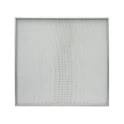
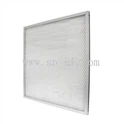
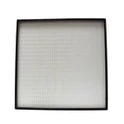
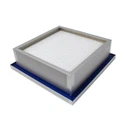
Hey there! As a supplier of H13 Mini-Pleat HEPA Filters, I often get asked about what these filters are made of. So, I thought I'd write this blog to break it down for you.
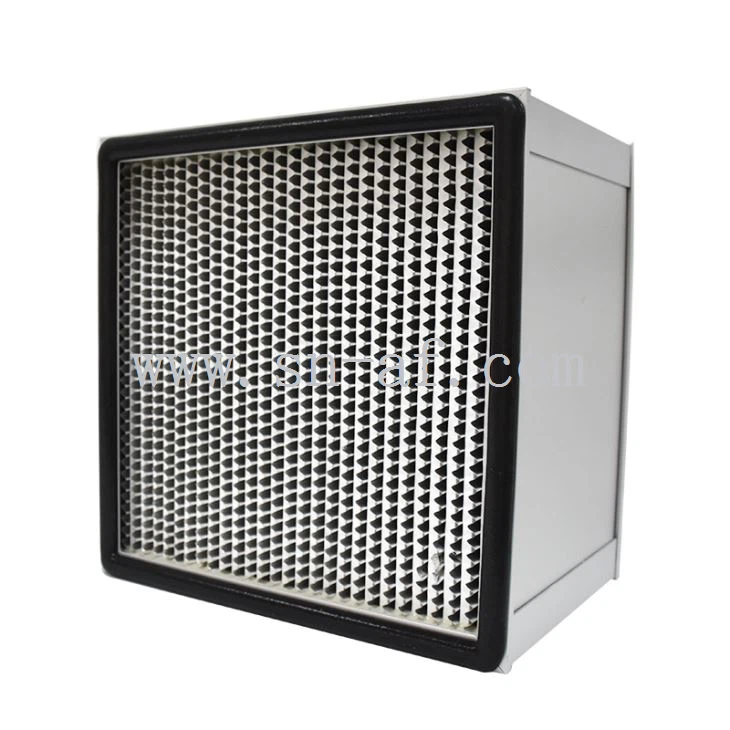
First off, let's understand what an H13 Mini-Pleat HEPA Filter is. HEPA stands for High-Efficiency Particulate Air. These filters are designed to trap a high percentage of tiny particles in the air, making the air cleaner and safer to breathe. The "H13" part refers to the filter's efficiency rating. An H13 filter can capture at least 99.95% of particles that are 0.3 microns in size. The "Mini-Pleat" design means that the filter media is folded into small pleats, which increases the surface area of the filter and allows for better air flow and more efficient filtration.
Now, let's get into the materials. The main component of an H13 Mini-Pleat HEPA Filter is the filter media. This is the part that actually does the job of capturing particles. Most commonly, the filter media is made from a type of glass fiber. Glass fibers are great for this job because they're very thin and can be arranged in a way that creates a dense network of fibers. This network is what traps the particles as the air passes through the filter.
The glass fibers used in H13 Mini-Pleat HEPA Filters are usually microfine. They're so small that they can capture even the tiniest particles, like dust, pollen, mold spores, and some bacteria. The manufacturing process of these glass fibers is quite precise. They're spun into very thin strands and then arranged in a random pattern to form the filter media. This random arrangement helps to increase the chances of particles getting trapped as they try to pass through the filter.
In addition to the glass fiber media, there are other materials used in the construction of an H13 Mini-Pleat HEPA Filter. One important part is the frame. The frame holds the filter media in place and provides structural support. Frames can be made from different materials, depending on the application and the customer's requirements.
Common frame materials include aluminum, galvanized steel, and plastic. Aluminum frames are lightweight and corrosion-resistant, making them a popular choice for many applications. Galvanized steel frames are strong and durable, and they're often used in more heavy-duty or industrial settings. Plastic frames are inexpensive and can be molded into different shapes, which is useful for custom-made filters.
Another component is the separator. Separators are used to keep the pleats of the filter media separated from each other. This is important because it allows for proper air flow through the filter. If the pleats were to stick together, the air wouldn't be able to pass through the filter effectively, and the filtration efficiency would decrease.
Separators can be made from materials like aluminum foil, paper, or plastic. Aluminum foil separators are strong and can withstand high air pressures. Paper separators are inexpensive and can work well in less demanding applications. Plastic separators are lightweight and can be easily molded into different shapes.
Now, let's talk about some related products. If you're looking for a filter with a slightly lower efficiency rating, you might consider the H11 Mini-Pleat Filter. An H11 filter can capture at least 95% of particles that are 0.3 microns in size. It's a good option if you don't need the highest level of filtration but still want a decent-quality filter.
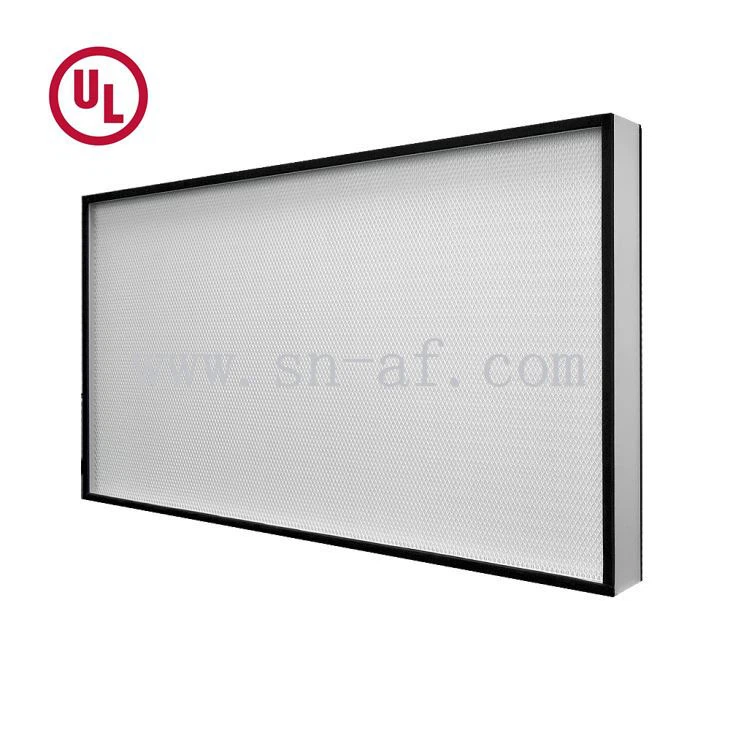
On the other hand, if you need an even higher level of filtration, the H14 Mini-Pleat HEPA Filter might be the right choice for you. An H14 filter can capture at least 99.995% of particles that are 0.3 microns in size. It's often used in applications where the air quality needs to be extremely clean, like in hospitals or clean rooms.
There's also the Separator HEPA Filter. This type of filter uses separators to keep the pleats of the filter media apart, just like the H13 Mini-Pleat HEPA Filter. However, the design and construction of separator HEPA filters can vary, and they might be used in different applications depending on their specific features.
So, why choose an H13 Mini-Pleat HEPA Filter? Well, for starters, it offers a high level of filtration efficiency. Whether you're using it in a home air purifier, a commercial HVAC system, or an industrial setting, it can effectively remove a large percentage of harmful particles from the air. The mini-pleat design also allows for better air flow, which means that the filter won't restrict the air flow too much and will work more efficiently.
If you're in the market for an H13 Mini-Pleat HEPA Filter or any of the related products I mentioned, I'd love to have a chat with you. We can discuss your specific needs, the application you're using the filter for, and find the best solution for you. Whether you need a standard-sized filter or a custom-made one, we've got the expertise and the resources to meet your requirements.
In conclusion, the H13 Mini-Pleat HEPA Filter is a great choice for anyone who wants to improve the air quality in their environment. With its high-efficiency glass fiber media, sturdy frame, and well-designed pleat structure, it's a reliable and effective filtration solution. So, don't hesitate to reach out if you're interested in purchasing these filters. We're here to help you make the right choice and get the best product for your needs.
References
- ASHRAE (American Society of Heating, Refrigerating and Air-Conditioning Engineers) Handbook on HVAC Systems and Equipment
- ISO (International Organization for Standardization) standards related to air filters