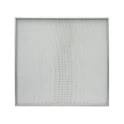
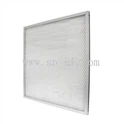
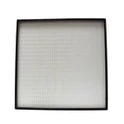
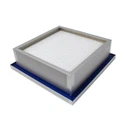
As a supplier of U17 Mini - Pleat ULPA Filters, I often encounter inquiries from customers about the ease of cleaning these high - performance filters. In this blog, I'll delve into the topic, exploring the factors that affect the cleaning process of U17 Mini - Pleat ULPA Filters and providing insights based on our experience in the industry.
Understanding U17 Mini - Pleat ULPA Filters
Before discussing the cleaning process, it's essential to understand what U17 Mini - Pleat ULPA Filters are. ULPA stands for Ultra - Low Penetration Air, and these filters are designed to remove extremely fine particles from the air. The U17 rating indicates a very high level of filtration efficiency, capable of capturing particles as small as 0.12 microns with an efficiency of 99.999%.
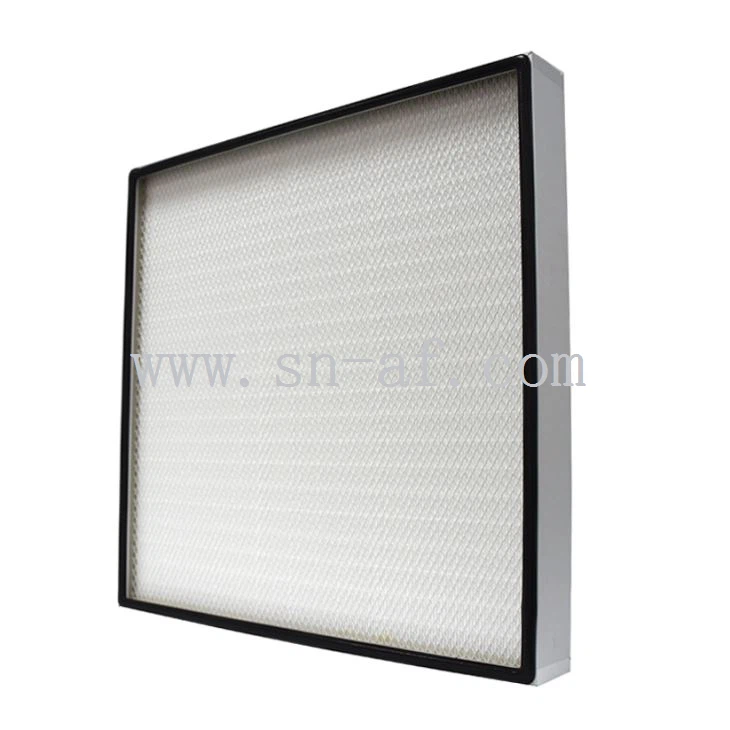
The mini - pleat design is another key feature. Mini - pleats increase the filter media surface area within a compact space, allowing for more effective filtration. This design is commonly used in applications where high - efficiency air filtration is required, such as in semiconductor manufacturing, pharmaceutical production, and cleanrooms.
Factors Affecting the Cleanability of U17 Mini - Pleat ULPA Filters
-
Filter Media
The filter media used in U17 Mini - Pleat ULPA Filters is typically made of materials like glass fiber. Glass fiber media is known for its high filtration efficiency but can be delicate. The fine fibers can be easily damaged if not handled properly during the cleaning process. For example, aggressive cleaning methods such as high - pressure water jets or abrasive scrubbing can break the fibers, reducing the filter's efficiency and lifespan. -
Particle Type and Loading
The type of particles captured by the filter plays a significant role in the cleaning process. If the filter is capturing dry, particulate matter like dust or pollen, it may be relatively easier to clean compared to filters that have captured sticky or oily substances. For instance, in a manufacturing environment where there are oil mists, the oil can coat the filter media, making it difficult to remove the particles and clean the filter effectively.
The loading of particles on the filter also matters. A highly loaded filter with a large amount of accumulated particles will be more challenging to clean than a lightly loaded one. Over time, as particles build up, they can clog the filter pores, restricting the airflow and increasing the pressure drop across the filter.
- Filter Design
The mini - pleat design, while advantageous for filtration, can also pose challenges during cleaning. The narrow pleats can trap particles deep within the filter, making it difficult to reach and remove them. Additionally, the pleats can create areas where water or cleaning agents may not penetrate evenly, leading to incomplete cleaning.
Cleaning Methods for U17 Mini - Pleat ULPA Filters
- Dry Cleaning
Dry cleaning methods are often the first choice for cleaning U17 Mini - Pleat ULPA Filters. One common dry cleaning method is using compressed air. By blowing compressed air through the filter in the opposite direction of the normal airflow, it can dislodge some of the loose particles. However, this method may not be sufficient for removing deeply embedded particles or sticky substances.
Another dry cleaning option is using a vacuum cleaner with a soft brush attachment. The vacuum can be used to gently remove surface - level dust and debris from the filter. This method is relatively gentle on the filter media but may not be effective for thorough cleaning.
- Wet Cleaning
Wet cleaning involves using water or cleaning agents to remove the particles from the filter. When using water, it's important to use a low - pressure spray to avoid damaging the filter media. A mild detergent can be added to the water to help break down oily or sticky substances. After wet cleaning, the filter needs to be dried thoroughly before reinstallation. Improper drying can lead to the growth of mold or mildew on the filter, which can affect its performance and air quality.
However, wet cleaning is not always recommended for U17 Mini - Pleat ULPA Filters. As mentioned earlier, the delicate glass fiber media can be damaged by water, and there is a risk of the fibers becoming distorted or losing their shape during the wet cleaning process.
Comparison with Other Mini - Pleat ULPA Filters
When comparing the cleanability of U17 Mini - Pleat ULPA Filters with U15 Mini - Pleat ULPA Filter and U16 Mini - Pleat ULPA Filter, there are some differences. U15 and U16 filters have slightly lower filtration efficiencies compared to U17 filters. This means that they may capture larger particles more easily, and in some cases, these larger particles may be easier to clean.
However, the basic principles of cleaning remain similar across all these types of filters. The filter media, particle type, and loading still play crucial roles in determining the ease of cleaning.
Is U17 Mini - Pleat ULPA Filter Easy to Clean?
In general, U17 Mini - Pleat ULPA Filters are not considered easy to clean. The high - efficiency filter media, combined with the mini - pleat design and the type of particles they are designed to capture, make the cleaning process challenging. While it is possible to clean these filters to some extent, it requires careful handling and the use of appropriate cleaning methods.
It's important to note that in many cases, cleaning may not fully restore the filter to its original performance. After a certain number of cleaning cycles, the filter's efficiency may gradually decline, and it may need to be replaced.
Conclusion and Call to Action
U17 Mini - Pleat ULPA Filters are essential components in many high - end air filtration applications. While they are not the easiest filters to clean, proper maintenance and cleaning can extend their lifespan and ensure optimal performance.
If you are in need of U17 Mini - Pleat ULPA Filters or have questions about their cleaning and maintenance, we are here to help. Our team of experts can provide you with detailed information and guidance on the best practices for using and caring for these filters. Visit our website U17 Mini - Pleat ULPA Filter to learn more about our products and services. Contact us to start a discussion about your procurement needs, and let's work together to find the best air filtration solutions for your specific requirements.

References
- "Air Filtration Handbook" by Klaus Willeke and E. Neil Light.
- Industry standards and guidelines for ULPA filter manufacturing and maintenance.