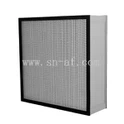
Hey there! As a supplier of medium filters, I often get asked the question: "Can a medium filter remove dust?" Well, let's dive right into it and find out.
First off, let's understand what a medium filter is. Medium filters are designed to capture particles of a certain size range. They sit between the coarse filters, which catch larger debris, and the high - efficiency filters like HEPA filters. Medium filters typically have a higher efficiency than coarse filters but not as high as the top - of - the - line HEPA ones.
Now, when it comes to dust, it's a pretty broad term. Dust can consist of all sorts of things like dirt, pollen, pet dander, and tiny bits of fabric or paper. The size of dust particles can vary widely, from large visible pieces to microscopic ones.
Most medium filters are effective at removing a significant amount of dust. They are engineered with a specific pore size and filtration media that can trap particles in the range of 1 - 10 micrometers. A lot of common dust particles fall within this size bracket. For example, pollen grains, which are a type of dust in the environmental sense, usually range from 10 - 100 micrometers, and medium filters can do a decent job of catching the smaller ones.
One of the key factors that determine a medium filter's ability to remove dust is its construction. The filtration media used in medium filters can be made from different materials such as synthetic fibers or cellulose. Synthetic materials, like those in our Synthetic Pocket Filter, are often more durable and can provide better filtration efficiency. They have a more uniform structure, which allows for more consistent particle capture.
Cellulose - based medium filters also have their advantages. They are often more cost - effective and can be quite good at capturing larger dust particles. However, they may not be as efficient as synthetic filters when it comes to the smaller dust particles.
Another important aspect is the design of the filter. Our Pocket Air Filter F5 is a great example. The pocket design increases the surface area of the filter. A larger surface area means more space for dust particles to be trapped. When air passes through the filter, the dust gets stuck on the fibers of the filtration media. The more surface area there is, the more dust can be collected before the filter needs to be replaced.
But it's not just about the size and design. The air flow rate also plays a role. If the air is moving too fast through the filter, some dust particles may not have enough time to get trapped. On the other hand, if the air flow is too slow, it can reduce the overall efficiency of the ventilation system. Medium filters are usually designed to work within a specific range of air flow rates to ensure optimal dust removal.
Let's talk about the maintenance of medium filters. To keep them working effectively at removing dust, regular maintenance is a must. Over time, as dust accumulates on the filter, it can start to clog. A clogged filter not only reduces the filter's ability to remove dust but can also put extra strain on the ventilation system. You'll need to replace or clean the filter depending on the type. Disposable filters are just that - you throw them away when they're full. Reusable filters can be cleaned, but you need to follow the manufacturer's instructions carefully to avoid damaging the filtration media.
In a home setting, medium filters can make a big difference. If you have pets, suffer from allergies, or live in an area with a lot of dust, a medium filter in your HVAC system can help keep the air cleaner. It can reduce the amount of dust that settles on your furniture, floors, and in the air you breathe. This can lead to a more comfortable living environment and may even help with allergy symptoms.


In an industrial or commercial setting, the importance of medium filters for dust removal is even more significant. In factories, warehouses, or offices, large amounts of dust can be generated. Medium filters can help protect the equipment from dust damage. For example, in a manufacturing plant, dust can get into machinery and cause malfunctions. By using medium filters in the ventilation system, you can reduce the amount of dust that reaches the sensitive parts of the equipment, increasing its lifespan and reducing maintenance costs.
So, to answer the question "Can a medium filter remove dust?" - yes, it can! Medium filters are a practical and effective solution for removing a large portion of dust from the air. They offer a balance between cost, efficiency, and ease of use.
If you're interested in learning more about our medium filters or are looking to make a purchase, we'd love to hear from you. Whether you need a filter for your home, office, or industrial facility, we have a wide range of options to meet your needs. Just reach out, and we can start a conversation about the best medium filter solution for you.
References
- "Filtration Handbook" by Christopher D. Hodgson
- "Air Filtration: An Introduction for Engineers" by David W. Cooper