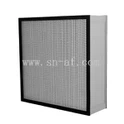
As a supplier of high temperature filters, I understand the critical importance of filtration efficiency in various industrial applications. High temperature environments pose unique challenges to filtration systems, and adjusting the filtration efficiency of a high temperature filter is a task that requires a deep understanding of the filter's design, materials, and the specific requirements of the application. In this blog, I will share some insights on how to adjust the filtration efficiency of a high temperature filter based on my years of experience in the industry.
Understanding the Basics of Filtration Efficiency
Filtration efficiency is a measure of how effectively a filter can remove particles from a fluid (either gas or liquid). It is typically expressed as a percentage of the particles of a specific size range that are captured by the filter. For high temperature filters, the efficiency is often determined by the filter media, the structure of the filter, and the operating conditions.
The filter media is the heart of the filtration process. Different materials have different filtration capabilities, and the choice of media depends on the temperature, chemical composition of the fluid, and the size of the particles to be removed. Common media for high temperature filters include ceramic fibers, metal meshes, and high temperature polymers. Each of these materials has its own advantages and limitations in terms of filtration efficiency, temperature resistance, and chemical compatibility.


The structure of the filter also plays a crucial role in determining the filtration efficiency. A well-designed filter will have a large surface area for filtration, which allows for more particles to be captured. The pore size and distribution of the filter media are also important factors. A filter with a smaller pore size will generally have a higher filtration efficiency for smaller particles, but it may also have a higher pressure drop, which can affect the flow rate of the fluid.
Factors Affecting Filtration Efficiency in High Temperature Environments
In high temperature environments, several factors can affect the filtration efficiency of a filter. These include:
Temperature
High temperatures can cause the filter media to expand, shrink, or degrade, which can change the pore size and structure of the filter. This can lead to a decrease in filtration efficiency or an increase in pressure drop. For example, some polymers may soften or melt at high temperatures, while ceramic fibers may become brittle and break.
Chemical Reactions
The high temperature and the presence of certain chemicals in the fluid can cause chemical reactions to occur on the surface of the filter media. These reactions can change the properties of the media, such as its wettability or surface charge, which can affect the filtration efficiency. For instance, oxidation or corrosion of metal mesh filters can reduce their filtration performance.
Particle Loading
As the filter captures particles, the accumulation of particles on the surface of the filter media can cause the pore size to decrease, leading to an increase in filtration efficiency for larger particles but a decrease in flow rate. Eventually, the filter may become clogged, which can significantly reduce its filtration efficiency and increase the pressure drop.
Adjusting Filtration Efficiency
Based on the above factors, here are some ways to adjust the filtration efficiency of a high temperature filter:
Selecting the Right Filter Media
The choice of filter media is the first step in adjusting the filtration efficiency. For high temperature applications, it is important to select a media that can withstand the operating temperature without significant degradation. For example, ceramic fibers are a popular choice for high temperature filtration due to their excellent thermal stability and high filtration efficiency. Metal meshes are also suitable for high temperature applications, especially when high strength and corrosion resistance are required.
When selecting the filter media, it is also important to consider the size of the particles to be removed. A media with a smaller pore size will generally have a higher filtration efficiency for smaller particles, but it may also have a higher pressure drop. Therefore, a balance needs to be struck between filtration efficiency and pressure drop.
Optimizing the Filter Structure
The structure of the filter can be optimized to improve the filtration efficiency. One way to do this is to increase the surface area of the filter media. This can be achieved by using a pleated or folded design, which can significantly increase the filtration area without increasing the physical size of the filter. Another way is to control the pore size and distribution of the filter media. This can be done through the manufacturing process, such as by using different weaving or sintering techniques for metal meshes or by controlling the fiber diameter and density for ceramic fiber filters.
Monitoring and Maintaining the Filter
Regular monitoring and maintenance of the filter are essential to ensure its optimal performance. This includes monitoring the pressure drop across the filter, the flow rate of the fluid, and the particle concentration in the outlet fluid. If the pressure drop increases significantly or the flow rate decreases, it may indicate that the filter is clogged and needs to be cleaned or replaced.
In addition, the filter should be inspected regularly for signs of damage or degradation. If the filter media shows signs of melting, cracking, or corrosion, it should be replaced immediately to prevent a decrease in filtration efficiency.
Adjusting the Operating Conditions
The operating conditions, such as the temperature, flow rate, and particle loading, can also be adjusted to optimize the filtration efficiency. For example, if the temperature is too high, it may be necessary to cool the fluid before it enters the filter to prevent damage to the filter media. If the flow rate is too high, it may cause the particles to pass through the filter without being captured, so the flow rate may need to be adjusted to ensure that the particles have enough time to be filtered.
The Role of High Temperature HEPA Filters
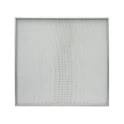
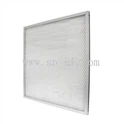
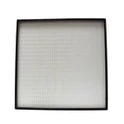
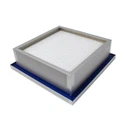
In some high temperature applications, High Temperature HEPA Filter can be a great option. HEPA (High Efficiency Particulate Air) filters are designed to remove at least 99.97% of particles that are 0.3 microns in diameter or larger. High temperature HEPA filters are specifically engineered to maintain their high filtration efficiency in high temperature environments.
These filters are typically made of special materials, such as high temperature-resistant polymers or ceramic fibers, that can withstand the high temperatures without losing their filtration performance. They are often used in applications where a high level of air purification is required, such as in semiconductor manufacturing, pharmaceutical production, and cleanrooms.
Conclusion
Adjusting the filtration efficiency of a high temperature filter is a complex task that requires a comprehensive understanding of the filter's design, materials, and the specific requirements of the application. By selecting the right filter media, optimizing the filter structure, monitoring and maintaining the filter, and adjusting the operating conditions, it is possible to achieve the desired filtration efficiency and ensure the reliable operation of the filtration system.
If you are in need of high temperature filters or have any questions about adjusting the filtration efficiency of your filters, please feel free to contact us. Our team of experts is always ready to provide you with the best solutions for your specific needs.
References
- Brown, R. C. (2007). Introduction to Air Filtration. Elsevier.
- Hinds, W. C. (1999). Aerosol Technology: Properties, Behavior, and Measurement of Airborne Particles. Wiley.
- Tsai, C. -J., & Hsu, C. -H. (2008). High - temperature filtration for advanced power systems. Progress in Energy and Combustion Science, 34(2), 151 - 179.