Pollen is a common allergen that can cause discomfort and health issues for many people, especially during the spring and fall seasons. With the increasing concern about indoor air quality, many individuals are turning to HEPA filters as a potential solution to remove pollen from their living spaces. As a HEPA filter supplier, I am often asked whether a HEPA filter can effectively remove pollen. In this blog post, I will delve into the science behind HEPA filters and their ability to tackle pollen particles.
Understanding HEPA Filters
HEPA stands for High-Efficiency Particulate Air. A HEPA filter is a type of mechanical air filter that works by forcing air through a fine mesh of fibers. These fibers trap various particles, including dust, pollen, mold spores, and pet dander. To be classified as a true HEPA filter, it must meet specific standards set by the United States Department of Energy (DOE). According to these standards, a HEPA filter must be able to remove at least 99.97% of particles that are 0.3 microns in diameter.
The efficiency of a HEPA filter is based on its ability to capture particles of different sizes. The 0.3-micron particle size is considered the "most penetrating particle size" (MPPS). Particles larger or smaller than 0.3 microns are generally easier to capture. For example, larger particles are more likely to be trapped by impaction, where they collide with the filter fibers and stick to them. Smaller particles are captured through diffusion, as they move randomly and eventually come into contact with the fibers.
Pollen Size and Characteristics
Pollen grains vary in size depending on the plant species. Most pollen grains range from 10 to 100 microns in diameter, which is significantly larger than the 0.3-micron MPPS. This means that in theory, HEPA filters should be very effective at capturing pollen particles.
Pollen is also relatively heavy compared to other airborne particles. This makes it more likely to settle out of the air over time. However, when there is air movement, such as from an air conditioner, fan, or open window, pollen can become airborne again and circulate throughout a room.
How HEPA Filters Remove Pollen
When air containing pollen passes through a HEPA filter, several mechanisms come into play to trap the pollen grains. As mentioned earlier, the large size of pollen particles makes them more likely to be captured by impaction. As the air flows through the filter, the pollen grains collide with the fibers and are stuck in place.
In addition to impaction, interception can also contribute to the removal of pollen. Interception occurs when a pollen grain comes close enough to a filter fiber that it is attracted to and adheres to the fiber. The irregular shape of pollen grains increases the likelihood of interception, as different parts of the grain can come into contact with the fibers.
Real-World Effectiveness of HEPA Filters Against Pollen
Numerous studies have shown that HEPA filters are highly effective at reducing pollen levels in indoor environments. A study published in the Journal of Allergy and Clinical Immunology found that using a HEPA air purifier in a bedroom significantly reduced the concentration of airborne pollen and improved sleep quality for allergy sufferers.
In real-world settings, the effectiveness of a HEPA filter in removing pollen depends on several factors. The size of the room, the air exchange rate, and the quality of the filter all play a role. A larger room may require a more powerful HEPA filter or multiple filters to ensure adequate air circulation and pollen removal. Similarly, a filter with a higher MERV (Minimum Efficiency Reporting Value) rating will generally be more effective at capturing pollen.
Types of HEPA Filters for Pollen Removal
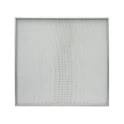
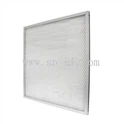
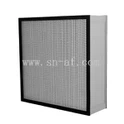
As a HEPA filter supplier, we offer a range of filters that are suitable for removing pollen. One of our popular products is the H11 Mini-Pleat Filter. This filter has a high dust-holding capacity and is designed to provide efficient filtration of pollen and other airborne particles. The mini-pleat design increases the surface area of the filter, allowing for more effective particle capture.
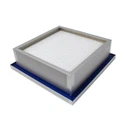
Another option is the Gel Seal HEPA Filter. This filter features a gel sealant around the edges, which helps to prevent air leakage and ensures that all air passing through the filter is effectively filtered. The gel seal also provides a tight seal, making it ideal for use in environments where high levels of filtration are required, such as hospitals and laboratories.
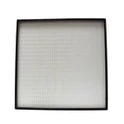
For applications that require even higher levels of filtration, we recommend the H13 Mini-Pleat HEPA Filter. This filter has a higher efficiency rating than the H11 filter and is capable of removing up to 99.995% of particles that are 0.3 microns in diameter. It is particularly effective at capturing small pollen grains and other fine particles.
Maintenance and Replacement of HEPA Filters
To ensure the continued effectiveness of a HEPA filter in removing pollen, proper maintenance and replacement are essential. Over time, the filter will become clogged with particles, which can reduce its efficiency and airflow. It is recommended to check the filter regularly and replace it when it appears dirty or when the manufacturer's recommended replacement schedule has been reached.
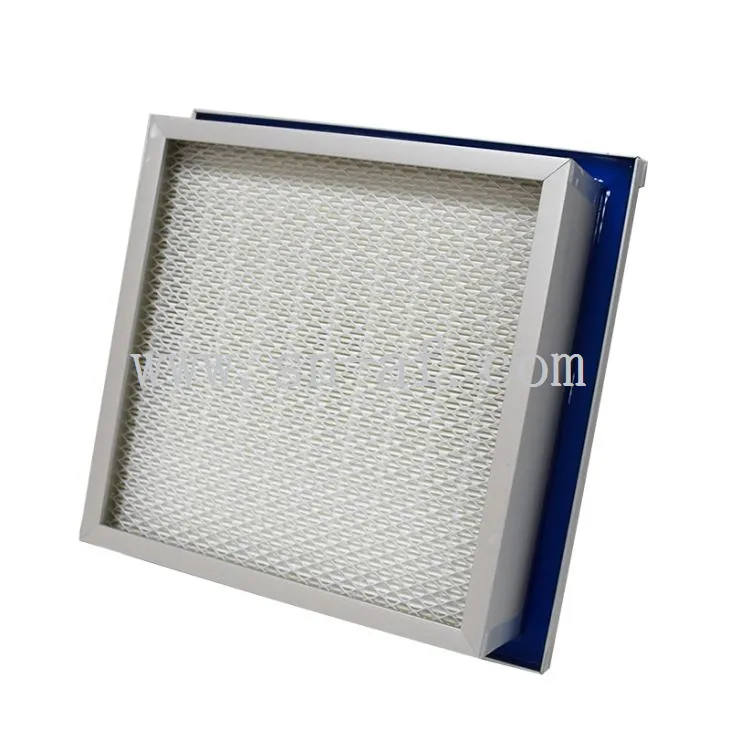

In addition to regular replacement, it is also important to keep the filter clean. Vacuuming the filter or gently tapping it to remove loose particles can help to extend its lifespan. However, it is important to note that HEPA filters should not be washed, as this can damage the filter fibers and reduce its effectiveness.
Conclusion
In conclusion, a HEPA filter can indeed remove pollen from indoor air. The large size of pollen particles makes them relatively easy to capture by HEPA filters, which are designed to trap particles as small as 0.3 microns. Real-world studies have shown that HEPA filters can significantly reduce pollen levels in indoor environments and improve the quality of life for allergy sufferers.
As a HEPA filter supplier, we offer a variety of high-quality filters that are specifically designed to remove pollen and other airborne particles. Whether you are looking for a filter for your home, office, or commercial space, we have the solution to meet your needs.
If you are interested in learning more about our HEPA filters or would like to discuss your specific requirements, please feel free to contact us. Our team of experts is ready to assist you in finding the right filter for your application and providing you with the best possible service.
References
- Journal of Allergy and Clinical Immunology. "Effect of HEPA air purifiers on indoor allergen levels and sleep quality in patients with allergic rhinitis."
- United States Department of Energy. "HEPA Filter Standards and Testing."