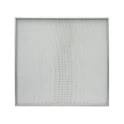
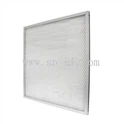
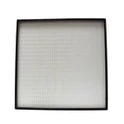
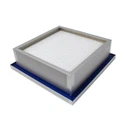
What is the Pressure Drop of U16 Mini - Pleat ULPA Filter?
As a supplier of U16 Mini - Pleat ULPA Filters, I often encounter inquiries from customers about the pressure drop of these filters. Understanding the pressure drop is crucial as it directly impacts the performance and efficiency of the filtration system. In this blog, I will delve into the concept of pressure drop in U16 Mini - Pleat ULPA Filters, its influencing factors, and its significance in practical applications.
Understanding Pressure Drop
Pressure drop, also known as differential pressure, refers to the difference in pressure between the upstream and downstream sides of a filter. When air or other fluids pass through a U16 Mini - Pleat ULPA Filter, they encounter resistance due to the filter media and its structure. This resistance causes a decrease in pressure from the inlet to the outlet of the filter, which is the pressure drop.
The pressure drop is typically measured in units such as pascals (Pa), inches of water column (in. WC), or millimeters of water column (mm WC). A lower pressure drop indicates that the filter allows air to pass through more easily, which is generally desirable as it reduces the energy consumption of the ventilation or filtration system. Conversely, a high pressure drop means that more energy is required to push the air through the filter, leading to increased operating costs.
Factors Affecting the Pressure Drop of U16 Mini - Pleat ULPA Filters
Filter Media
The filter media is the core component of a U16 Mini - Pleat ULPA Filter, and its properties have a significant impact on the pressure drop. ULPA (Ultra - Low Penetration Air) filters are designed to capture extremely fine particles, and the media used in U16 filters is highly efficient in particle removal. However, this high - efficiency media often has a dense structure, which can increase the resistance to air flow and result in a higher pressure drop.
The material of the filter media, its fiber diameter, and the porosity also play important roles. For example, filters with smaller fiber diameters can capture particles more effectively but may also cause a greater pressure drop. Additionally, the porosity of the media, which is the ratio of the void volume to the total volume of the media, affects how easily air can pass through. A lower porosity means less open space for air flow, leading to a higher pressure drop.

Pleat Design
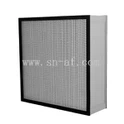
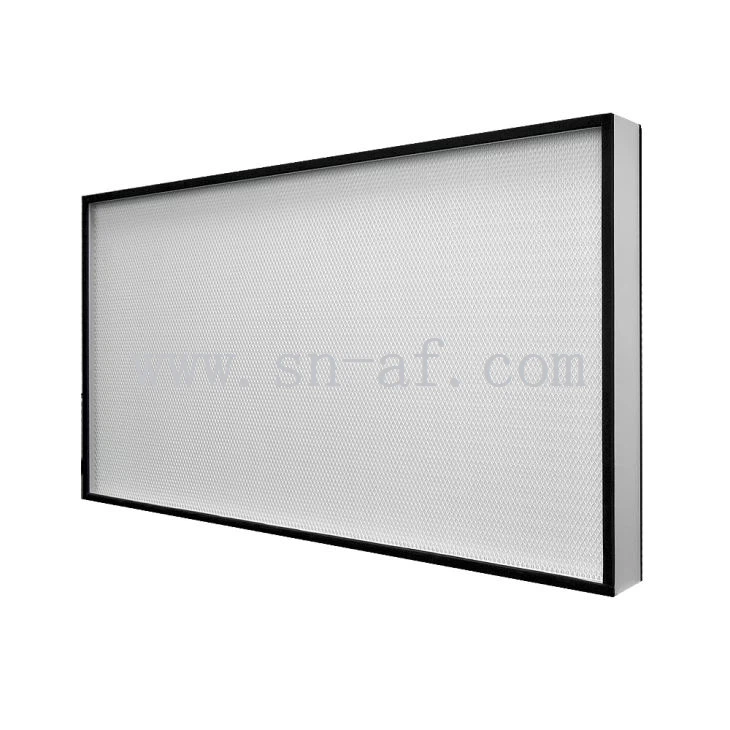
The pleat design of a U16 Mini - Pleat ULPA Filter is another important factor influencing the pressure drop. Mini - pleat filters are characterized by their closely spaced pleats, which increase the surface area of the filter media available for filtration. A larger surface area allows more air to come into contact with the media, reducing the velocity of the air passing through each individual pleat and thus decreasing the pressure drop.
However, the spacing between the pleats and the height of the pleats also matter. If the pleats are too closely spaced, the air may have difficulty flowing between them, causing an increase in pressure drop. On the other hand, if the pleats are too far apart, the effective filtration area may be reduced, and the overall performance of the filter may be compromised.
Airflow Rate
The airflow rate, which is the volume of air passing through the filter per unit of time, has a direct relationship with the pressure drop. As the airflow rate increases, the pressure drop across the filter also increases. This is because at higher airflow rates, the air has to overcome more resistance as it passes through the filter media and the pleats.
In practical applications, it is important to select a U16 Mini - Pleat ULPA Filter that is suitable for the expected airflow rate of the system. If the airflow rate is too high for the filter, the pressure drop will be excessive, leading to increased energy consumption and potentially damaging the filter. Conversely, if the airflow rate is too low, the filtration system may not be able to meet the required air quality standards.
Significance of Pressure Drop in Practical Applications
Energy Efficiency
In any ventilation or filtration system, energy efficiency is a major concern. The pressure drop across a U16 Mini - Pleat ULPA Filter affects the energy consumption of the system's fan or blower. A high pressure drop requires the fan to work harder to maintain the desired airflow rate, which increases the power consumption. By choosing a filter with a lower pressure drop, the energy consumption of the system can be significantly reduced, resulting in cost savings over the long term.
For example, in a large - scale cleanroom environment where continuous air filtration is required, the energy savings from using a low - pressure - drop U16 Mini - Pleat ULPA Filter can be substantial. These savings not only benefit the environment by reducing energy consumption but also improve the economic viability of the operation.
Filter Life
The pressure drop also has an impact on the filter life of a U16 Mini - Pleat ULPA Filter. As the filter captures particles over time, the particles accumulate on the surface of the filter media, gradually increasing the resistance to air flow and causing the pressure drop to rise. When the pressure drop reaches a certain level, the filter is considered to be at the end of its useful life and needs to be replaced.
By monitoring the pressure drop, operators can determine when it is time to replace the filter. A filter with a lower initial pressure drop will generally have a longer service life before reaching the maximum allowable pressure drop. This not only reduces the frequency of filter replacements but also minimizes the downtime associated with filter changes.
Comparing with Other ULPA Filters
When considering U16 Mini - Pleat ULPA Filters, it is also interesting to compare them with other types of ULPA filters, such as U17 Mini - Pleat ULPA Filter and U15 Mini - Pleat ULPA Filter. U17 filters have a higher efficiency in particle removal compared to U16 filters, which means they can capture even finer particles. However, this higher efficiency often comes at the cost of a higher pressure drop.
On the other hand, U15 filters have a slightly lower efficiency than U16 filters. They may have a lower pressure drop, but they may not be able to meet the same strict air quality requirements as U16 filters in applications where extremely high - purity air is needed. Therefore, the choice between U15, U16, and U17 filters depends on the specific requirements of the application, taking into account both the pressure drop and the filtration efficiency.
Importance of Selecting the Right U16 Mini - Pleat ULPA Filter
Selecting the right U16 Mini - Pleat ULPA Filter is crucial for ensuring the optimal performance of a ventilation or filtration system. A filter with an appropriate pressure drop can help to achieve a balance between energy efficiency and filtration performance. When choosing a filter, it is important to consider the specific requirements of the application, such as the required airflow rate, the level of air quality needed, and the available space for the filter.
As a supplier of U16 Mini - Pleat ULPA Filters, we offer a wide range of products with different pressure drop characteristics to meet the diverse needs of our customers. Our technical team can provide professional advice on filter selection based on your specific application requirements.
Conclusion
The pressure drop of a U16 Mini - Pleat ULPA Filter is a critical parameter that affects the performance, energy efficiency, and service life of a ventilation or filtration system. Understanding the factors that influence the pressure drop, such as the filter media, pleat design, and airflow rate, is essential for making informed decisions when selecting a filter.
If you are in need of U16 Mini - Pleat ULPA Filters or have any questions about pressure drop and filter selection, please feel free to contact us for further discussion and procurement. We are committed to providing high - quality products and professional services to meet your filtration needs.
References
- ASHRAE Handbook - HVAC Systems and Equipment. American Society of Heating, Refrigerating and Air - Conditioning Engineers.
- ISO 16890:2016 Air filters -- Determination of filtration performance. International Organization for Standardization.