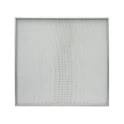
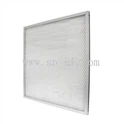
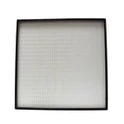
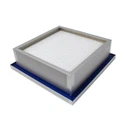
As a supplier of U15 Mini-Pleat ULPA Filters, I often encounter inquiries about the pressure drop of these essential air filtration components. In this blog post, I will delve into the concept of pressure drop, its significance for U15 Mini-Pleat ULPA Filters, and how it impacts the efficiency and performance of air filtration systems.
Understanding Pressure Drop
Pressure drop, also known as pressure loss, refers to the decrease in pressure that occurs as a fluid (in this case, air) flows through a filter. It is a critical parameter in air filtration systems because it directly affects the energy consumption, operating cost, and overall efficiency of the system.
When air passes through a filter, the filter media creates resistance to the airflow. This resistance causes a drop in pressure between the upstream (inlet) and downstream (outlet) sides of the filter. The greater the resistance, the higher the pressure drop. Pressure drop is typically measured in units of pressure, such as pascals (Pa), inches of water column (in. WC), or millimeters of water column (mm WC).

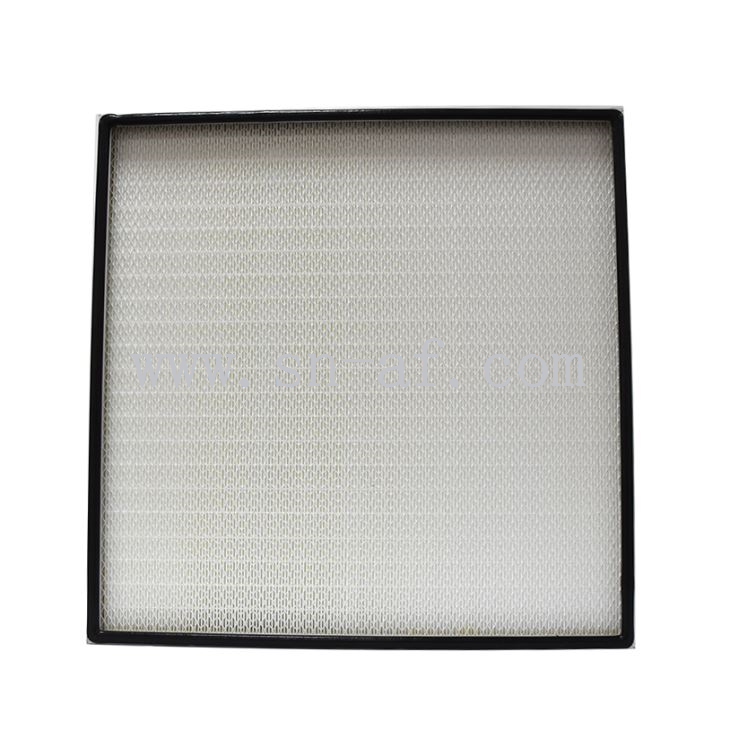
Significance of Pressure Drop in U15 Mini - Pleat ULPA Filters
U15 Mini-Pleat ULPA (Ultra-Low Penetration Air) filters are designed to remove ultra-fine particles from the air, including particles as small as 0.12 microns, with an efficiency of 99.9995%. These filters are commonly used in critical environments such as semiconductor manufacturing facilities, pharmaceutical cleanrooms, and hospitals, where high levels of air cleanliness are required.
The pressure drop of a U15 Mini-Pleat ULPA Filter has several important implications:
Energy Consumption
A higher pressure drop means that the air handling unit (AHU) or fan needs to work harder to push the air through the filter. This results in increased energy consumption and higher operating costs. In large-scale air filtration systems, even a small increase in pressure drop can lead to significant energy savings over time.
System Performance
Excessive pressure drop can also affect the performance of the air filtration system. If the pressure drop is too high, the airflow rate may decrease, leading to inadequate ventilation and potentially compromising the cleanliness of the environment. Additionally, high pressure drop can cause premature filter failure, as the filter media may become overloaded more quickly.
Filter Life
The pressure drop of a filter increases as it captures more particles. When the pressure drop reaches a certain level, the filter needs to be replaced. By monitoring the pressure drop, facility managers can determine the optimal time to replace the filter, ensuring that the system operates efficiently and effectively.
Factors Affecting the Pressure Drop of U15 Mini - Pleat ULPA Filters
Several factors can influence the pressure drop of U15 Mini-Pleat ULPA Filters:
Filter Media
The type and quality of the filter media play a significant role in determining the pressure drop. High-quality filter media with a low resistance to airflow will result in a lower pressure drop. Additionally, the thickness and density of the filter media can also affect the pressure drop.
Pleat Design
The pleat design of the filter, including the pleat height, width, and spacing, can impact the pressure drop. A more efficient pleat design can increase the surface area of the filter media, allowing more air to pass through the filter with less resistance.
Airflow Velocity
The velocity of the airflow passing through the filter also affects the pressure drop. Higher airflow velocities generally result in higher pressure drops. Therefore, it is important to select a filter that is suitable for the specific airflow rate of the system.
Particle Loading
As the filter captures more particles, the pressure drop increases. This is because the particles accumulate on the filter media, creating a barrier that restricts the airflow. Regular filter maintenance and replacement are essential to prevent excessive particle loading and maintain a low pressure drop.
Measuring and Monitoring Pressure Drop
To ensure the efficient operation of U15 Mini-Pleat ULPA Filters, it is important to measure and monitor the pressure drop regularly. This can be done using a pressure gauge or differential pressure sensor installed on the filter housing. The pressure drop readings can be used to determine the condition of the filter and to schedule maintenance and replacement as needed.
In addition to regular pressure drop measurements, it is also recommended to establish a baseline pressure drop for the filter when it is new. This baseline can be used as a reference point to compare future pressure drop readings and to detect any significant changes in the filter's performance.
Comparing Pressure Drop in Different ULPA Filters
When selecting a ULPA filter for a specific application, it is important to consider the pressure drop in addition to the filtration efficiency. U17 Mini-Pleat ULPA Filter and U16 Mini-Pleat ULPA Filter are also popular choices in high - performance air filtration systems.
U17 filters offer a higher level of filtration efficiency than U15 and U16 filters, but they typically have a higher pressure drop. On the other hand, U16 filters provide a good balance between filtration efficiency and pressure drop. The U15 Mini-Pleat ULPA Filter is a versatile option that offers a high level of filtration performance with a relatively low pressure drop, making it suitable for a wide range of applications.
How Our U15 Mini - Pleat ULPA Filters Excel in Pressure Drop Management
At our company, we are committed to producing U15 Mini-Pleat ULPA Filters that offer excellent pressure drop characteristics. Our filters are designed with advanced pleat technology to maximize the surface area of the filter media while minimizing the resistance to airflow. This results in a lower pressure drop and reduced energy consumption.
We use high - quality filter media that is carefully selected for its low resistance and high filtration efficiency. Our manufacturing process ensures consistent quality and performance, and we conduct rigorous testing to ensure that each filter meets or exceeds the industry standards.
Contact Us for Your U15 Mini - Pleat ULPA Filter Needs
If you are in the market for U15 Mini - Pleat ULPA Filters or have questions about pressure drop and air filtration systems, we are here to help. Our team of experts can provide you with detailed information, technical support, and customized solutions to meet your specific requirements.
Contact us today to discuss your project and learn more about how our U15 Mini - Pleat ULPA Filters can improve the efficiency and performance of your air filtration system.
References
- ASHRAE Handbook - HVAC Systems and Equipment. This comprehensive handbook provides in - depth information on air filtration systems, including pressure drop calculations and performance evaluations.
- ISO 29463:2011. This international standard specifically focuses on air filters for general ventilation and provides guidelines for testing and evaluating the performance of ULPA filters, including pressure drop.
- Manufacturers' technical documentation. The technical literature provided by filter manufacturers often includes detailed information on the pressure drop characteristics of their products, as well as best practices for installation, operation, and maintenance.