In the realm of air filtration, understanding the differences between various filter types is crucial for making informed decisions that meet specific air quality needs. As a V - Bank Filter supplier, I've witnessed firsthand the diverse requirements of customers and the importance of choosing the right filter. In this blog, we'll delve into the differences between V - Bank Filters and panel filters, exploring their design, performance, applications, and more.
Design and Structure
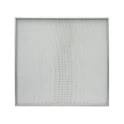
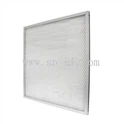
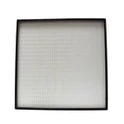
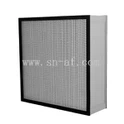
One of the most apparent differences between V - Bank Filters and panel filters lies in their design and structure. Panel filters are typically flat, rectangular filters with a simple frame that holds the filter media in place. The filter media is usually arranged in a single layer or a series of pleats, providing a relatively large surface area for air to pass through. This straightforward design makes panel filters easy to install and replace, and they are commonly used in HVAC systems for basic air filtration.
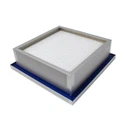
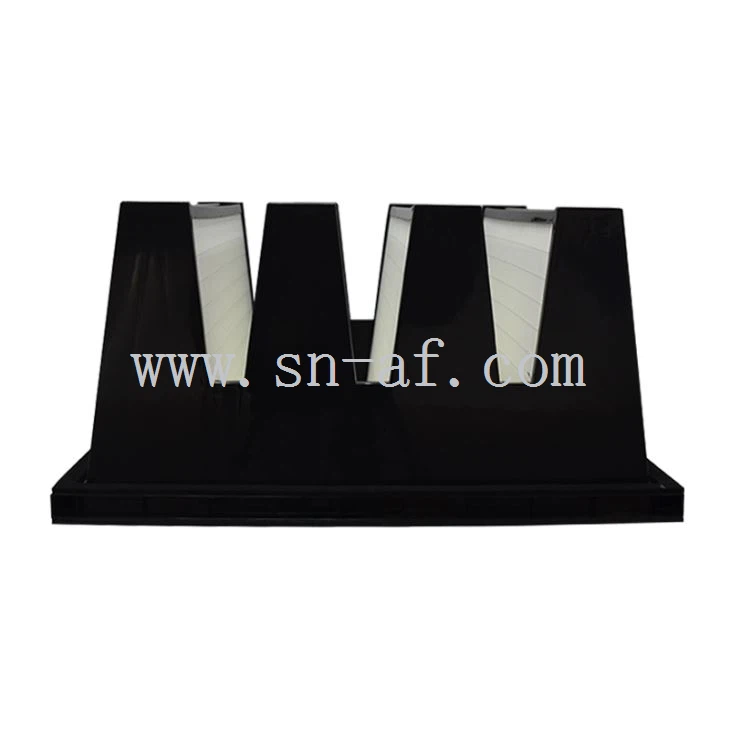
On the other hand, V - Bank Filters have a more complex and unique design. As the name suggests, they are shaped like a "V," with multiple panels of filter media arranged in a banked configuration. This design allows for a much larger surface area of filter media to be packed into a smaller space compared to panel filters. The V - shape also helps to direct the airflow evenly across the filter media, maximizing its efficiency. For example, a Mini Pleat V - Bank Filter Mini Pleat V - Bank Filter takes advantage of this design with its densely packed mini pleats, providing an even greater surface area for enhanced filtration.
Filtration Efficiency
Filtration efficiency is a critical factor when choosing an air filter, and it is where V - Bank Filters and panel filters often differ significantly. Panel filters are generally designed for basic air filtration, removing larger particles such as dust, pollen, and lint from the air. They typically have a relatively low Minimum Efficiency Reporting Value (MERV) rating, usually ranging from 1 to 8. While they can effectively improve indoor air quality to some extent, they may not be sufficient for environments that require high - level filtration.
In contrast, V - Bank Filters are engineered for high - efficiency filtration. They are capable of capturing a much wider range of particle sizes, including smaller and more harmful particles such as bacteria, viruses, and fine dust. V - Bank Filters often have a higher MERV rating, typically ranging from 13 to 16 or even higher in some cases. This makes them ideal for applications where strict air quality standards must be met, such as hospitals, laboratories, and cleanrooms.
Dust Holding Capacity
Another important difference between the two filter types is their dust holding capacity. Dust holding capacity refers to the amount of dust and debris that a filter can collect before it needs to be replaced. Panel filters, due to their relatively simple design and lower surface area, have a limited dust holding capacity. As they collect dust over time, the pressure drop across the filter increases, which can reduce the airflow in the HVAC system and increase energy consumption. This means that panel filters may need to be replaced more frequently, especially in high - dust environments.
V - Bank Filters, with their larger surface area and more efficient design, have a significantly higher dust holding capacity. The V - shape design allows the filter to distribute the dust more evenly across the filter media, preventing premature clogging. This results in a longer service life and less frequent filter replacements, which can save both time and money in the long run. For example, in industrial settings where there is a high volume of dust and debris in the air, V - Bank Filters can maintain their performance for a much longer period compared to panel filters.
Airflow Resistance
Airflow resistance, also known as pressure drop, is an important consideration in air filtration systems. A high pressure drop can reduce the efficiency of the HVAC system, increase energy consumption, and potentially cause damage to the system components. Panel filters generally have a lower airflow resistance compared to V - Bank Filters, especially when they are clean. This is because their simple design allows air to pass through the filter more easily. However, as they collect dust and become clogged, the pressure drop across the panel filter can increase rapidly.
V - Bank Filters, on the other hand, may have a slightly higher initial pressure drop due to their more complex design and higher density of filter media. However, their ability to distribute dust evenly and their larger dust holding capacity means that the pressure drop increases at a much slower rate over time. In the long term, V - Bank Filters can maintain a more stable airflow and lower energy consumption compared to panel filters, especially in applications where the filter needs to operate for extended periods.
Applications
The differences in design, filtration efficiency, dust holding capacity, and airflow resistance between V - Bank Filters and panel filters make them suitable for different applications. Panel filters are commonly used in residential and commercial HVAC systems for general air filtration. They are cost - effective and easy to install, making them a popular choice for basic air quality improvement. They are also used in some light industrial applications where the air quality requirements are not extremely high.
V - Bank Filters, with their high - efficiency filtration and large dust holding capacity, are used in a wide range of critical applications. In the healthcare industry, they are essential for maintaining clean air in operating rooms, isolation wards, and intensive care units to prevent the spread of infections. In laboratories and cleanrooms, V - Bank Filters are used to ensure a contamination - free environment for sensitive research and manufacturing processes. They are also widely used in industrial settings such as semiconductor manufacturing, food processing, and pharmaceutical production, where strict air quality control is necessary.
Cost Considerations
When it comes to cost, panel filters are generally more affordable upfront compared to V - Bank Filters. Their simple design and lower manufacturing costs make them a budget - friendly option for basic air filtration needs. However, it's important to consider the long - term costs. As mentioned earlier, panel filters have a lower dust holding capacity and may need to be replaced more frequently, which can add up over time.
V - Bank Filters, while more expensive initially, can offer significant cost savings in the long run. Their longer service life and lower energy consumption due to stable airflow can offset the higher upfront cost. Additionally, in applications where high - level filtration is required, the cost of not using a V - Bank Filter, such as potential product contamination or health risks, can far outweigh the cost of the filter itself.
Installation and Maintenance
Installation and maintenance are also factors that differ between V - Bank Filters and panel filters. Panel filters are relatively easy to install, as they can simply be inserted into a filter rack or frame in the HVAC system. They are also easy to replace, usually requiring only basic tools. However, due to their shorter service life, more frequent replacements are needed, which can be time - consuming.
V - Bank Filters, on the other hand, may require more careful installation due to their larger size and more complex design. They often need to be installed by trained professionals to ensure proper sealing and alignment. However, because of their longer service life, maintenance is less frequent. When it comes time to replace a V - Bank Filter, the process is more involved but is offset by the reduced frequency of replacements.
In conclusion, V - Bank Filters and panel filters have distinct differences in design, filtration efficiency, dust holding capacity, airflow resistance, applications, cost, and installation and maintenance. As a V - Bank Filter supplier, I understand that choosing the right filter depends on the specific needs of your application. If you require high - efficiency filtration, long - term performance, and are willing to invest in a more advanced solution, V - Bank Filters are the way to go. On the other hand, if you have basic air filtration needs and are on a tight budget, panel filters may be a suitable choice.

If you're interested in learning more about V - Bank Filters or need help choosing the right filter for your application, I encourage you to reach out. We can discuss your specific requirements and provide you with the best filtration solution for your needs. Let's work together to ensure the highest level of air quality in your environment.
References
- ASHRAE (American Society of Heating, Refrigerating and Air - Conditioning Engineers). "ASHRAE Standard 52.2 - 2017: Method of Testing General Ventilation Air - Cleaning Devices for Removal Efficiency by Particle Size."
- US Environmental Protection Agency. "Indoor Air Quality: Air Filters."