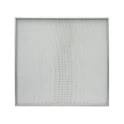
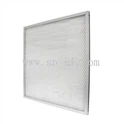
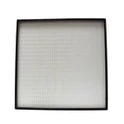
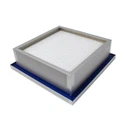
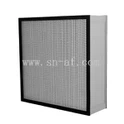
Hey there! As a supplier of Grease Metal Panels Filters, I've seen firsthand the benefits these filters bring to the table. They're tough, they're durable, and they do a pretty good job of capturing grease and other particles. But like anything in life, they're not perfect. In this blog post, I'm gonna break down some of the disadvantages of using a Grease Metal Panels Filter.
1. Limited Filtration Efficiency
One of the main drawbacks of Grease Metal Panels Filters is their limited filtration efficiency, especially when it comes to capturing smaller particles. These filters are typically designed to trap larger grease droplets and debris, but they might struggle with finer particles. For example, if you're dealing with a kitchen environment where there are a lot of microscopic oil mist particles, a Grease Metal Panels Filter might not be able to catch them all.
In comparison, Synthetic Fiber Flat Panel Filter can offer higher filtration efficiency for finer particles. These synthetic fiber filters are engineered with a more intricate fiber structure that can capture smaller particles more effectively. So, if your application requires a high level of filtration for fine particles, the Grease Metal Panels Filter might fall short.
2. Maintenance Requirements
Grease Metal Panels Filters require regular maintenance to keep them working properly. Over time, the metal panels can become clogged with grease and other debris, which can reduce the filter's effectiveness and even cause airflow problems. When this happens, you'll need to clean or replace the filter.
Cleaning a Grease Metal Panels Filter can be a bit of a hassle. You usually have to remove the filter from its housing, soak it in a cleaning solution, and then scrub it to get rid of all the built-up grease. This process can be time-consuming and labor-intensive, especially if you have multiple filters to clean.
On the other hand, Synthetic Fiber Panel Pre Air Filter G4 are often easier to maintain. Some synthetic fiber filters are disposable, which means you can simply replace them when they get dirty. This can save you a lot of time and effort in the long run.
3. Cost
Another disadvantage of Grease Metal Panels Filters is their cost. These filters are typically more expensive than some other types of filters, especially when you consider the initial purchase price as well as the long-term maintenance costs.
The metal used in Grease Metal Panels Filters is often a high-quality, corrosion-resistant material, which drives up the cost. Additionally, as mentioned earlier, the maintenance requirements can add to the overall expense. You'll need to factor in the cost of cleaning solutions, replacement parts, and labor when calculating the total cost of using a Grease Metal Panels Filter.
In contrast, V-form Extended Surface Panel Filter can be a more cost-effective option. These filters are designed with an extended surface area, which allows them to capture more particles without getting clogged as quickly. This means less frequent filter replacements and lower maintenance costs over time.
4. Weight and Size
Grease Metal Panels Filters can be quite heavy and bulky, which can make them difficult to install and handle. This is especially true if you're working in a tight space or if you need to install the filters in a location that's hard to reach.
The weight of the metal panels can also put additional stress on the filter housing and the supporting structure. This can lead to premature wear and tear, and in some cases, it might even cause the housing to fail.
Some other types of filters, such as the synthetic fiber filters mentioned earlier, are generally lighter and more compact. This makes them easier to install and handle, and they put less stress on the supporting structure.


5. Corrosion and Rust
If Grease Metal Panels Filters are exposed to moisture or harsh chemicals, they can be prone to corrosion and rust. This can not only damage the filter itself but also reduce its effectiveness. Rust and corrosion can cause the metal panels to break down, which can lead to holes and gaps in the filter. These holes and gaps can allow grease and other particles to pass through the filter, reducing its filtration efficiency.
To prevent corrosion and rust, you'll need to take extra precautions when using Grease Metal Panels Filters. This might include using a protective coating on the metal panels, ensuring proper ventilation to prevent moisture buildup, and avoiding exposure to harsh chemicals.
Conclusion
So, there you have it – some of the main disadvantages of using a Grease Metal Panels Filter. While these filters do have their place in certain applications, it's important to be aware of their limitations. Depending on your specific needs and requirements, you might want to consider other types of filters, such as the Synthetic Fiber Flat Panel Filter, Synthetic Fiber Panel Pre Air Filter G4, or V-form Extended Surface Panel Filter.
If you're still unsure which type of filter is right for you, or if you have any questions about our Grease Metal Panels Filters or other filter products, don't hesitate to reach out. We're here to help you find the best filtration solution for your needs. Contact us to start a procurement discussion and let's work together to find the perfect filter for your application.
References
- "Filtration Technology Handbook"
- Industry reports on air filtration systems