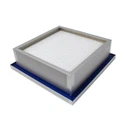
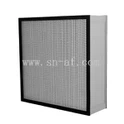
As a trusted supplier of U17 Mini - Pleat ULPA Filters, I am often asked about the dimensions of these high - performance filtration products. In this blog post, I'll delve into the various aspects of the dimensions of U17 Mini - Pleat ULPA Filters, including standard sizes, custom options, and how these dimensions impact the filter's performance.
Standard Dimensions
U17 Mini - Pleat ULPA Filters come in a range of standard dimensions to meet the diverse needs of different industries and applications. These standard sizes are designed based on common industry requirements and are widely used in cleanrooms, semiconductor manufacturing, and other high - precision environments.
The most common width dimensions for U17 Mini - Pleat ULPA Filters typically range from 200mm to 1200mm. For example, a width of 610mm is quite popular as it is a standard size that fits well into many existing HVAC systems and cleanroom setups. A filter with a width of 610mm can provide a good balance between airflow capacity and space utilization.
In terms of height, the standard range is usually from 200mm to 900mm. A height of 305mm is frequently chosen because it allows for an optimal pleat configuration and sufficient filtration area. This height dimension ensures that the filter can capture a large amount of particulate matter while maintaining a reasonable pressure drop.
The depth of U17 Mini - Pleat ULPA Filters is another crucial dimension. Standard depths generally fall between 50mm and 300mm. A depth of 150mm is a common choice as it provides a good combination of pleat density and airflow resistance. A deeper filter can accommodate more pleats, which increases the filtration area and thus enhances the filter's efficiency in capturing ultrafine particles.
Custom Dimensions
While standard dimensions are widely available, we understand that some customers may have specific requirements that cannot be met by off - the - shelf products. That's why we offer custom - sized U17 Mini - Pleat ULPA Filters.
Custom dimensions can be tailored to fit unique equipment or installation spaces. For instance, in some specialized cleanroom projects, the available space for filter installation may be limited. In such cases, we can manufacture filters with non - standard widths, heights, or depths to ensure a perfect fit. We have the technical expertise and advanced manufacturing capabilities to produce filters with precise custom dimensions, meeting the strictest tolerances.
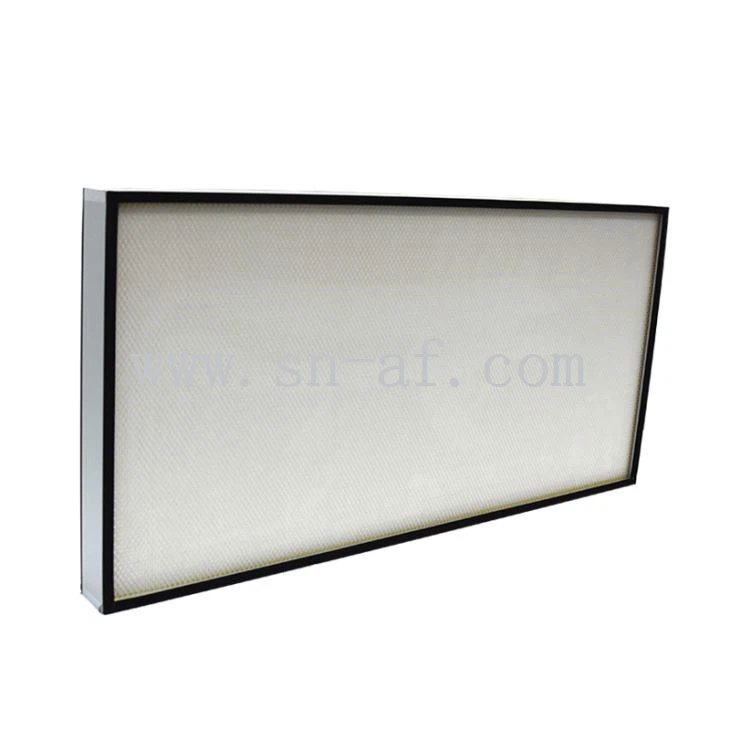
When it comes to custom dimensions, it's important to consider the impact on the filter's performance. Changing the dimensions can affect the airflow distribution, pleat spacing, and overall filtration efficiency. Our team of engineers works closely with customers to analyze their specific needs and design custom filters that not only fit the space but also maintain high - level performance.
Impact of Dimensions on Performance
The dimensions of U17 Mini - Pleat ULPA Filters have a significant impact on their performance. Let's take a closer look at how different dimensions affect key performance indicators.
Filtration Area
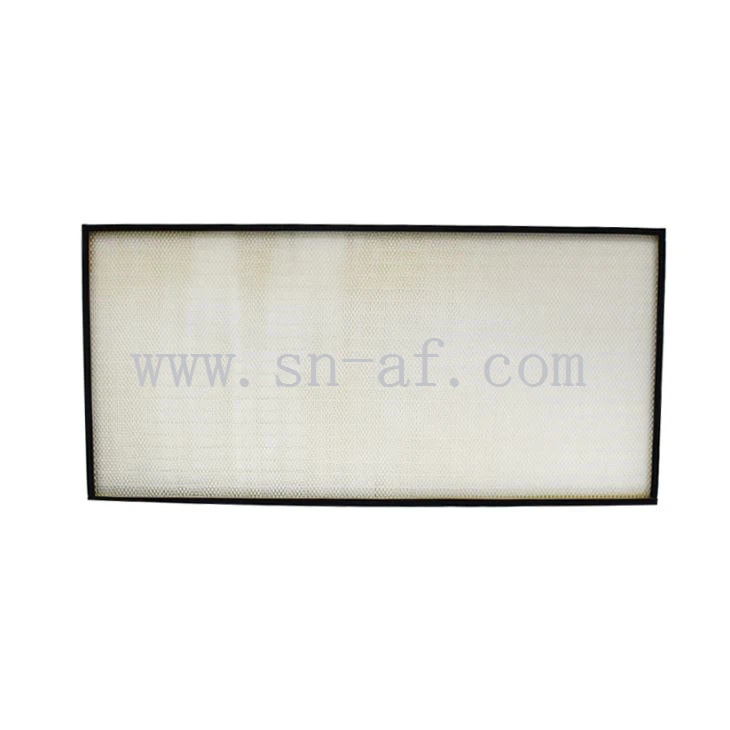
The width, height, and depth of the filter all contribute to the total filtration area. A larger filtration area means more surface area for the air to pass through, which allows for a greater volume of air to be filtered and reduces the pressure drop across the filter. For example, increasing the height or width of the filter can directly increase the filtration area, while a deeper filter can also provide more space for pleats, further expanding the filtration surface.
Airflow Capacity
The dimensions of the filter also influence its airflow capacity. A filter with appropriate width and height dimensions can ensure smooth airflow distribution. If the filter is too narrow or too short, it may cause uneven airflow, leading to hotspots or areas with poor filtration. On the other hand, an overly large filter may not be fully utilized, resulting in inefficient operation. The depth of the filter also plays a role in airflow capacity. A deeper filter with well - designed pleats can maintain a consistent airflow rate while capturing particles effectively.
Particle Capture Efficiency
The pleat spacing, which is related to the filter's dimensions, affects the particle capture efficiency. A proper pleat spacing ensures that particles have enough time to come into contact with the filter media and be captured. If the pleats are too close together, it may increase the pressure drop and reduce the airflow, while if they are too far apart, some particles may pass through without being captured. Our engineers carefully design the pleat configuration based on the filter's dimensions to achieve the highest possible particle capture efficiency for U17 Mini - Pleat ULPA Filters.
Comparison with Other Mini - Pleat ULPA Filters
In the market, there are also U16 Mini - Pleat ULPA Filter and U15 Mini - Pleat ULPA Filter. While these filters share some similarities in terms of the mini - pleat design, the U17 Mini - Pleat ULPA Filter offers higher filtration efficiency.
The dimensions of U17 Mini - Pleat ULPA Filters are often optimized to achieve the best performance at the U17 level. Compared to U16 and U15 filters, U17 filters may have different pleat densities and overall dimensions to meet the more stringent requirements for capturing ultrafine particles. For example, to achieve the higher efficiency of U17, the pleat spacing may be more precisely controlled, and the filter may have a larger filtration area relative to its size.
Conclusion
In conclusion, the dimensions of U17 Mini - Pleat ULPA Filters are carefully designed to meet the high - performance requirements of various industries. Whether you need a standard - sized filter or a custom - made one, we can provide you with the right solution. Our U17 Mini - Pleat ULPA Filter offers excellent filtration efficiency, reliable performance, and a wide range of dimension options.
If you are interested in purchasing U17 Mini - Pleat ULPA Filters or have any questions about their dimensions and performance, please feel free to contact us. We are more than happy to assist you in finding the perfect filtration solution for your needs.
References
- ASHRAE (American Society of Heating, Refrigerating and Air - Conditioning Engineers) Standards on Air Filtration
- ISO (International Organization for Standardization) Cleanroom Standards
- Technical Documentation of ULPA Filter Manufacturing