Hey there! As a supplier of bag filters for HVAC systems, I've seen firsthand how crucial it is to measure the efficiency of these filters accurately. A well - functioning bag filter can significantly improve the air quality in a building, reduce energy consumption, and extend the lifespan of the HVAC system. In this blog, I'll share some tips on how to measure the efficiency of a bag filter in an HVAC system.
Why Measuring Filter Efficiency Matters
Before we dive into the measurement methods, let's talk about why it's so important to measure the efficiency of bag filters. First off, air quality is a big deal. In commercial and residential buildings, people spend a lot of time indoors. If the air is filled with dust, pollen, mold spores, and other contaminants, it can lead to various health issues, like allergies, asthma, and respiratory infections. A high - efficiency bag filter can trap these particles, ensuring that the air circulating in the building is clean and healthy.
Secondly, energy efficiency is another key factor. When a bag filter is clogged or not working efficiently, the HVAC system has to work harder to push air through it. This means higher energy consumption and increased utility bills. By regularly measuring the filter efficiency, you can identify when it's time to replace or clean the filter, thus saving energy and money in the long run.
Measuring Filter Efficiency: Key Metrics
There are several metrics used to measure the efficiency of a bag filter in an HVAC system. The most common ones are the Minimum Efficiency Reporting Value (MERV), the Filtering Efficiency Rating (FPR), and the Dust Spot Efficiency.


MERV
MERV is a standard developed by the American Society of Heating, Refrigerating and Air - Conditioning Engineers (ASHRAE). It rates the filter's ability to capture particles in the size range of 0.3 to 10 microns. The higher the MERV rating, the more efficient the filter is at capturing small particles. For example, a MERV 1 - 4 filter is good at capturing large particles like dust and lint, while a MERV 17 - 20 filter can capture very small particles such as viruses and bacteria.
To determine the MERV rating of a bag filter, you can use a particle counter. This device measures the number of particles of different sizes in the air before and after it passes through the filter. By comparing these two measurements, you can calculate the filter's efficiency for each particle size range and then assign a MERV rating accordingly.
FPR
The FPR is a rating system developed by The Home Depot. It's a bit more consumer - friendly than MERV. FPR rates filters on a scale of 1 to 10, with 1 being the least efficient and 10 being the most efficient. FPR takes into account the filter's ability to capture particles of various sizes, as well as its airflow resistance. A filter with a high FPR can capture more particles while still allowing sufficient airflow through the HVAC system.
You can estimate the FPR of a bag filter by looking at its physical characteristics, such as the thickness of the filter media and the number of pleats. Thicker media and more pleats generally indicate a higher FPR. However, for a more accurate measurement, you can use a pressure gauge to measure the pressure drop across the filter. A higher pressure drop usually means a more efficient filter, but it also means more resistance to airflow.
Dust Spot Efficiency
Dust spot efficiency measures the filter's ability to capture a specific type of dust, usually a fine test dust. This method involves weighing a filter before and after it has been exposed to a controlled amount of dust. The difference in weight represents the amount of dust captured by the filter. The dust spot efficiency is then calculated as the percentage of the initial dust that the filter has captured.
This method is useful for comparing the performance of different filters under the same conditions. However, it doesn't take into account the filter's performance with other types of particles or its long - term efficiency.
Our Bag Filters: High - Efficiency Options
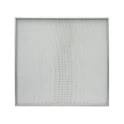
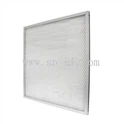
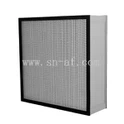
As a supplier, we offer a range of bag filters for HVAC systems that are designed to meet different efficiency requirements. For example, our Pleating HEPA Air Filter is a high - performance filter that can capture up to 99.97% of particles as small as 0.3 microns. It's ideal for applications where high - quality air filtration is required, such as hospitals, laboratories, and clean rooms.
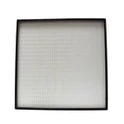
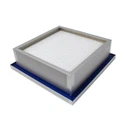
Our Mini Pleat V Bank HEPA Air Filter is another great option. The mini - pleat design provides a large surface area for filtration, which increases the filter's efficiency and lifespan. It's suitable for commercial and industrial HVAC systems that need to handle a high volume of air.
If you're looking for a more cost - effective solution, our Glass Fiber Bag Air Filter for Condition is a good choice. It's made of high - quality glass fiber media that can effectively capture dust and other contaminants. It has a relatively high MERV rating and is easy to install and maintain.
Regular Maintenance and Monitoring
Measuring the efficiency of a bag filter is not a one - time thing. It's important to regularly monitor the filter's performance to ensure that it's working at its best. You can set up a maintenance schedule to check the filter's condition, measure its efficiency, and replace it when necessary.
During the maintenance process, you should also clean the filter housing and the surrounding area to prevent the buildup of dust and debris. This can help improve the overall performance of the HVAC system and extend the life of the filter.
Conclusion
Measuring the efficiency of a bag filter in an HVAC system is essential for maintaining good air quality, saving energy, and prolonging the life of the system. By using metrics like MERV, FPR, and dust spot efficiency, you can accurately assess the filter's performance. And if you're in the market for high - quality bag filters, we've got you covered with our wide range of products.
If you're interested in learning more about our bag filters or have any questions about filter efficiency, don't hesitate to reach out. We're here to help you find the best solution for your HVAC system. Whether you're a building owner, a facility manager, or an HVAC contractor, we can provide you with the right filters and expert advice. Contact us today to start a procurement discussion and take your HVAC system's air filtration to the next level.
References
- American Society of Heating, Refrigerating and Air - Conditioning Engineers (ASHRAE). ASHRAE Standard 52.2 - 2017.
- The Home Depot. FPR Rating System.