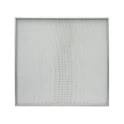
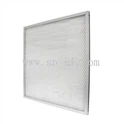
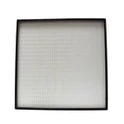
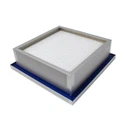
Hey there, fellow filtration enthusiasts! I'm part of a V-Bank Filter supplier team, and today I wanna dive deep into a pretty crucial question: How does the thickness of the filter media in a V-Bank Filter affect its performance?
Let's start by getting a basic understanding of V-Bank Filters. These bad boys are used in a whole bunch of places, from industrial settings to commercial HVAC systems. They're designed to capture all sorts of particulate matter, keeping the air clean and fresh. And the filter media is the heart and soul of these filters. It's what actually traps those pesky particles.
Now, when it comes to the thickness of the filter media, it can have a big impact on several aspects of a V-Bank Filter's performance.
Efficiency
One of the first things we notice is the effect on filtration efficiency. In general, thicker filter media tends to offer higher efficiency. You see, a thicker layer of media gives those particles more chances to get trapped. It's like having a longer obstacle course for the particles. As the air passes through the thicker media, there are more fibers or materials that can catch the particles.
For example, let's say we're dealing with a standard air filter in a commercial building. A V-Bank Filter with a thinner filter media might let some smaller particles slip through. But if we increase the thickness of that media, the filter can capture a much higher percentage of those tiny particles. This is super important in places where air quality is a top priority, like hospitals or research labs. They need to keep that air as clean as possible to protect patients, researchers, and sensitive equipment.
But it's not all roses. There's a trade-off here. As the filter media gets thicker, the resistance to air flow also goes up. This means that more energy is needed to push the air through the filter. In an HVAC system, this can lead to higher energy bills. So, while thicker media can boost efficiency, we've got to balance that with the cost of running the system.
Dust Holding Capacity
Another key performance factor is the dust holding capacity. This is basically how much dust and dirt the filter can hold before it needs to be replaced. Thicker filter media generally has a higher dust holding capacity.
Think of it like a sponge. A thicker sponge can soak up more water than a thin one. Similarly, a thicker filter media can hold more particulate matter. When the filter has a higher dust holding capacity, it can last longer between replacements. This is great for businesses because it means less downtime for filter changes and lower maintenance costs.
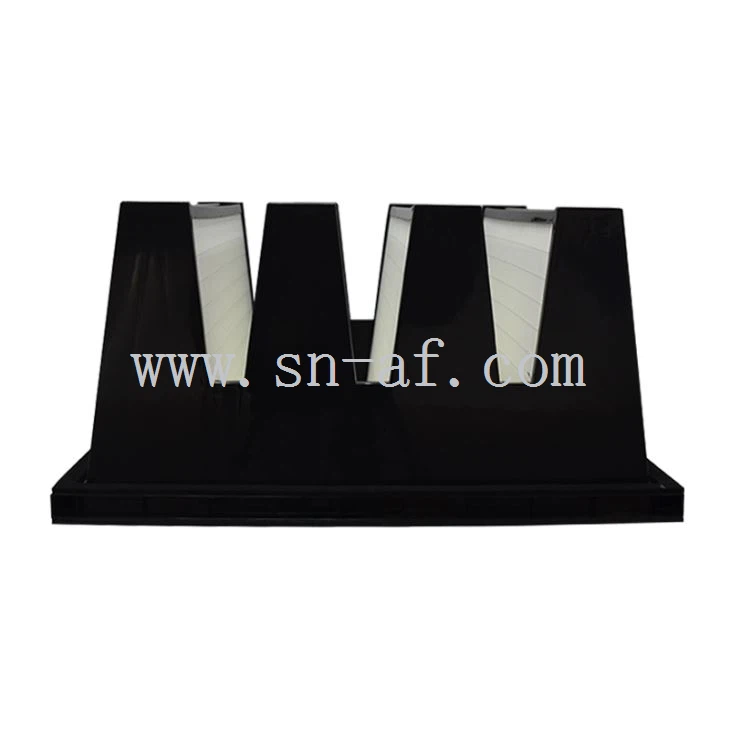
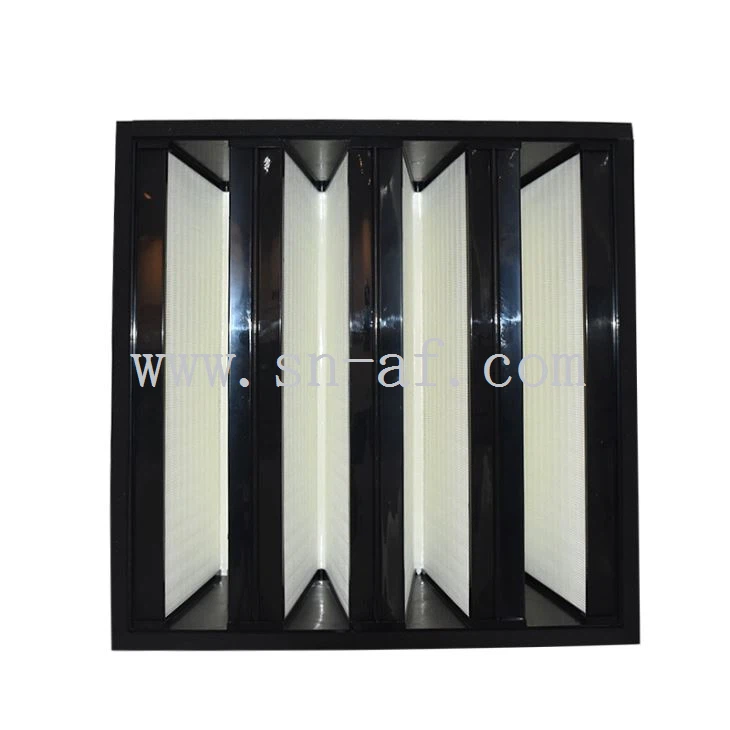
In an industrial environment, where there's a lot of dust and debris floating around, a V-Bank Filter with thick filter media can really shine. It can keep working effectively for a longer period, reducing the hassle of frequent filter replacements. But again, we've got to consider the air flow resistance. As the filter gets clogged with more dust, the resistance will increase even more. So, we still need to keep an eye on that air flow and make sure it doesn't cause too many problems for the system.
Life Span
The life span of the filter is also affected by the thickness of the filter media. A filter with thicker media generally has a longer life span because of its higher dust holding capacity. It can withstand more dust and dirt before it reaches the end of its useful life.
In a commercial air handling unit, a V-Bank Filter with thin filter media might need to be replaced every few months. But if we use a filter with thicker media, it could last six months or even a year. This not only saves money on filter replacements but also reduces the environmental impact of throwing away all those used filters.
However, we've got to remember that the environment plays a big role here too. In a really dirty environment, even a filter with thick media might need to be replaced more often. And if the system is running constantly at high speed, the filter will also wear out faster.
Air Flow and Resistance
As I mentioned earlier, the thickness of the filter media affects air flow and resistance. Thinner media allows air to flow through more easily, which means less resistance. This is good for energy efficiency because the HVAC system doesn't have to work as hard to push the air through the filter.
But on the flip side, thinner media might not be as effective at capturing particles. So, we need to find that sweet spot. In some cases, we can use a combination of different thicknesses of filter media in a single V-Bank Filter. This way, we can get the benefits of both high efficiency and good air flow.
For example, we could have a thin layer of media on the upstream side of the filter to capture the larger particles first. Then, a thicker layer on the downstream side can capture the smaller particles. This setup can help balance efficiency, air flow, and dust holding capacity.
Choosing the Right Thickness
So, how do we decide on the right thickness of filter media for a V-Bank Filter? Well, it all depends on the specific application.
If air quality is the number one concern and energy costs are less of an issue, we'll probably want to go with a thicker filter media. This will give us the highest possible efficiency and dust holding capacity. On the other hand, if energy efficiency is a major factor, we might have to settle for a thinner media.
It's also important to consider the type of particles we're trying to capture. If the particles are mostly large, a thinner media might work just fine. But if we're dealing with a lot of small particles, a thicker media will be more effective.
We can also use our experience as a V-Bank Filter supplier to help customers make these decisions. We've seen firsthand how different thicknesses of filter media perform in various settings. We can analyze the customer's specific needs and recommend the best filter for their situation.
The Role of Mini Pleat V-Bank Filter
One option we often recommend is the Mini Pleat V-Bank Filter. These filters use a special design with small pleats to maximize the surface area of the filter media. This means that even with a relatively thin filter media, they can achieve high efficiency and good dust holding capacity.
The mini pleat design allows the filter to capture more particles without increasing the resistance to air flow too much. This makes them a great choice for many applications where both air quality and energy efficiency are important. They offer a good balance between performance and cost.
So, if you're in the market for a V-Bank Filter, I'd definitely check out the Mini Pleat V-Bank Filter. It could be the perfect solution for your needs.
Conclusion
In conclusion, the thickness of the filter media in a V-Bank Filter has a significant impact on its performance. Thicker media can boost efficiency and dust holding capacity, but it also increases air flow resistance and energy consumption. Thinner media offers better air flow but might not be as effective at capturing particles.
As a V-Bank Filter supplier, our goal is to help you find the right balance. We want to provide you with a filter that meets your specific needs in terms of air quality, energy efficiency, and cost. Whether you're looking for a filter for your hospital, factory, or office building, we've got the expertise to guide you.
If you're interested in learning more about our V-Bank Filters or have any questions about how the filter media thickness affects performance, don't hesitate to get in touch. We'd love to have a chat and see how we can help you improve your air quality while keeping costs under control. Let's work together to find the perfect filter solution for your business.
References
- Compilation of industry whitepapers on HVAC filtration.
- Research studies on air filter performance factors.