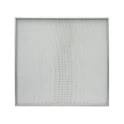
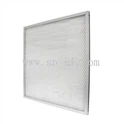
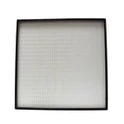
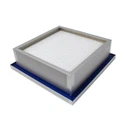
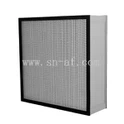
The high-efficiency particulate air (HEPA) filter is a critical component in many air purification systems, and the separator HEPA filter, in particular, plays a significant role in various applications. As a Separator HEPA Filter supplier, I have witnessed firsthand how the quality of these filters can have a profound impact on their performance. In this blog post, I will delve into the relationship between the quality of a Separator HEPA Filter and its performance, exploring the key factors that contribute to both.
The Basics of Separator HEPA Filters
Before we discuss the impact of quality on performance, it's essential to understand what a Separator HEPA Filter is. A Separator HEPA Filter is designed to remove at least 99.97% of particles that are 0.3 microns in diameter from the air that passes through it. The "separator" in its name refers to the material used to separate the pleats of the filter media. This separation is crucial as it allows for a larger surface area of the filter media to be exposed to the air, increasing the filter's efficiency.
Key Quality Factors Affecting Performance
Filter Media Quality
The quality of the filter media is perhaps the most critical factor in determining the performance of a Separator HEPA Filter. High - quality filter media is made from materials that have a fine and uniform fiber structure. These fibers are designed to capture particles effectively through a combination of interception, impaction, and diffusion mechanisms.
For example, filters made from high - grade glass fiber media tend to have better particle - capturing capabilities compared to those made from lower - quality materials. The fine fibers in high - quality media can trap smaller particles more efficiently, resulting in a higher filtration efficiency. Additionally, high - quality media is more durable and resistant to damage from air flow, moisture, and chemical exposure. This means that the filter can maintain its performance over a longer period, reducing the need for frequent replacements.
Separator Material and Design
The separator material and its design also play a significant role in the filter's performance. A good separator should be rigid enough to maintain the separation between the pleats, ensuring that the air can flow freely through the filter. If the separator is too flexible or weak, the pleats may collapse under the pressure of the air flow, reducing the effective surface area of the filter and decreasing its efficiency.
In addition, the design of the separator can affect the air distribution within the filter. Well - designed separators can direct the air evenly across the filter media, ensuring that all parts of the media are utilized effectively. This helps to prevent uneven loading of the filter, which can lead to premature clogging and reduced performance.
Sealing Quality
Proper sealing is essential for a Separator HEPA Filter to perform at its best. A high - quality seal prevents air from bypassing the filter media, ensuring that all the air passing through the filter housing is actually filtered. If the seal is not tight or if there are gaps in the sealing material, unfiltered air can leak through, reducing the overall efficiency of the filter.
Sealing materials such as gaskets and adhesives should be of high quality and resistant to aging, temperature changes, and chemical exposure. For example, Gel Seal HEPA Filter uses a special gel - based sealing material that provides an excellent air - tight seal. This type of seal is particularly effective in applications where a high level of filtration efficiency is required, such as in cleanrooms and pharmaceutical manufacturing facilities.
Manufacturing Precision
The precision with which a Separator HEPA Filter is manufactured also affects its performance. During the manufacturing process, factors such as the pleating density, the alignment of the pleats, and the assembly of the filter components need to be carefully controlled.
A uniform pleating density ensures that the air flow is evenly distributed across the filter media, maximizing its utilization. If the pleating is uneven, some areas of the filter may receive more air flow than others, leading to uneven loading and reduced efficiency. Similarly, precise alignment of the pleats and accurate assembly of the filter components, including the filter media, separators, and frame, are necessary to ensure that the filter functions correctly.
Performance Metrics and the Impact of Quality
Filtration Efficiency
Filtration efficiency is the most obvious performance metric affected by the quality of a Separator HEPA Filter. As mentioned earlier, high - quality filter media and proper separator design contribute to a higher filtration efficiency. A well - made filter can achieve the specified filtration efficiency of 99.97% for 0.3 - micron particles, and often perform even better for larger and smaller particles.
For instance, in a laboratory setting where strict air quality standards are required, a high - quality Separator HEPA Filter can effectively remove harmful microorganisms, dust, and chemical particles from the air, ensuring a clean and safe working environment.
Air Flow Resistance
Air flow resistance, also known as pressure drop, is another important performance metric. A high - quality Separator HEPA Filter should have a relatively low air flow resistance while still maintaining high filtration efficiency. This is achieved through the use of high - quality filter media and well - designed separators.
If the filter media is too dense or the separator design restricts the air flow, the pressure drop across the filter will be high. This can lead to increased energy consumption as the air handling system has to work harder to push the air through the filter. In contrast, a high - quality filter with a low pressure drop can reduce energy costs and improve the overall efficiency of the air purification system.
Dust - Holding Capacity
The dust - holding capacity of a filter refers to the amount of dust and particles it can hold before its performance starts to degrade significantly. High - quality Separator HEPA Filters typically have a higher dust - holding capacity. This is because the high - quality filter media can capture and retain more particles without becoming clogged quickly.
A filter with a high dust - holding capacity can operate for a longer time between replacements, reducing maintenance costs and downtime. For example, in industrial applications where the air contains a large amount of dust and debris, a filter with a high dust - holding capacity can provide continuous and reliable air purification.
Comparing Different Types of Separator HEPA Filters
H13 Mini - Pleat HEPA Filter
The H13 Mini - Pleat HEPA Filter is a type of Separator HEPA Filter that offers high performance in a compact design. The mini - pleat design allows for a larger surface area of the filter media to be packed into a smaller space, increasing the filtration efficiency.
These filters are often made with high - quality filter media and well - designed separators to ensure optimal performance. They are suitable for applications where space is limited, such as in small air purifiers and some medical equipment. The high - quality construction of H13 Mini - Pleat HEPA Filters enables them to achieve a high level of filtration efficiency while maintaining a relatively low pressure drop.
Gel Seal HEPA Filter
As mentioned earlier, Gel Seal HEPA Filters are known for their excellent sealing properties. The gel - based seal provides a hermetic seal around the filter, preventing any air leakage. This type of filter is commonly used in applications where a high level of air purity is required, such as in semiconductor manufacturing and biotechnology laboratories.
The high - quality gel seal, combined with high - grade filter media and proper separator design, ensures that the Gel Seal HEPA Filter can maintain its performance over a long period, even in harsh operating conditions.
Importance of Quality in Different Applications
Cleanroom Environments
In cleanroom environments, such as those used in the semiconductor and pharmaceutical industries, the quality of the Separator HEPA Filter is of utmost importance. These environments require a high level of air purity to prevent contamination of products and equipment.


A high - quality Separator HEPA Filter can effectively remove particles as small as nanometers in size, ensuring that the cleanroom meets the strict air quality standards. The durability and long - term performance of high - quality filters also help to maintain a stable and clean environment, reducing the risk of product defects and production downtime.
HVAC Systems in Commercial Buildings
In commercial buildings, Separator HEPA Filters are used in HVAC systems to improve indoor air quality. High - quality filters can remove allergens, dust, and pollutants from the air, creating a healthier and more comfortable environment for the building occupants.
Moreover, filters with low air flow resistance can reduce the energy consumption of the HVAC system, leading to cost savings for the building owner. The long - term performance of high - quality filters also means less frequent filter replacements, reducing maintenance efforts and costs.
Conclusion and Call to Action
In conclusion, the quality of a Separator HEPA Filter has a profound impact on its performance in terms of filtration efficiency, air flow resistance, and dust - holding capacity. By focusing on key quality factors such as filter media quality, separator material and design, sealing quality, and manufacturing precision, we can ensure that our filters meet the highest standards of performance.
As a Separator HEPA Filter supplier, we are committed to providing high - quality filters that are tailored to the specific needs of our customers. Whether you are looking for a filter for a cleanroom, an HVAC system, or any other application, we have the expertise and products to meet your requirements.
If you are interested in learning more about our Separator HEPA Filters or would like to discuss your specific filtration needs, please feel free to reach out to us. We are ready to assist you in finding the best filter solutions for your applications and look forward to the opportunity to work with you on your next project.
References
- Brown, R. C. (2000). Air Filtration: An Integrated Approach to the Theory and Application of Fibrous Filters. Pergamon.
- Hinds, W. C. (1999). Aerosol Technology: Properties, Behavior, and Measurement of Airborne Particles. Wiley - Interscience.
- ASHRAE (American Society of Heating, Refrigerating and Air - Conditioning Engineers). (2017). ASHRAE Handbook: HVAC Systems and Equipment.