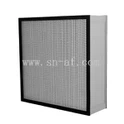
Hey there! I'm a supplier of V - Bank Filters, and today I wanna chat about how the pressure drop changes over time for these filters.

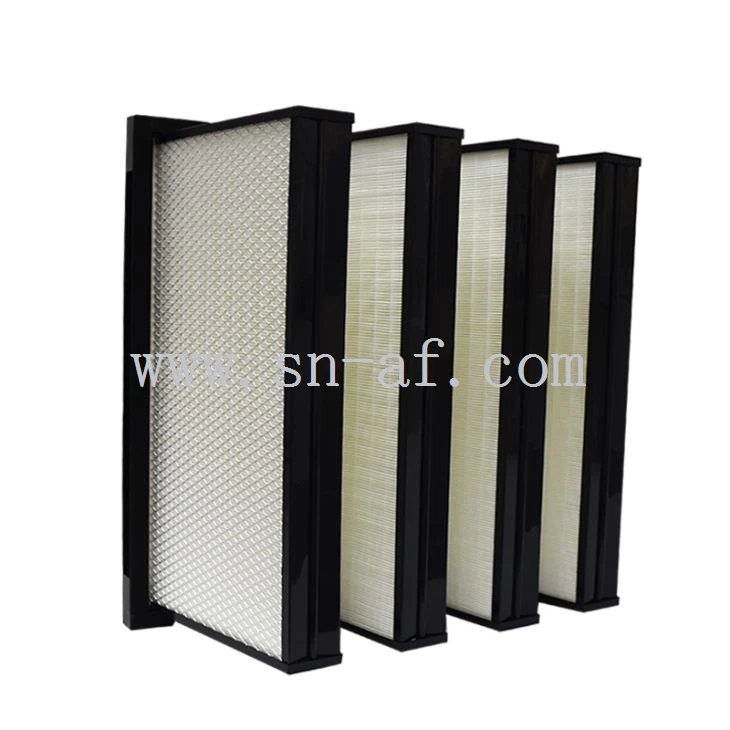
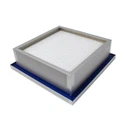
First off, let's understand what a V - Bank Filter is. It's a type of air filter with a unique V - shaped design. This design allows for a larger filter surface area within a relatively small space, which is super useful in HVAC systems and other air - handling applications. One popular variant is the Mini Pleat V - Bank Filter. It has even smaller pleats, which can capture more fine particles.
Now, let's dig into the pressure drop. Pressure drop is basically the difference in air pressure between the upstream and downstream sides of the filter. When air passes through a filter, it has to push through the media, and this resistance causes a drop in pressure.
At the beginning, when the V - Bank Filter is brand new, the pressure drop is relatively low. The filter media is clean, and air can flow through it easily. Think of it like running through an empty hallway. There's not much to slow you down, right? The initial pressure drop is determined by a few factors. The porosity of the filter media plays a big role. If the media has large pores, air can pass through more freely, resulting in a lower pressure drop. Also, the thickness of the media matters. A thinner media usually has less resistance, so the pressure drop is lower.
As time goes by, the filter starts to collect dust and other particles. This is where things start to get interesting. The collected particles act like little roadblocks in the filter media. They clog up the pores, making it harder for air to pass through. It's like adding obstacles to that empty hallway you were running through earlier. The pressure drop starts to increase.
The rate at which the pressure drop increases depends on a few things. The air quality of the environment where the filter is installed is a major factor. If the air is full of dust, pollen, and other contaminants, the filter will get dirty faster, and the pressure drop will rise more quickly. For example, in an industrial area with lots of manufacturing activities, the air might be very dirty, and the filter could reach a high pressure drop in a relatively short time.
The airflow rate also affects the pressure - drop increase. A higher airflow rate means more air is passing through the filter per unit of time. This causes more particles to be deposited on the filter media, speeding up the clogging process and increasing the pressure drop at a faster rate.
Another important aspect is the filter's efficiency rating. Filters with a higher efficiency are designed to capture smaller particles. While this is great for air quality, it also means that they tend to clog up faster. So, a high - efficiency V - Bank Filter might experience a more rapid increase in pressure drop compared to a lower - efficiency one.
Let's talk about how we can monitor the pressure drop over time. Most HVAC systems have pressure gauges installed on either side of the filter. These gauges measure the air pressure, and by comparing the readings, we can determine the pressure drop. Regularly checking these readings is crucial. It helps us know when the filter is getting dirty and needs to be replaced.
If we ignore the increasing pressure drop, it can lead to some problems. A high pressure drop means that the HVAC system has to work harder to push air through the filter. This can result in increased energy consumption. The fan in the system has to use more power to maintain the same airflow rate, which can drive up your electricity bills. Also, a clogged filter can reduce the overall performance of the HVAC system. It might not be able to heat or cool the space as effectively, leading to discomfort for the people in the building.
So, when should we replace the V - Bank Filter? Well, it depends on the pressure drop and the specific requirements of the system. In general, when the pressure drop reaches a certain level, usually specified by the manufacturer, it's time to replace the filter. This level can vary based on the type of application and the design of the HVAC system.
As a V - Bank Filter supplier, I know how important it is to choose the right filter for your needs. Different applications require different filter efficiencies and capacities. For example, in a hospital or a cleanroom, you'll need a high - efficiency filter to maintain a very clean environment. On the other hand, in a less - critical environment like a warehouse, a lower - efficiency filter might be sufficient.
If you're in the market for V - Bank Filters, whether it's the standard ones or the Mini Pleat V - Bank Filter, I'm here to help. I can provide you with the right filter based on your specific requirements. We can discuss the air quality in your area, the airflow rate of your HVAC system, and your budget.
Don't hesitate to reach out if you have any questions or if you're interested in purchasing V - Bank Filters. We can have a chat about how to optimize your HVAC system's performance with the right filter. I'm always happy to work with you to find the best solution for your air - filtration needs.
References
- ASHRAE Handbook - HVAC Systems and Equipment
- Filter manufacturers' technical documents
- Research papers on air - filtration technology