As a supplier of V-Bank Filters, I've spent countless hours studying the factors that affect their performance. One variable that often goes unnoticed but has a significant impact is air humidity. In this blog post, I'll delve into how air humidity influences the dust-holding capacity of a V-Bank Filter, and why this knowledge is crucial for both manufacturers and end-users.
Understanding V-Bank Filters
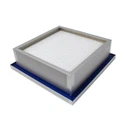
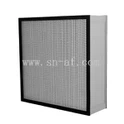
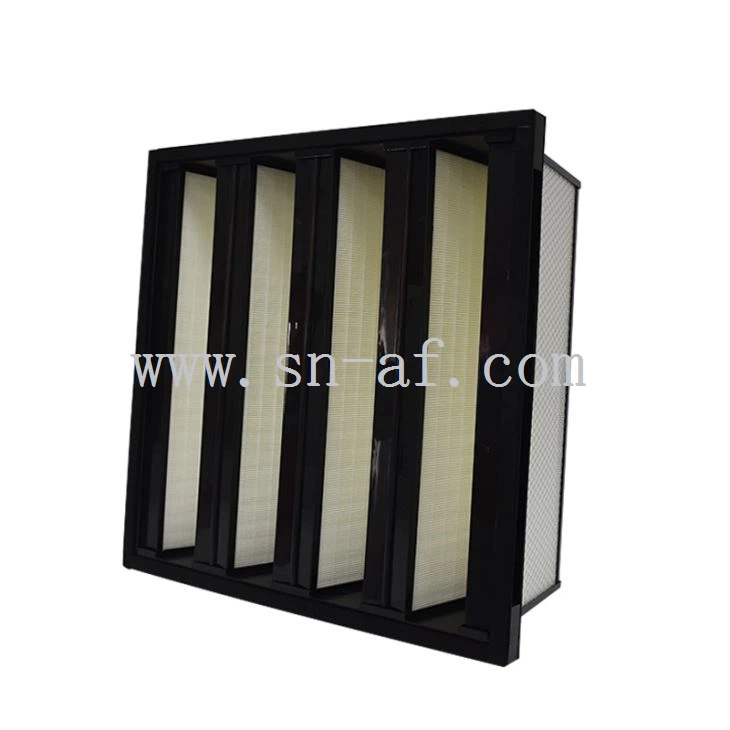
Before we explore the relationship between air humidity and dust-holding capacity, let's first understand what V-Bank Filters are. V-Bank Filters are a type of air filter commonly used in HVAC systems, industrial applications, and cleanrooms. They are designed with a unique V-shaped configuration that allows for a larger surface area compared to traditional flat filters. This increased surface area enables V-Bank Filters to capture more dust and particulate matter, making them highly efficient at improving air quality.
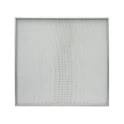
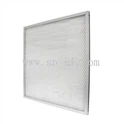
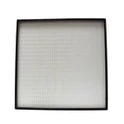
The Mini Pleat V-Bank Filter is a specific type of V-Bank Filter that features a pleated design. The mini pleats further increase the surface area, enhancing the filter's dust-holding capacity and filtration efficiency. These filters are ideal for applications where high levels of air purity are required, such as in hospitals, laboratories, and semiconductor manufacturing facilities.
The Role of Air Humidity in Filtration
Air humidity refers to the amount of water vapor present in the air. It can have a profound effect on the performance of air filters, including V-Bank Filters. When air humidity is high, the water vapor in the air can interact with the dust particles and the filter media in several ways.
One of the primary ways humidity affects filtration is through the process of agglomeration. Agglomeration occurs when water vapor condenses on the surface of dust particles, causing them to stick together and form larger clusters. These larger clusters are easier to capture by the filter media, as they are less likely to pass through the pores of the filter. As a result, the dust-holding capacity of the filter increases, and the filtration efficiency improves.
However, high humidity can also have some negative effects on the performance of V-Bank Filters. Excessive moisture can cause the filter media to become saturated, leading to a decrease in airflow and an increase in pressure drop. This can reduce the overall efficiency of the HVAC system and increase energy consumption. Additionally, high humidity can create a favorable environment for the growth of mold and bacteria on the filter media, which can pose a health risk to occupants.
On the other hand, low humidity can also impact the dust-holding capacity of V-Bank Filters. When air humidity is low, the dust particles are more likely to remain in a dry state and are less likely to agglomerate. This can make it more difficult for the filter media to capture the dust particles, resulting in a decrease in the dust-holding capacity and filtration efficiency.
Experimental Studies on the Effect of Humidity
Numerous experimental studies have been conducted to investigate the effect of air humidity on the dust-holding capacity of air filters. These studies have provided valuable insights into the complex relationship between humidity and filtration performance.
One study published in the Journal of Aerosol Science found that the dust-holding capacity of a V-Bank Filter increased with increasing humidity up to a certain point. The researchers observed that at low humidity levels, the dust particles remained dry and were easily carried through the filter media. As the humidity increased, the dust particles began to agglomerate, making them easier to capture by the filter. However, beyond a certain humidity level, the filter media became saturated, and the dust-holding capacity started to decline.

Another study conducted by the American Society of Heating, Refrigerating and Air-Conditioning Engineers (ASHRAE) examined the effect of humidity on the filtration efficiency of different types of air filters, including V-Bank Filters. The results showed that the filtration efficiency of the filters increased with increasing humidity, but the rate of increase varied depending on the filter media and the particle size distribution.
Practical Implications for V-Bank Filter Users
The findings of these experimental studies have important practical implications for users of V-Bank Filters. Understanding the effect of air humidity on the dust-holding capacity of the filters can help users optimize their filtration systems and improve air quality.
For applications where high humidity is expected, such as in humid climates or in industrial processes that generate moisture, it is important to select V-Bank Filters with a high dust-holding capacity and a moisture-resistant filter media. These filters can better withstand the effects of humidity and maintain their performance over time. Additionally, regular maintenance and replacement of the filters are essential to prevent the growth of mold and bacteria on the filter media.
In applications where low humidity is present, such as in dry climates or in cleanrooms with strict humidity control, it may be necessary to use pre-filters or humidifiers to increase the humidity levels and improve the filtration efficiency. Pre-filters can help capture the larger dust particles and prevent them from reaching the V-Bank Filters, while humidifiers can add moisture to the air and promote the agglomeration of dust particles.
Conclusion and Call to Action
In conclusion, air humidity plays a crucial role in the performance of V-Bank Filters. High humidity can increase the dust-holding capacity and filtration efficiency of the filters through the process of agglomeration, but it can also cause problems such as saturation and mold growth. Low humidity, on the other hand, can decrease the dust-holding capacity and make it more difficult for the filters to capture dust particles.
As a V-Bank Filter supplier, we understand the importance of providing our customers with high-quality filters that can perform effectively in a variety of environmental conditions. Our Mini Pleat V-Bank Filter is designed to offer superior dust-holding capacity and filtration efficiency, even in challenging humidity conditions.
If you're interested in learning more about our V-Bank Filters or need assistance in selecting the right filter for your application, please don't hesitate to contact us. Our team of experts is available to answer your questions and provide you with customized solutions. Let's work together to improve the air quality in your facility and ensure the health and comfort of your occupants.
References
- Journal of Aerosol Science. (Year). Effect of humidity on the dust-holding capacity of air filters.
- American Society of Heating, Refrigerating and Air-Conditioning Engineers (ASHRAE). (Year). Study on the effect of humidity on filtration efficiency.