Hey there! As a supplier of primary filters, I've been getting a lot of questions lately about what exactly the quality standard for a primary filter is. So, I thought I'd take a few minutes to break it down for you.
First off, let's talk about what a primary filter actually does. A primary filter is the first line of defense in an air filtration system. Its main job is to capture large particles like dust, lint, and hair before they can make their way further into the system and cause damage or reduce efficiency. This is super important because if these large particles aren't removed early on, they can clog up more expensive and sensitive filters downstream, leading to increased maintenance costs and decreased performance.
Now, onto the quality standards. There are a few key factors that I look at when determining the quality of a primary filter.
1. Filtration Efficiency
One of the most important aspects of a primary filter is its filtration efficiency. This refers to how well the filter can capture particles of a certain size. The efficiency is usually measured as a percentage, and it's determined by testing the filter against a specific challenge aerosol. For primary filters, we're typically looking at capturing particles in the range of 5 to 10 microns. A high - quality primary filter should have a good efficiency rating for these larger particles. For example, a filter with an efficiency of 80% or higher for 5 - 10 micron particles is considered pretty good.
2. Material Quality
The material used to make the filter is also crucial. High - quality primary filters are often made from synthetic fibers. These fibers are durable, resistant to moisture, and can be engineered to have specific filtration properties.
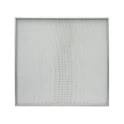
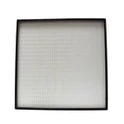
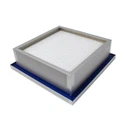
Take our Synthetic Fiber Flat Panel Filter for example. It's made from top - notch synthetic fibers that are designed to trap large particles effectively. The synthetic material is also less likely to break down over time compared to other materials, which means a longer lifespan for the filter.
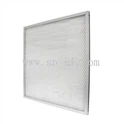
Another great option is our Synthetic Fiber Panel Pre Air Filter G4. This filter uses high - quality synthetic fibers that are arranged in a way that maximizes the surface area for particle capture. The G4 rating indicates a relatively high level of filtration efficiency for a primary filter, making it a popular choice for many applications.
3. Construction and Design
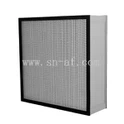
The way the filter is constructed can also have a big impact on its quality. A well - made primary filter should have a sturdy frame that holds the filter media in place. The seams should be well - sealed to prevent air from bypassing the filter media.
Some primary filters, like our Pocket Primary Filter, are designed with a pocket - style configuration. This design increases the surface area of the filter media, allowing for more particles to be captured without increasing the pressure drop across the filter. The pockets are also reinforced to prevent them from collapsing under the weight of the captured particles.
4. Pressure Drop
Pressure drop is another important consideration. When air passes through a filter, there is a certain amount of resistance, which causes a drop in pressure. A high - quality primary filter should have a relatively low pressure drop while still maintaining good filtration efficiency. If the pressure drop is too high, it can put extra strain on the HVAC system, leading to increased energy consumption and potentially shortening the lifespan of the system components.
5. Durability and Longevity
Let's face it, no one wants to replace filters all the time. A good primary filter should be durable enough to withstand normal operating conditions and last for a reasonable amount of time. This means it should be resistant to tearing, abrasion, and chemical degradation.
We test our filters rigorously to ensure they can stand up to the test of time. Whether it's in a commercial building, an industrial facility, or a residential setting, our filters are designed to keep performing at their best for as long as possible.


6. Compliance with Standards
In many industries, there are specific standards and regulations that primary filters must meet. For example, in the HVAC industry, filters may need to comply with standards set by organizations like ASHRAE (American Society of Heating, Refrigerating and Air - Conditioning Engineers). A high - quality primary filter should be able to meet or exceed these standards, giving you peace of mind that you're using a product that is safe and effective.
So, now that you know what to look for in a high - quality primary filter, you might be wondering how our filters stack up. Well, we've spent years perfecting our manufacturing processes and using the latest technology to ensure that our filters meet and exceed all the quality standards I've just talked about.
If you're in the market for primary filters, whether it's for a new installation or a replacement, I'd love to have a chat with you. We can discuss your specific needs, recommend the right filter for your application, and give you a quote. Whether you're a small business owner looking to improve the air quality in your office or an engineer working on a large - scale industrial project, we've got the expertise and the products to help you out.
Don't hesitate to reach out if you have any questions or if you're ready to start a purchase negotiation. We're here to make the process as easy and stress - free as possible for you.
References
- ASHRAE Handbook of Fundamentals
- Filtration Industry Association Publications