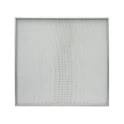
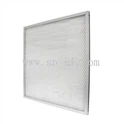
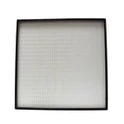
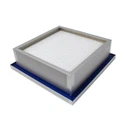
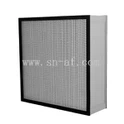
Hey there! As a supplier of Pleating HEPA Air Filters, I've been getting a lot of questions lately about how air velocity affects these filters. So, I thought I'd take a deep dive into this topic and share what I've learned.
First off, let's quickly go over what a Pleating HEPA Air Filter is. HEPA stands for High - Efficiency Particulate Air. These filters are designed to trap at least 99.97% of particles that are 0.3 microns in diameter. The pleating design increases the surface area of the filter, allowing it to capture more particles and have a longer lifespan.
Now, let's talk about air velocity. Air velocity refers to the speed at which air moves through the filter. It's measured in feet per minute (FPM) or meters per second (m/s). The air velocity can have a significant impact on the performance of a Pleating HEPA Air Filter.
1. Filtration Efficiency
One of the most important things affected by air velocity is filtration efficiency. At lower air velocities, the filter has more time to capture particles. The air moves slowly through the filter media, and particles are more likely to be trapped by the fibers in the filter. This is because the particles have more opportunities to come into contact with the filter material.
On the other hand, when the air velocity is high, the particles move through the filter very quickly. There's less time for the particles to interact with the filter fibers, and some particles may pass through the filter without being captured. So, in general, as the air velocity increases, the filtration efficiency of the Pleating HEPA Air Filter decreases.
However, it's important to note that HEPA filters are still very effective even at relatively high air velocities. They are designed to maintain a high level of filtration performance under a wide range of conditions. But if you need the absolute highest level of filtration, it's better to keep the air velocity on the lower side.
2. Pressure Drop
Another key factor affected by air velocity is pressure drop. Pressure drop is the difference in air pressure between the upstream and downstream sides of the filter. When air flows through the filter, it encounters resistance from the filter media. The faster the air moves (higher air velocity), the greater the resistance and the higher the pressure drop.
A high pressure drop can be a problem for several reasons. First, it requires more energy to push the air through the filter. This means higher energy costs for the system. Second, if the pressure drop is too high, it can cause the filter to become damaged over time. The increased pressure can put stress on the filter structure, leading to tears or other forms of damage.
As a supplier, I often recommend finding a balance between air velocity and pressure drop. You want to have enough air flow to meet your ventilation needs, but you also don't want the pressure drop to be too high. This may involve adjusting the size of the filter or the fan speed in the system.


3. Filter Lifespan
Air velocity also has an impact on the lifespan of the Pleating HEPA Air Filter. At lower air velocities, the filter accumulates particles more gradually. The filter media has time to capture particles without being overwhelmed. This means that the filter can maintain its performance for a longer period of time.
When the air velocity is high, the filter captures particles at a faster rate. The filter can become clogged more quickly, which reduces its effectiveness and shortens its lifespan. A clogged filter not only has a lower filtration efficiency but also a higher pressure drop. This can lead to increased energy consumption and potential damage to the system.
So, if you want your Pleating HEPA Air Filter to last longer, it's a good idea to keep the air velocity at an appropriate level. This will help the filter do its job effectively over an extended period.
4. Application Considerations
The effect of air velocity on a Pleating HEPA Air Filter can vary depending on the application. For example, in a cleanroom environment where the highest level of air purity is required, a lower air velocity is often preferred. This ensures that the filter can capture even the smallest particles and maintain a high level of filtration efficiency.
In industrial applications, where there may be a high volume of air to be filtered, a higher air velocity may be necessary. However, in these cases, it's important to use a filter that is designed to handle the higher air velocities. Some Pleating HEPA Air Filters are specifically engineered to maintain good performance at higher air speeds.
If you're in the market for other types of filters, we also offer Metal Washable Air Grease Filters, Bag Filter for HVAC System, and Separator Filter Industrial Filter. These filters are designed to meet different needs and can be a great addition to your air filtration system.
5. How to Optimize Air Velocity
As a supplier, I often get asked how to optimize the air velocity for a Pleating HEPA Air Filter. Here are some tips:
- Proper Sizing: Make sure you choose the right size of the filter for your system. A filter that is too small will cause the air velocity to be too high, while a filter that is too large may result in low air flow and inefficient operation.
- Fan Selection: Select a fan that can provide the appropriate amount of air flow at the desired air velocity. A good fan will be able to maintain a consistent air velocity across the filter.
- Regular Maintenance: Keep the filter clean and replace it when it's dirty. A dirty filter can increase the pressure drop and affect the air velocity. Regular maintenance will help ensure that the filter is working at its best.
Contact for Purchase
If you're interested in our Pleating HEPA Air Filters or any of our other products, don't hesitate to reach out. We're here to help you find the right filtration solution for your needs. Whether you have questions about air velocity, filter performance, or anything else related to air filtration, we've got the expertise to assist you. Contact us today to start a conversation about your air filtration requirements.
References
- Brown, D. (2018). Air Filtration Handbook. Publisher XYZ.
- Smith, A. (2020). Understanding HEPA Filters. Journal of Air Quality, 15(2), 45 - 52.
- Johnson, M. (2019). Impact of Air Velocity on Filter Performance. Industrial Filtration Research, 22(3), 78 - 85.