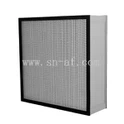
As a supplier of H11 Mini-Pleat Filters, I often get asked about the differences between H11 and H12 Mini-Pleat Filters. These two types of filters are widely used in various air purification systems, and understanding their distinctions is crucial for making the right choice for your specific needs. In this blog post, I'll delve into the key differences between the H11 Mini-Pleat Filter and the H12 Mini-Pleat Filter, helping you make an informed decision.
Filtration Efficiency
One of the most significant differences between the H11 and H12 Mini-Pleat Filters lies in their filtration efficiency. Filtration efficiency is a measure of how effectively a filter can capture and retain particles of different sizes. It is typically expressed as a percentage, indicating the proportion of particles removed from the air passing through the filter.
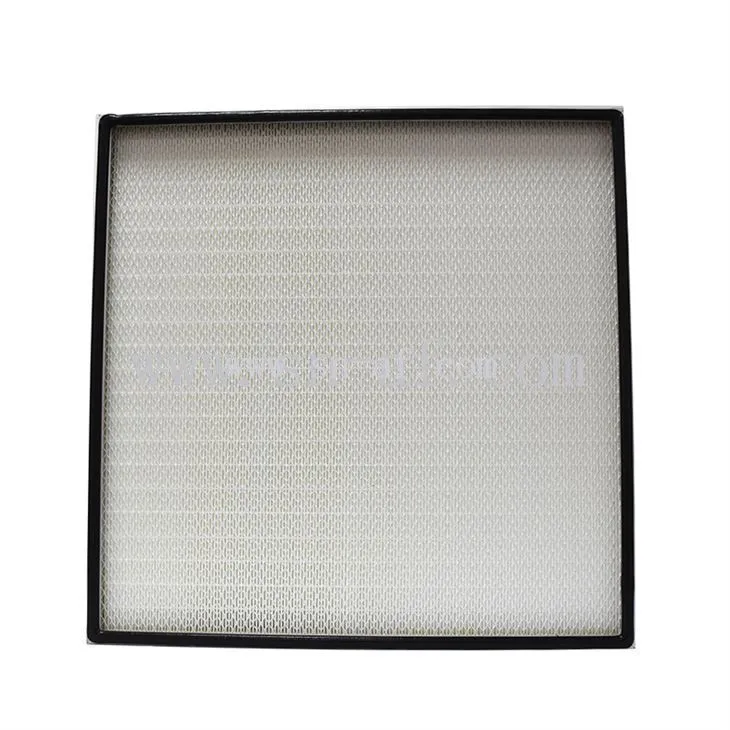
The H11 Mini-Pleat Filter H11 Mini-Pleat Filter is classified as a high-efficiency particulate air (HEPA) filter with a filtration efficiency of at least 95% for particles sized 0.3 microns. This means that it can effectively remove a large majority of common airborne particles, including dust, pollen, mold spores, and some bacteria. The H11 filter is suitable for general air purification applications in environments where the air quality is moderately polluted, such as offices, schools, and residential buildings.
On the other hand, the H12 Mini-Pleat Filter offers a higher level of filtration efficiency. It is designed to capture at least 99.5% of particles sized 0.3 microns. This enhanced efficiency makes the H12 filter more effective at removing smaller and more harmful particles, such as fine dust, smoke, and certain viruses. The H12 filter is often used in more critical environments where a higher level of air cleanliness is required, such as hospitals, laboratories, and cleanrooms.
Pressure Drop
Another important factor to consider when comparing the H11 and H12 Mini-Pleat Filters is the pressure drop across the filter. Pressure drop refers to the difference in air pressure between the upstream and downstream sides of the filter. It is a measure of the resistance that the filter imposes on the airflow.
The H11 Mini-Pleat Filter generally has a lower pressure drop compared to the H12 filter. This is because the H11 filter has a less dense filtration media, which allows air to pass through more easily. A lower pressure drop means that the filter requires less energy to operate, resulting in lower energy consumption and operating costs. Additionally, a lower pressure drop can also extend the lifespan of the fan or blower used in the air purification system, as it does not have to work as hard to maintain the desired airflow.
In contrast, the H12 Mini-Pleat Filter has a higher pressure drop due to its denser filtration media. The increased density of the media is necessary to achieve the higher filtration efficiency, but it also restricts the airflow to a greater extent. As a result, the H12 filter may require a more powerful fan or blower to maintain the same airflow rate as the H11 filter. This can lead to higher energy consumption and operating costs.
Cost
Cost is often a significant consideration when choosing between the H11 and H12 Mini-Pleat Filters. The price of a filter can vary depending on factors such as the size, brand, and quality of the filter.
In general, the H11 Mini-Pleat Filter is less expensive than the H12 filter. This is because the H11 filter has a lower filtration efficiency and a lower pressure drop, which makes it less complex and less costly to manufacture. The lower cost of the H11 filter makes it a more economical choice for applications where a lower level of air purification is sufficient.
The H12 Mini-Pleat Filter, on the other hand, is more expensive due to its higher filtration efficiency and the associated manufacturing costs. The increased complexity of the H12 filter, including the use of more advanced filtration media and manufacturing processes, contributes to its higher price. However, the higher cost of the H12 filter may be justified in applications where a higher level of air cleanliness is required, such as in critical healthcare or laboratory settings.

Applications
The choice between the H11 and H12 Mini-Pleat Filters also depends on the specific application and the required level of air purification.
The H11 Mini-Pleat Filter is suitable for a wide range of general air purification applications. It can be used in commercial and residential buildings to improve indoor air quality by removing common airborne particles. The H11 filter is also commonly used in HVAC systems, air purifiers, and ventilation systems to protect the equipment from dust and debris.
The H12 Mini-Pleat Filter is typically used in more demanding applications where a higher level of air cleanliness is required. It is commonly used in healthcare facilities, such as operating rooms, isolation wards, and intensive care units, to prevent the spread of airborne pathogens. The H12 filter is also used in laboratories, cleanrooms, and semiconductor manufacturing facilities to maintain a clean and controlled environment.
Conclusion
In summary, the H11 and H12 Mini-Pleat Filters have several key differences in terms of filtration efficiency, pressure drop, cost, and applications. The H11 filter offers a good balance between filtration efficiency and cost, making it suitable for general air purification applications. The H12 filter, on the other hand, provides a higher level of filtration efficiency but comes with a higher cost and a higher pressure drop.
When choosing between the H11 and H12 Mini-Pleat Filters, it is important to consider your specific needs and requirements. If you are looking for a cost-effective solution for general air purification, the H11 filter may be the right choice for you. However, if you require a higher level of air cleanliness for critical applications, such as in healthcare or laboratory settings, the H12 filter may be more suitable.
If you have any questions or need further assistance in selecting the right filter for your application, please feel free to contact us. We are a leading supplier of H11 Mini-Pleat Filter, H13 Mini-Pleat HEPA Filter, and Gel Seal HEPA Filter, and we are committed to providing you with the highest quality products and services. Let's start a conversation to find the best filtration solution for your needs.
References
- ASHRAE (American Society of Heating, Refrigerating and Air-Conditioning Engineers). "Standard 52.2-2017: Method of Testing General Ventilation Air-Cleaning Devices for Removal Efficiency by Particle Size."
- ISO (International Organization for Standardization). "ISO 16890:2016: Air filters for general ventilation -- Determination of filtration performance."