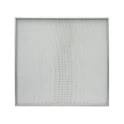
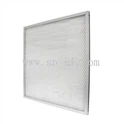
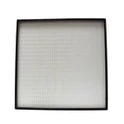
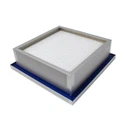
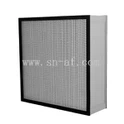
Hey there! As a supplier of medium filters, I often get asked about the difference between medium filters and coarse filters. So, I thought I'd break it down for you in this blog post.
What Are Coarse Filters?
Let's start with coarse filters. These are like the first line of defense in an air - filtration system. Coarse filters are designed to capture the big stuff. Think of things like dust, hair, lint, and large debris that might be floating around in the air. They usually have a relatively low efficiency rating because their main job is to stop the obvious, large particles from getting deeper into the filtration system.
The materials used in coarse filters are typically quite basic. You'll often find them made from materials like fiberglass or synthetic fibers that are arranged in a way that allows air to pass through easily while catching the larger particles. These filters are commonly used in places where the air doesn't need to be extremely clean, such as in industrial settings where there's a lot of large - scale dust production or in the pre - filtration stage of an HVAC system.
One of the advantages of coarse filters is that they're relatively inexpensive. They're easy to install and replace, which makes them a cost - effective option for initial filtration. However, they're not great at capturing smaller particles. If you're dealing with things like pollen, smoke, or fine dust, a coarse filter isn't going to cut it.
What Are Medium Filters?
Now, let's talk about medium filters. These are a step up from coarse filters in terms of filtration efficiency. Medium filters are designed to capture smaller particles that coarse filters miss. They can trap things like pollen, mold spores, and some bacteria.
The construction of medium filters is more sophisticated. They usually have a denser fiber arrangement compared to coarse filters. This increased density allows them to catch smaller particles, but it also means that air flow can be a bit more restricted. However, modern medium filters are designed to balance filtration efficiency and air flow as much as possible.
There are different types of medium filters available. For example, the Pocket Air Filter F5 is a popular choice. It has a pocket - like design that provides a large surface area for filtration, which helps to increase its efficiency. Another option is the Synthetic Pocket Filter, which is made from synthetic materials that are durable and effective at capturing a wide range of particles.
Medium filters are commonly used in places where better air quality is required. This includes commercial buildings, hospitals, and some residential settings. They can significantly improve the air quality by removing a larger portion of the contaminants in the air.
Key Differences
Filtration Efficiency
The most obvious difference between medium and coarse filters is their filtration efficiency. Coarse filters are mainly for large particles, while medium filters can handle smaller ones. If you want to protect your HVAC system from large debris and do some basic air cleaning, a coarse filter will work. But if you're concerned about things like allergies or need a higher level of air purity, a medium filter is the way to go.
Particle Size
Coarse filters are designed to capture particles larger than 10 microns. In contrast, medium filters can capture particles in the range of 1 - 10 microns. This difference in the size of the particles they can trap is what makes medium filters more effective at improving air quality.
Air Flow Resistance
As mentioned earlier, medium filters have a higher air flow resistance compared to coarse filters. The denser fiber structure of medium filters means that air has a harder time passing through. This can put a bit more strain on your HVAC system, but modern systems are often designed to handle this. Coarse filters, on the other hand, have very low air flow resistance, so they don't put much stress on the system.
Cost
Coarse filters are generally cheaper than medium filters. The materials used in coarse filters are less expensive, and the manufacturing process is simpler. Medium filters, with their more advanced construction and better filtration capabilities, come at a higher price. However, the cost is often justified by the improved air quality they provide.
Lifespan
The lifespan of a filter also varies between the two types. Coarse filters usually need to be replaced more frequently because they get clogged up quickly with large particles. Medium filters, while they also get clogged, tend to have a longer lifespan because they're dealing with smaller particles that don't accumulate as rapidly.
Which One Should You Choose?
The choice between a medium filter and a coarse filter depends on your specific needs. If you're in an industrial environment where there's a lot of large - scale dust and debris, a coarse filter might be sufficient for your pre - filtration needs. It'll protect your main filtration system from getting clogged with the big stuff.
However, if you're in a place where air quality is a concern, such as an office building or a home with allergy sufferers, a medium filter is a better option. It can remove a wider range of contaminants and provide a healthier environment.


If you're still not sure which filter is right for you, feel free to reach out. As a medium filter supplier, I have the knowledge and experience to help you make the best choice for your situation. Whether you need advice on the type of filter, the right size for your system, or anything else related to air filtration, I'm here to assist.
Conclusion
In conclusion, the difference between medium and coarse filters boils down to their filtration efficiency, the size of the particles they can capture, air flow resistance, cost, and lifespan. Coarse filters are great for basic, large - particle filtration, while medium filters offer a higher level of air purification.
If you're interested in purchasing medium filters or need more information, don't hesitate to get in touch. I can provide you with detailed product information, pricing, and help you find the perfect solution for your air - filtration needs. Let's work together to improve the air quality in your space!
References
- ASHRAE Handbook of Fundamentals
- ISO Standards for Air Filtration
- Industry Reports on Air Filtration Technologies