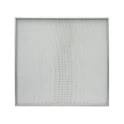
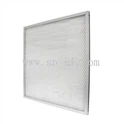
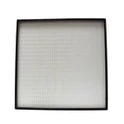
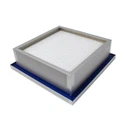
Hey there! As a supplier of U15 Mini - Pleat ULPA Filters, I often get asked about the air flow rate of these nifty filters. So, I thought I'd sit down and write this blog to share everything you need to know about it.
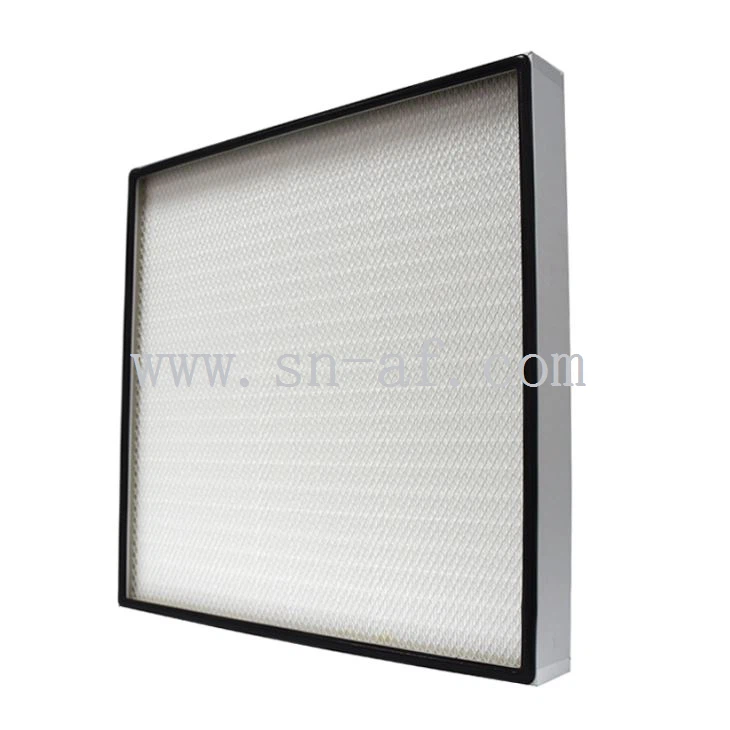

First off, let's understand what a U15 Mini - Pleat ULPA Filter is. If you're not familiar, you can check out more details here: U15 Mini - Pleat ULPA Filter. These filters are super important in environments where you need ultra - clean air, like in semiconductor manufacturing, pharmaceutical production, and some high - end research labs.
The air flow rate of a U15 Mini - Pleat ULPA Filter is a crucial factor. It basically tells you how much air the filter can handle in a given amount of time. Think of it like a water pipe. If you have a small pipe, it can only let a little bit of water through at a time. But if you have a big pipe, more water can flow. Similarly, a filter with a high air flow rate can let more air pass through than one with a low rate.
There are a few things that affect the air flow rate of these filters. One of the main factors is the filter's design. The pleat structure of the U15 Mini - Pleat ULPA Filter plays a big role. The mini - pleat design is pretty smart. It allows for a large surface area in a relatively small space. A larger surface area means more room for air to pass through, which can increase the air flow rate.
Another factor is the resistance of the filter media. The filter media is what actually traps the particles in the air. If the media is very dense and has a high resistance, it'll be harder for air to get through, and the air flow rate will be lower. On the other hand, if the media has a lower resistance, more air can flow, and the rate will be higher.
Now, let's talk about how we measure the air flow rate. Usually, it's measured in cubic feet per minute (CFM) or cubic meters per hour (m³/h). Different applications will require different air flow rates. For example, in a small cleanroom for making small electronic components, you might need a filter with a relatively low air flow rate, maybe around 500 - 1000 CFM. But in a large pharmaceutical manufacturing plant, you could need a filter with an air flow rate of 5000 CFM or more.
As a supplier, we offer U15 Mini - Pleat ULPA Filters with a range of air flow rates to meet different customer needs. We know that every customer's situation is unique, so we work hard to provide the right filter for them.
You might be wondering how our filters compare to other types. Well, we also have U17 Mini - Pleat ULPA Filter and U16 Mini - Pleat ULPA Filter. The U17 and U16 filters are even more efficient at trapping particles than the U15. But sometimes, a higher - efficiency filter can have a lower air flow rate because the media is denser. So, it's a bit of a trade - off. You need to decide based on your specific requirements.
If you're worried about energy consumption, the air flow rate is also important. A filter with a high air flow rate at a low resistance will require less energy to push the air through. This can save you money on your energy bills in the long run.
We've done a lot of testing on our U15 Mini - Pleat ULPA Filters to make sure they perform well. We test them in different conditions to see how the air flow rate changes. For example, we test them at different pressures and with different particle loads. This helps us understand how the filter will behave in real - world situations.
When you're choosing a filter, it's important to consider the air flow rate along with other factors like the filter's efficiency, size, and cost. You don't want to just go for the filter with the highest air flow rate if it doesn't meet your other requirements.
If you're in the market for a U15 Mini - Pleat ULPA Filter or any of our other filters, we'd love to help you out. We have a team of experts who can answer all your questions and help you find the right filter for your application. Whether you're setting up a new cleanroom or just replacing an old filter, we've got you covered.
Contact us to start a conversation about your filter needs. We can discuss the air flow rate, the design, and any other details you're interested in. We're always here to make sure you get the best filter for your money.
In conclusion, the air flow rate of the U15 Mini - Pleat ULPA Filter is an important factor that depends on the filter's design, media resistance, and other things. By understanding these factors, you can make a more informed decision when choosing a filter. And if you have any questions or need more information, don't hesitate to reach out.
References
- "Air Filtration Handbook" - A comprehensive guide on air filters and their performance.
- Industry standards and guidelines for cleanroom filtration.