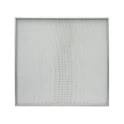
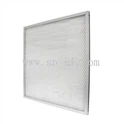
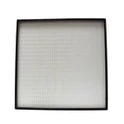
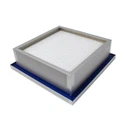
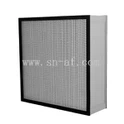
Synthetic pocket filters are a staple in many ventilation and air - purification systems. As a supplier of these essential filters, I often get asked the question: How often should I replace a Synthetic Pocket Filter? In this blog, I'll dive deep into the factors that influence the replacement frequency and offer some guidelines to help you make an informed decision.
Understanding Synthetic Pocket Filters
Before we discuss replacement intervals, let's briefly understand what a Synthetic Pocket Filter is. These filters are made from synthetic materials, typically non - woven fabrics. The pocket design provides a large surface area for capturing airborne particles. They are commonly used in commercial and industrial ventilation systems, as well as in some residential applications where high - efficiency air filtration is required. The synthetic materials offer good durability, resistance to moisture, and effective particle - capturing capabilities.
Factors Affecting Replacement Frequency
Air Quality
The quality of the air passing through the filter is one of the most significant factors. In areas with high levels of pollutants, such as near industrial sites, busy roads, or construction areas, the filter will accumulate particles more quickly. For example, in a manufacturing plant where there are high concentrations of dust, fumes, and particulate matter, the filter may need to be replaced every 1 - 3 months. On the other hand, in a clean office environment with proper air - handling systems, the replacement interval could be extended to 6 - 12 months.
Filter Efficiency Rating
Different synthetic pocket filters have varying efficiency ratings. Filters with higher MERV (Minimum Efficiency Reporting Value) ratings are designed to capture smaller particles and are generally more efficient. However, this also means they can clog up faster. A Pocket Air Filter F5, which has a relatively moderate efficiency rating, may last longer compared to a filter with a much higher MERV rating in the same environment. The F5 filter is suitable for general ventilation applications and can typically handle a reasonable amount of particle load before needing replacement.
Airflow Rate
The rate at which air passes through the filter affects its lifespan. Higher airflow rates can cause particles to be forced into the filter more quickly, leading to faster clogging. In systems with high - volume air circulation, such as large - scale commercial buildings or data centers, the synthetic pocket filters may need to be replaced more frequently. Conversely, in low - airflow systems, the filter can last longer as the particle deposition rate is lower.


Humidity and Moisture
Humidity and moisture can have a significant impact on the performance and lifespan of synthetic pocket filters. In high - humidity environments, moisture can cause particles to stick together and accumulate on the filter more rapidly. It can also lead to the growth of mold and bacteria on the filter, which not only reduces its efficiency but also poses a health risk. If the filter is exposed to excessive moisture, it may need to be replaced more often, perhaps every 2 - 4 months.
General Replacement Guidelines
Light - Use Environments
In light - use environments like small offices, classrooms, or residential spaces with relatively clean air, a synthetic pocket filter can last between 6 and 12 months. These environments typically have low levels of pollutants and moderate airflow rates. However, it's still important to monitor the filter's condition regularly. You can visually inspect the filter for signs of dirt and discoloration. If the filter appears significantly dirty or if you notice a decrease in airflow, it may be time for a replacement.
Medium - Use Environments
Commercial buildings, such as shopping malls, hotels, and restaurants, fall into the medium - use category. Here, the replacement interval for synthetic pocket filters is usually between 3 and 6 months. These environments have a higher volume of people and potentially more sources of pollutants, such as cooking fumes in restaurants or dust from foot traffic in shopping malls. Regular maintenance and filter inspections are crucial to ensure optimal performance.
Heavy - Use Environments
Industrial facilities, manufacturing plants, and construction sites are heavy - use environments. In these settings, synthetic pocket filters may need to be replaced every 1 to 3 months. The high levels of dust, chemicals, and other pollutants in these areas can quickly clog the filter and reduce its effectiveness. Additionally, continuous operation of ventilation systems in industrial settings means that the filters are constantly exposed to a large volume of dirty air.
Monitoring Filter Condition
In addition to following the general replacement guidelines based on the environment, it's essential to monitor the condition of the synthetic pocket filter regularly. One way to do this is by measuring the pressure drop across the filter. As the filter accumulates particles, the pressure drop increases. Most ventilation systems are equipped with pressure gauges that can be used to monitor this. When the pressure drop reaches a certain threshold, it indicates that the filter is clogged and needs to be replaced.
Another method is visual inspection. Remove the filter from the housing and examine it closely. If you see a thick layer of dirt, debris, or discoloration, it's a sign that the filter is no longer functioning optimally. You can also check for any signs of damage, such as holes or tears in the filter material, which would require immediate replacement.
Importance of Timely Replacement
Replacing synthetic pocket filters at the appropriate intervals is crucial for several reasons. Firstly, a clogged filter restricts airflow, which can put additional strain on the ventilation system. This can lead to increased energy consumption, higher operating costs, and potentially premature wear and tear on the system components. Secondly, a dirty filter is less effective at capturing airborne particles, which means that pollutants can circulate freely in the indoor environment, posing a health risk to the occupants. Lastly, timely replacement ensures that the ventilation system operates at its peak performance, providing clean and fresh air.
Contact Us for Your Filter Needs
If you're unsure about the replacement frequency of synthetic pocket filters for your specific application or if you're looking to purchase high - quality filters, we're here to help. As a leading supplier of synthetic pocket filters, we offer a wide range of products to meet your needs. Our team of experts can provide personalized advice based on your environment, airflow requirements, and budget. Whether you're a small business owner, an industrial facility manager, or a homeowner, we have the right filter solution for you.
Don't compromise on the quality of your indoor air. Contact us today to discuss your filter requirements and let us help you maintain a healthy and efficient ventilation system.
References
- ASHRAE (American Society of Heating, Refrigerating and Air - Conditioning Engineers) standards on air filtration and ventilation system maintenance.
- Manufacturer's guidelines for synthetic pocket filters.
- Industry research on the impact of air quality, filter efficiency, and airflow on filter lifespan.