A gas mask is a crucial piece of equipment designed to protect the wearer from inhaling harmful substances such as toxic gases, vapors, and particulate matter. At the heart of a gas mask lies the primary filter, a component that plays a fundamental role in ensuring the air breathed is safe. As a primary filter supplier, I am well - versed in how these filters work and their significance.
The Basics of a Primary Filter in a Gas Mask
The primary filter in a gas mask serves as the first line of defense. It is responsible for removing large and small particles, as well as some gaseous contaminants from the air before it reaches the wearer's respiratory system. The filter typically consists of multiple layers, each with a specific function.
Physical Filtration Mechanisms
One of the main ways a primary filter works is through physical filtration. This involves the capture of particles based on their size and shape. The filter media has a porous structure, and as air passes through, particles that are larger than the pores get trapped.
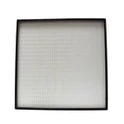
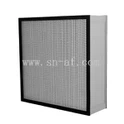
For instance, a Pocket Primary Filter often uses a combination of fine fibers to create a maze - like structure. When air flows through this maze, dust, pollen, and other large particulate matter collide with the fibers and adhere to them. This is known as mechanical interception.
Another physical filtration mechanism is inertial impaction. Larger particles have more inertia and are less likely to follow the流线 of the air as it bends around the filter fibers. Instead, they continue on a straight path and strike the fibers, getting trapped. This is particularly effective for removing particles in the range of 0.5 - 5 micrometers.
Diffusion is also an important physical process. Smaller particles, especially those less than 0.1 micrometers, exhibit random Brownian motion. As they move randomly through the air, they are more likely to come into contact with the filter fibers and be captured.
Chemical Filtration
In addition to physical filtration, many primary filters also perform chemical filtration. This is essential for removing gaseous contaminants such as toxic chemicals and fumes.
Activated carbon is a commonly used material for chemical filtration in gas mask primary filters. Activated carbon has a large surface area with many tiny pores. These pores can adsorb gas molecules through a process called adsorption. The gas molecules adhere to the surface of the carbon due to weak intermolecular forces.
The effectiveness of activated carbon depends on several factors, including the type of carbon, the pore size distribution, and the nature of the gas being filtered. Different types of activated carbon are tailored to adsorb specific gases. For example, some activated carbons are treated with chemicals to enhance their ability to adsorb specific toxic gases like hydrogen sulfide or ammonia.
Types of Primary Filters and Their Working Principles
There are several types of primary filters available, each with its own unique working principles and applications.
Synthetic Fiber Panel Pre - Air Filter G4
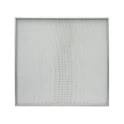
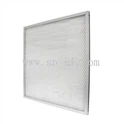
The Synthetic Fiber Panel Pre - Air Filter G4 is designed as a pre - filter to remove large particulate matter. It is made of synthetic fibers that are arranged in a panel - like structure.
The fibers in this filter are designed to have a high dust - holding capacity. As air passes through the panel, the large particles are trapped on the surface and within the fiber matrix. The open structure of the panel allows for relatively high air flow rates, which is important in gas mask applications where the wearer needs to be able to breathe easily.
This type of filter is often used as the first stage in a multi - stage filtration system. By removing the large particles, it helps to protect the more sensitive and expensive downstream filters from premature clogging.
Grease Metal Panels Filter
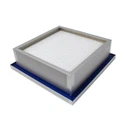
The Grease Metal Panels Filter is another type of primary filter. It consists of metal panels coated with a thin layer of grease.
When air passes through the metal panels, the grease acts as a sticky surface that captures particles. The metal structure provides mechanical strength to the filter, allowing it to withstand higher air flow velocities and pressures.
This type of filter is particularly effective for removing oily and greasy particles. The grease attracts and holds these particles, preventing them from passing through the filter. It is commonly used in industrial environments where there is a high concentration of oily fumes and particulate matter.
Factors Affecting the Performance of Primary Filters
Several factors can affect the performance of primary filters in gas masks.
Particle Size Distribution
The size distribution of the particles in the air being filtered is a crucial factor. Filters are designed to be most effective within a certain range of particle sizes. For example, a filter that is very efficient at removing large particles may not be as effective at removing very small particles, and vice versa.
If the air contains a wide range of particle sizes, a multi - stage filtration system may be required. The primary filter can be designed to remove the larger particles first, followed by secondary filters that are more effective at removing smaller particles.
Gas Concentration and Composition
In the case of chemical filtration, the concentration and composition of the gaseous contaminants in the air are important. High concentrations of toxic gases can quickly saturate the activated carbon in the filter, reducing its effectiveness.
Different gases also have different adsorption characteristics. Some gases are more easily adsorbed than others, and the filter needs to be designed to handle the specific gases present in the environment.
Air Flow Rate
The air flow rate through the filter can also affect its performance. A high air flow rate may reduce the contact time between the air and the filter media, decreasing the efficiency of both physical and chemical filtration. On the other hand, a very low air flow rate may not provide enough air for the wearer to breathe comfortably.
Therefore, gas mask primary filters are designed to operate within a specific range of air flow rates to ensure optimal performance.
Maintenance and Replacement of Primary Filters
Proper maintenance and timely replacement of primary filters are essential to ensure the continued effectiveness of a gas mask.
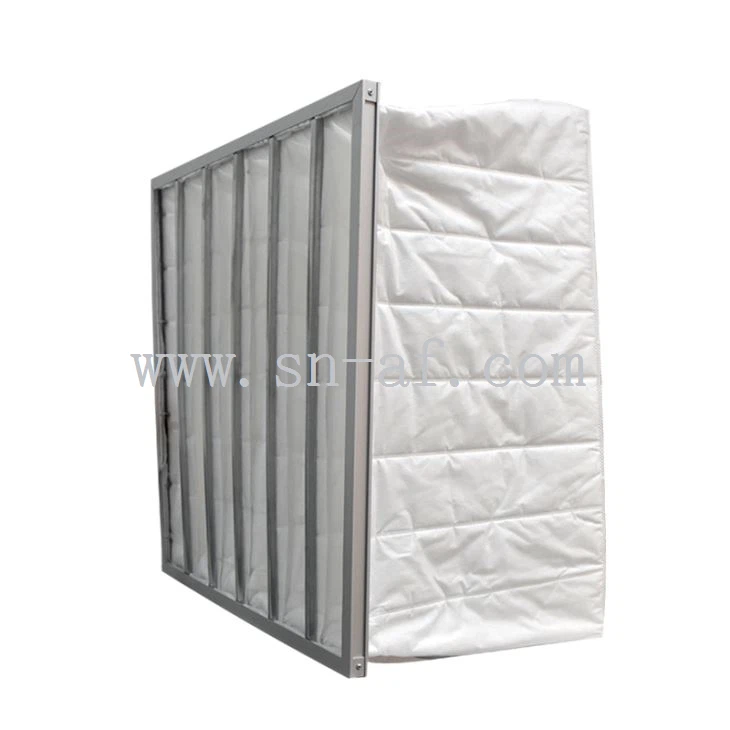

Regular inspection of the filter is necessary to check for signs of clogging or damage. If the filter appears dirty or blocked, it should be replaced immediately. A clogged filter can increase the breathing resistance, making it difficult for the wearer to breathe and reducing the overall protection provided by the gas mask.
The replacement interval for primary filters depends on several factors, including the environment in which the gas mask is used, the concentration of contaminants, and the air flow rate. In high - contamination environments, the filter may need to be replaced more frequently.
Conclusion
The primary filter in a gas mask is a vital component that works through a combination of physical and chemical filtration mechanisms to protect the wearer from harmful substances. Different types of primary filters, such as the Pocket Primary Filter, Synthetic Fiber Panel Pre - Air Filter G4, and Grease Metal Panels Filter, offer unique advantages and are suitable for different applications.
As a primary filter supplier, I understand the importance of providing high - quality filters that meet the specific needs of our customers. Whether you are in an industrial setting, a laboratory, or an emergency response situation, having a reliable primary filter in your gas mask is crucial for your safety.
If you are interested in purchasing primary filters for your gas masks or have any questions about our products, please feel free to contact us for further discussions and to explore how we can meet your filtration needs.
References
- American Conference of Governmental Industrial Hygienists (ACGIH). "Threshold Limit Values for Chemical Substances and Physical Agents and Biological Exposure Indices." ACGIH, 2023.
- Occupational Safety and Health Administration (OSHA). "Respiratory Protection Standard." OSHA, 2023.
- National Institute for Occupational Safety and Health (NIOSH). "Approval of Respiratory Protection Devices." NIOSH, 2023.