In modern industrial and scientific fields, cleanroom environments are of utmost importance, especially in sectors such as semiconductor manufacturing, pharmaceuticals, and biotechnology. These environments demand extremely low levels of airborne particles to ensure product quality and research accuracy. ULPA (Ultra Low Penetration Air) filters play a crucial role in maintaining the cleanliness of these spaces. As a leading ULPA filter supplier, I am delighted to share with you how ULPA filters work in a cleanroom environment.
The Basics of ULPA Filters
ULPA filters are designed to remove ultra - fine particles from the air. They are an upgraded version of HEPA (High - Efficiency Particulate Air) filters. While HEPA filters can remove at least 99.97% of particles with a size of 0.3 micrometers, ULPA filters can achieve a much higher efficiency, typically removing 99.999% or more of particles as small as 0.12 micrometers.
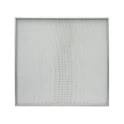
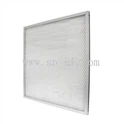
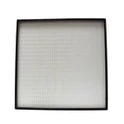
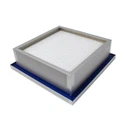
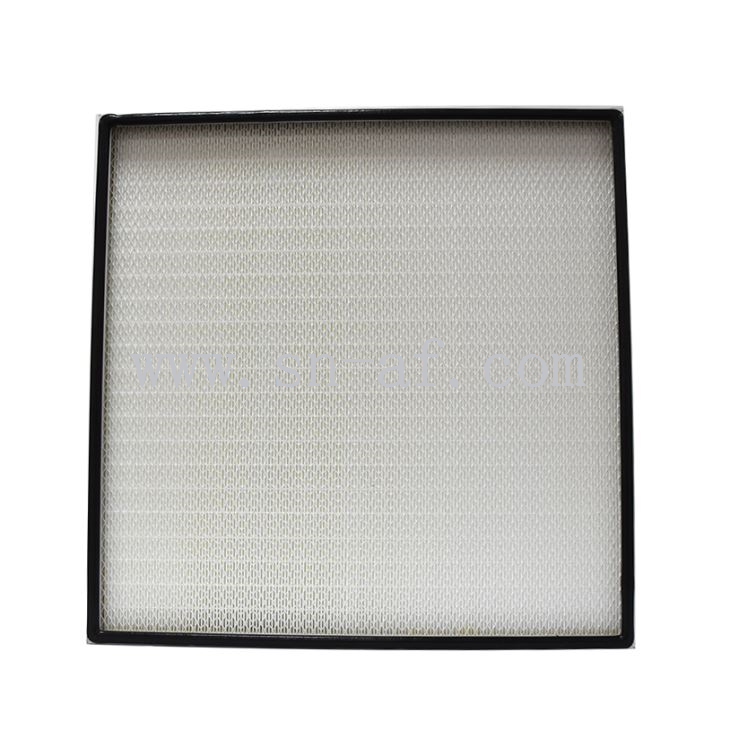
The construction of ULPA filters is quite sophisticated. They are usually made of a fine glass fiber media, which is pleated to increase the surface area for filtration. The pleating process allows more air to pass through the filter while maintaining a high level of particle capture. The filter media is then housed in a frame, which can be made of materials such as aluminum, stainless steel, or plastic, depending on the specific application requirements.
The Working Principle of ULPA Filters in Cleanrooms
1. Interception
Interception is one of the primary mechanisms by which ULPA filters capture particles. When an airborne particle follows the air stream and comes into contact with the filter fibers, it adheres to the fibers due to van der Waals forces. These are weak attractive forces between molecules. Particles that are larger in size or have a more irregular shape are more likely to be intercepted by the filter media. For example, in a cleanroom where there might be dust particles from the manufacturing process or human activities, these relatively larger particles are quickly captured through interception.
2. Inertial Impaction
Inertial impaction occurs when an air stream containing particles changes direction. Larger and heavier particles have more inertia and cannot follow the air stream's sudden change in direction. As a result, they collide with the filter fibers and are trapped. In a cleanroom ventilation system, the air is forced to pass through the filter at a certain velocity. When the air hits the filter media and changes its path, particles such as pollen or some types of bacteria are removed through inertial impaction.
3. Diffusion
Diffusion is especially important for capturing very small particles, such as nanoparticles. These tiny particles are constantly in random motion due to Brownian motion. As they move randomly in the air stream, they are more likely to come into contact with the filter fibers and be captured. In a cleanroom environment where the production of nanomaterials or the research on microscopic organisms is taking place, diffusion plays a vital role in ensuring the removal of these extremely small particles.

4. Electrostatic Attraction
Some ULPA filters are treated with an electrostatic charge to enhance their filtration efficiency. The electrostatic charge on the filter fibers attracts charged particles in the air. This mechanism is particularly effective for capturing particles that are difficult to remove through other means, such as sub - micrometer particles. The electrostatic attraction can significantly increase the overall particle capture rate of the filter, making it more efficient in maintaining a clean environment in the cleanroom.
The Role of ULPA Filters in Cleanroom Airflow Management
In a cleanroom, proper airflow management is essential for maintaining a uniform and clean environment. ULPA filters are an integral part of the ventilation system that controls the airflow. The filters are usually installed in the ceiling or the walls of the cleanroom. The air is drawn into the ventilation system, passes through the ULPA filters, and then is distributed evenly throughout the cleanroom.
The high - efficiency filtration of ULPA filters ensures that the air entering the cleanroom is free of contaminants. At the same time, the design of the filter and the ventilation system is optimized to maintain a consistent airflow rate and direction. This helps to prevent the accumulation of particles in certain areas of the cleanroom and ensures that the entire space meets the required cleanliness standards.
Different Types of ULPA Filters for Cleanrooms
As a ULPA filter supplier, we offer a variety of ULPA filters to meet different cleanroom requirements. For example, our U17 Mini - Pleat ULPA Filter is designed for applications that demand the highest level of particle removal. It has an extremely high efficiency in capturing ultra - fine particles, making it suitable for semiconductor manufacturing processes where even the smallest particle can cause defects in the products.
Our U15 Mini - Pleat ULPA Filter provides a good balance between filtration efficiency and airflow resistance. It is a popular choice for cleanrooms in the pharmaceutical industry, where a high level of cleanliness is required, but the airflow needs to be maintained at a reasonable level to ensure proper ventilation and environmental control.
The U16 Mini - Pleat ULPA Filter offers an intermediate level of performance between the U15 and U17 filters. It is suitable for cleanrooms in biotechnology research facilities, where the filtration requirements are relatively high, but not as stringent as in semiconductor manufacturing.
Maintenance and Replacement of ULPA Filters
Proper maintenance and timely replacement of ULPA filters are crucial for the long - term performance of a cleanroom. Over time, the filter media will accumulate particles, which can increase the airflow resistance and reduce the filtration efficiency. Regular inspection of the filters is necessary to monitor their condition.
The pressure drop across the filter is an important indicator of its performance. As the filter becomes clogged with particles, the pressure drop will increase. When the pressure drop reaches a certain threshold, it is time to replace the filter. In addition, the cleanroom environment should be regularly monitored for particle counts. If the particle counts exceed the specified limits, it may also indicate that the filters need to be replaced.
Conclusion
ULPA filters are indispensable components in cleanroom environments. Their ability to remove ultra - fine particles through multiple mechanisms, combined with their role in airflow management, ensures the cleanliness and stability of the cleanroom. As a ULPA filter supplier, we are committed to providing high - quality filters that meet the diverse needs of our customers.
If you are in need of ULPA filters for your cleanroom, whether it is for a new installation or a replacement, we would be more than happy to assist you. Our team of experts can help you select the most suitable filter for your specific application and provide you with professional advice on installation, maintenance, and replacement. Contact us today to start a procurement discussion and ensure the optimal performance of your cleanroom.
References
- Brown, R. C. (1993). Air Filtration: An Integrated Approach to the Theory and Applications of Fibrous Filters. Pergamon Press.
- Hinds, W. C. (1999). Aerosol Technology: Properties, Behavior, and Measurement of Airborne Particles. Wiley - Interscience.