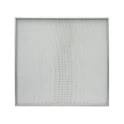
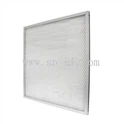
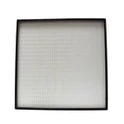
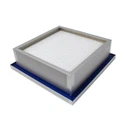
Hey there! As a supplier of Pleating HEPA Air Filters, I often get asked how these filters stack up against activated carbon filters. So, I thought I'd dive into the details and give you the lowdown on how they compare.
What Are Pleating HEPA Air Filters?
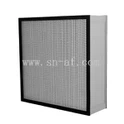
First off, let's talk about Pleating HEPA Air Filters. HEPA stands for High - Efficiency Particulate Air. These filters are designed to trap tiny particles in the air. The pleating design is super important. It increases the surface area of the filter, which means it can catch more particles. When air passes through a Pleating HEPA Air Filter, it has to go through all those folds, and the filter fibers grab onto particles like dust, pollen, pet dander, and even some bacteria and viruses.
One of the key features of HEPA filters is their high efficiency. A true HEPA filter can remove at least 99.97% of particles that are 0.3 microns in diameter. That's incredibly small! For context, a human hair is about 70 microns in diameter. So, HEPA filters are really good at cleaning the air we breathe, especially in places where air quality is crucial, like hospitals, clean rooms, and homes with people who have allergies or respiratory problems.
What Are Activated Carbon Filters?
Now, let's look at activated carbon filters. Activated carbon is a form of carbon that has been processed to have a whole bunch of tiny pores. These pores give the carbon a huge surface area, which allows it to adsorb (not absorb) various chemicals, gases, and odors. When air passes through an activated carbon filter, the pollutants stick to the surface of the carbon.
Activated carbon filters are great for dealing with things like smoke, volatile organic compounds (VOCs), and unpleasant smells. For example, if you have a kitchen where there's a lot of cooking fumes or a factory that emits chemical odors, an activated carbon filter can really help to make the air more bearable.
Comparing Filtration Efficiency
When it comes to filtration efficiency, Pleating HEPA Air Filters and activated carbon filters are kind of like two different tools in a toolbox. HEPA filters are all about capturing solid and liquid particles. They're the go - to for removing things like dust, mold spores, and fine particulate matter. If you're worried about the air quality in terms of visible and microscopic particles, a HEPA filter is your best bet.
On the other hand, activated carbon filters are focused on chemicals and odors. They're not very effective at capturing particles. For instance, if you have a room full of dust, an activated carbon filter won't do much to clean it up. But if there's a strong smell of paint or a chemical spill, an activated carbon filter can quickly start to reduce the odor and remove the harmful chemicals from the air.
Lifespan and Maintenance
The lifespan of Pleating HEPA Air Filters and activated carbon filters also differs. HEPA filters usually last longer in terms of particle - capturing ability. However, they can get clogged over time, especially if they're used in a very dusty environment. When a HEPA filter gets clogged, the air flow through the filter is restricted, and it becomes less efficient. So, it's important to replace HEPA filters regularly, usually every 6 to 12 months depending on the usage.
Activated carbon filters, on the other hand, have a limited capacity for adsorbing chemicals and odors. Once the pores of the activated carbon are filled up, the filter loses its effectiveness. The lifespan of an activated carbon filter can vary widely depending on the concentration of pollutants in the air. In a high - pollution environment, it might need to be replaced every 1 to 3 months, while in a cleaner environment, it could last 6 months or more.
Maintenance for both types of filters is relatively straightforward. For HEPA filters, you just need to make sure you're replacing them at the right time. Some HEPA filters can be vacuumed gently to remove large particles and extend their lifespan a bit. Activated carbon filters need to be replaced when they stop working effectively. There's not much you can do to "clean" an activated carbon filter once it's saturated.
Cost
Cost is another factor to consider. Generally, Pleating HEPA Air Filters can be more expensive upfront. This is because of the high - quality materials and the complex manufacturing process involved in making a filter that can meet the HEPA standards. However, over time, the cost of replacement filters can be relatively stable, especially if you're using them in a normal environment.
Activated carbon filters are often cheaper to buy initially. But because they need to be replaced more frequently in high - pollution areas, the long - term cost can add up. So, when you're thinking about the cost, you need to consider both the upfront price and the cost of replacement filters over time.
Applications
The applications of these two types of filters are also quite different. HEPA filters are commonly used in places where particle control is essential. In the medical field, they're used in operating rooms and isolation wards to prevent the spread of airborne diseases. In the electronics industry, Single Flange V - type HEPA Filter Clean Room are used to keep dust and other particles from contaminating sensitive electronic components. In homes, HEPA filters are popular in air purifiers to improve indoor air quality, especially for people with allergies or asthma.


Activated carbon filters are more commonly used in places where there are chemical pollutants and odors. In commercial kitchens, they're used to remove cooking smells and grease. In industrial settings, they're used to treat exhaust gases and remove VOCs. They're also used in some air purifiers that are designed to deal with specific odors, like those from smoking or pet areas.
Combining the Two
In some cases, it might be a good idea to use both Pleating HEPA Air Filters and activated carbon filters together. For example, in an air purifier, you could have a HEPA filter to remove particles and an activated carbon filter to deal with odors and chemicals. This way, you get the best of both worlds. You can clean the air of both particles and pollutants, creating a healthier and more pleasant environment.
If you're in the market for a Glass Fiber Bag Air Filter for Condition or any other type of air filter, it's important to understand your specific needs. Think about what kind of pollutants you're dealing with - whether it's particles, chemicals, or odors - and then choose the filter or combination of filters that will work best for you.
Conclusion
So, to sum it up, Pleating HEPA Air Filters and activated carbon filters are both great at what they do, but they have different strengths. HEPA filters are all about capturing particles, while activated carbon filters are focused on chemicals and odors. When choosing between them, consider factors like filtration efficiency, lifespan, cost, and application.
If you're interested in learning more about Pleating HEPA Air Filters or have any questions about which filter is right for your situation, feel free to reach out. We're here to help you make the best choice for your air - cleaning needs. Whether you're a homeowner looking to improve indoor air quality or a business owner in need of industrial - grade filtration, we've got the expertise and the products to meet your requirements. Let's start a conversation about how we can help you get the cleanest air possible.
References
- "Air Filtration: Principles and Applications" by Christopher D. Cote
- "The Handbook of Environmental Chemistry" for information on air pollutants and filtration technologies
- Industry reports on air filter performance and usage in different sectors.