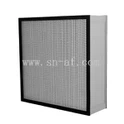
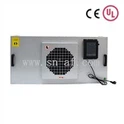
As a supplier of Pleating HEPA Air Filters, I understand the critical importance of ensuring the quality of these filters. High - quality HEPA filters are essential for maintaining clean and healthy air in various environments, from industrial settings to residential spaces. In this blog, I will share some key methods on how to check the quality of a pleating HEPA air filter.
1. Understanding the Basics of HEPA Filters
Before delving into the quality - checking process, it's crucial to have a basic understanding of HEPA filters. HEPA stands for High - Efficiency Particulate Air. A true HEPA filter is designed to trap at least 99.97% of particles that are 0.3 microns in diameter. The pleating design of these filters increases the surface area, allowing for more efficient particle capture.
2. Visual Inspection
The first step in checking the quality of a pleating HEPA air filter is a visual inspection.
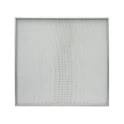
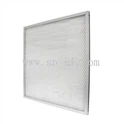
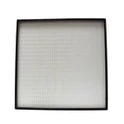
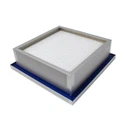
- Pleat Structure: Examine the pleats carefully. High - quality pleating HEPA filters should have evenly spaced and well - formed pleats. Uneven pleats can lead to inconsistent airflow and reduced filtration efficiency. For example, if some pleats are too close together while others are far apart, air may bypass the filter in certain areas, allowing particles to pass through.
- Filter Media Integrity: Look for any signs of damage to the filter media. Tears, holes, or loose fibers can significantly compromise the filter's ability to trap particles. A damaged filter may not meet the required HEPA standards and should be rejected.
- Frame Quality: The frame of the filter is also important. It should be sturdy and well - constructed. Check for any signs of warping, cracking, or loose joints. A weak frame can cause the filter to lose its shape during installation or use, which may lead to air leakage around the edges.
3. Testing the Filtration Efficiency
Filtration efficiency is one of the most important indicators of a HEPA filter's quality. There are several ways to test it.
- Particle Counting: This method involves using a particle counter to measure the number of particles in the air before and after passing through the filter. By comparing the particle counts, you can calculate the filtration efficiency. For example, if the particle counter shows that there were 1000 particles per cubic meter of air before passing through the filter and only 3 particles per cubic meter after, the filtration efficiency is (1000 - 3)/1000 * 100% = 99.7%. A true HEPA filter should achieve an efficiency of at least 99.97% for particles of 0.3 microns in diameter.
- DOP Testing: DOP (Dioctyl Phthalate) testing is a traditional method for evaluating HEPA filter efficiency. In this test, DOP aerosol particles are generated and passed through the filter. The concentration of DOP particles before and after the filter is measured to determine the filtration efficiency. However, due to environmental concerns, DOP has been replaced by other substances in some regions, such as PAO (Polyalphaolefin).
4. Airflow Resistance Testing
Airflow resistance, also known as pressure drop, is another important factor to consider when checking the quality of a pleating HEPA air filter.
- Why It Matters: A filter with high airflow resistance requires more energy to push air through it. This can lead to increased energy consumption and reduced performance of the air - handling system. On the other hand, a filter with too low airflow resistance may not provide adequate filtration.
- Testing Method: Airflow resistance can be measured using a differential pressure gauge. The gauge measures the pressure difference across the filter when air is flowing through it. The manufacturer usually provides a recommended pressure drop range for the filter. If the measured pressure drop is outside this range, it may indicate a problem with the filter, such as clogged media or incorrect installation.
5. Material Quality
The quality of the materials used in the filter can greatly affect its performance and durability.
- Filter Media Material: The filter media is the heart of the HEPA filter. High - quality filter media is made from materials such as glass fiber or synthetic fibers. These materials have small pores that can effectively trap particles. The media should also be resistant to moisture, chemicals, and high temperatures, depending on the application.
- Adhesive and Sealant Quality: Adhesives are used to bond the filter media to the frame, and sealants are used to prevent air leakage around the edges. Good - quality adhesives and sealants should be strong, flexible, and resistant to aging. Weak adhesives can cause the filter media to detach from the frame, while poor - quality sealants can lead to air bypass.
6. Compatibility with the Application
A high - quality pleating HEPA air filter should be compatible with the specific application.


- Airflow Requirements: Different applications have different airflow requirements. For example, an industrial air - handling system may require a filter with a high airflow capacity, while a small residential air purifier may need a filter with a lower airflow rate. Make sure the filter can handle the required airflow without excessive pressure drop or reduced filtration efficiency.
- Environmental Conditions: Consider the environmental conditions in which the filter will be used. If the environment is humid, the filter should be resistant to moisture. If there are chemicals or high temperatures present, the filter should be able to withstand these conditions without losing its filtration performance.
7. Certification and Standards
Certification is an important way to ensure the quality of a pleating HEPA air filter.
- HEPA Standards: Look for filters that meet recognized HEPA standards, such as those set by the Institute of Environmental Sciences and Technology (IEST) or the European Standard EN 1822. These standards define the minimum requirements for HEPA filter performance, including filtration efficiency, airflow resistance, and leak testing.
- Other Certifications: In addition to HEPA standards, some filters may have other certifications, such as UL (Underwriters Laboratories) certification for fire resistance or NSF (National Sanitation Foundation) certification for food - grade applications. These certifications can provide additional assurance of the filter's quality and safety.
8. Comparing with Similar Products
Another way to check the quality of a pleating HEPA air filter is to compare it with similar products on the market.
- Performance Comparison: Look at the filtration efficiency, airflow resistance, and other performance parameters of different filters. You can also read customer reviews and testimonials to get an idea of how well the filters perform in real - world applications.
- Price - Quality Ratio: While price is not always an indicator of quality, it can be a factor to consider. Compare the prices of different filters and look for a balance between quality and cost. A very cheap filter may not provide the same level of performance as a more expensive one, but an overly expensive filter may not always be necessary for your specific application.
9. Our Product Range and Advantages
As a supplier of Pleating HEPA Air Filters, we offer a wide range of high - quality filters to meet different customer needs. Our filters are made from the best - quality materials and are manufactured using advanced production techniques. We also conduct strict quality control tests on every filter to ensure that it meets or exceeds the industry standards.
In addition to Pleating HEPA Air Filters, we also provide other types of industrial filters, such as Extended Surface Multi Pocket Filter, Metal Washable Air Grease Filters, and you can learn more about Pocket Air Filter Performance on our website.
10. Contact Us for Procurement
If you are interested in our Pleating HEPA Air Filters or other industrial filters, we invite you to contact us for procurement. We have a professional sales team that can provide you with detailed product information and help you choose the most suitable filter for your application. We are committed to providing high - quality products and excellent customer service. Whether you are a large industrial enterprise or a small business, we can meet your filtration needs.
References
- Institute of Environmental Sciences and Technology (IEST). HEPA and ULPA Filter Standards.
- European Standard EN 1822. High - efficiency particulate air filters (HEPA) and ultra - low penetration air filters (ULPA).