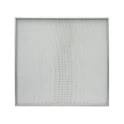
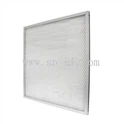
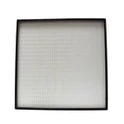
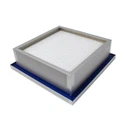
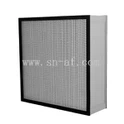
As a supplier of Disposable Panel Filters, understanding and accurately calculating the pressure drop of these filters is crucial. Pressure drop plays a significant role in the performance and efficiency of filtration systems, and it directly impacts energy consumption and overall operational costs. In this blog, I will share with you how to calculate the pressure drop of a Disposable Panel Filter, and also draw on my experience as a supplier to provide some practical tips.
Understanding Pressure Drop
Pressure drop, also known as pressure loss, refers to the decrease in pressure as air flows through a filter. This phenomenon occurs because the filter media resists the airflow, causing a drop in pressure from the upstream side (before the filter) to the downstream side (after the filter). A higher pressure drop indicates greater resistance to airflow, which means the system has to work harder to push air through the filter, leading to increased energy consumption.
Several factors can influence the pressure drop of a Disposable Panel Filter:
- Filter Media: Different filter media materials have varying levels of porosity and resistance to airflow. For example, a filter with a denser media will typically have a higher pressure drop compared to one with a more open media structure.
- Filter Area: A larger filter area provides more surface area for air to pass through, reducing the velocity of the air and thus lowering the pressure drop.
- Airflow Velocity: The faster the air flows through the filter, the higher the pressure drop. This is because higher velocities increase the friction between the air and the filter media.
- Dirt Loading: As the filter accumulates dirt and dust over time, its pressure drop will gradually increase. This is because the dirt particles clog the pores of the filter media, increasing the resistance to airflow.
Calculating Pressure Drop
The most common way to calculate the pressure drop of a Disposable Panel Filter is by using the following formula:
ΔP = K × V^n
Where:
- ΔP is the pressure drop (Pa)
- K is a constant that depends on the filter media and construction
- V is the face velocity of the air through the filter (m/s)
- n is an exponent that typically ranges from 1.5 to 2, depending on the filter media
The value of K and n can usually be obtained from the filter manufacturer's technical data sheet. These values are determined through laboratory testing under standardized conditions.
Let's take an example to illustrate how to use this formula. Suppose we have a Disposable Panel Filter with a K value of 2.5 and an n value of 1.7. The face velocity of the air through the filter is 2 m/s. Using the formula, we can calculate the pressure drop as follows:
ΔP = 2.5 × 2^1.7
ΔP = 2.5 × 5.656854
ΔP ≈ 14.14 Pa
It's important to note that this is a simplified calculation method, and in real-world applications, there may be other factors that need to be considered, such as the installation conditions of the filter, the shape of the ductwork, and the presence of other components in the system.


Practical Tips for Managing Pressure Drop
- Choose the Right Filter: Selecting a filter with the appropriate media and area for your application is crucial. A filter that is too small or has a too-dense media will result in a higher pressure drop, increasing energy consumption. On the other hand, a filter that is too large or has a too-open media may not provide adequate filtration efficiency. As a Disposable Panel Filter supplier, I can provide you with professional advice on filter selection based on your specific requirements.
- Monitor and Maintain the Filter: Regularly monitoring the pressure drop of your filter is essential to ensure its proper functioning. You can use a pressure gauge to measure the pressure difference across the filter. When the pressure drop reaches a certain threshold, it may be time to replace the filter. This will help maintain optimal airflow and minimize energy consumption.
- Consider Upgrading to Higher-Efficiency Filters: If you find that your current filters are causing a significant pressure drop and high energy costs, you may consider upgrading to higher-efficiency filters. For example, our V Extended Surface Mini-Pleat Filter offers a larger surface area and higher filtration efficiency, which can reduce the pressure drop and improve the overall performance of your filtration system.
Other Types of Filters and Their Pressure Drop Considerations
In addition to Disposable Panel Filters, we also supply a variety of other filters, such as Metal Washable Air Grease Filters and Plastic Frame V Bank Air Filter. Each type of filter has its own characteristics and pressure drop considerations.
Metal Washable Air Grease Filters are designed to capture grease and oil particles in industrial kitchens and other applications. These filters are typically made of metal mesh or perforated metal, which provides a high level of strength and durability. The pressure drop of Metal Washable Air Grease Filters is relatively low compared to some other types of filters, but it can still increase over time as the filter accumulates grease. Regular cleaning of these filters is essential to maintain their performance and minimize pressure drop.
Plastic Frame V Bank Air Filters are commonly used in HVAC systems to provide high-efficiency filtration. The V-shaped design of these filters increases the surface area, which helps to reduce the pressure drop and improve the filtration efficiency. However, like all filters, the pressure drop of Plastic Frame V Bank Air Filters will also increase as the filter becomes dirty. It's important to monitor the pressure drop and replace the filter when necessary.
Conclusion
Calculating the pressure drop of a Disposable Panel Filter is an important step in ensuring the efficient operation of your filtration system. By understanding the factors that influence pressure drop and using the appropriate calculation methods, you can select the right filter for your application and manage the pressure drop effectively. As a Disposable Panel Filter supplier, I am committed to providing high-quality filters and professional technical support to help you optimize your filtration system.
If you are interested in purchasing our Disposable Panel Filters or any other types of filters, or if you have any questions about pressure drop calculation or filter selection, please feel free to contact us for a detailed discussion. We look forward to working with you to meet your filtration needs.
References
- ASHRAE Handbook - Fundamentals.
- Manufacturer's technical data sheets.