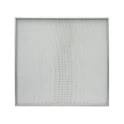
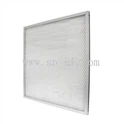
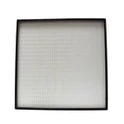
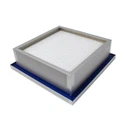
Hey there! As a supplier of H14 Mini - Pleat HEPA Filters, I often get asked whether these filters affect the air circulation in a room. Well, let's dive right into it and find out.
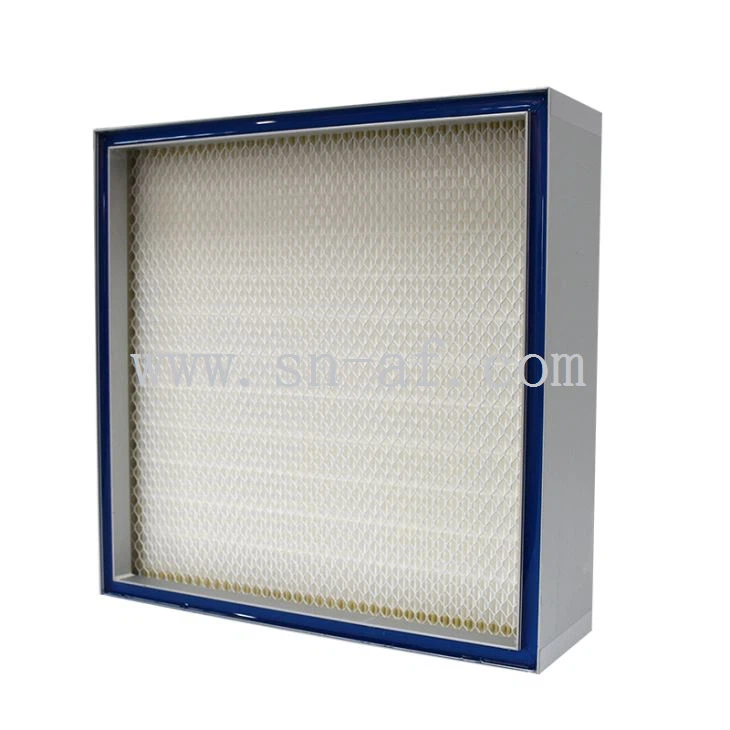
First off, let's understand what an H14 Mini - Pleat HEPA Filter is. HEPA stands for High - Efficiency Particulate Air. An H14 filter is one of the highest - grade HEPA filters available, capable of capturing at least 99.995% of particles that are 0.3 microns in size. The "Mini - Pleat" design refers to the way the filter media is folded. These mini pleats increase the surface area of the filter, allowing it to trap more particles without sacrificing too much on the air - flow.
Now, onto the big question: does it affect air circulation? The short answer is, it can, but it doesn't have to be a bad thing.
How Filters Can Impact Air Circulation
When air passes through a filter, there's bound to be some resistance. This is known as pressure drop. Any filter, including our H14 Mini - Pleat HEPA Filter, creates a bit of a roadblock for the air. As the air tries to push through the filter media, it has to work harder, which can slow down the overall air movement in the system.
Think of it like trying to blow air through a straw. If the straw is clean and wide, air flows easily. But if you stuff some cotton into the straw, you'll have to blow a lot harder to get the same amount of air through. That's similar to what happens with an air filter. The more particles the filter captures, the more clogged it gets, and the higher the pressure drop becomes.
The Design Advantage of H14 Mini - Pleat HEPA Filters
However, the mini - pleat design of our H14 filters is a game - changer. By increasing the surface area, we're spreading out the workload. Instead of having a single layer of filter media that the air has to push through all at once, the air can flow through multiple pleats. This means that for a given amount of air, it doesn't have to force its way through a small area. As a result, the pressure drop is relatively lower compared to filters with a less efficient design.
Let's compare it with some other filters. For instance, the H13 Mini - Pleat HEPA Filter is also a great option. It has a similar mini - pleat design but captures slightly fewer particles (at least 99.97% of 0.3 - micron particles). The H11 Mini - Pleat Filter captures even fewer particles (around 95% of 0.3 - micron particles). While these filters have lower efficiency ratings, they also generally have a lower pressure drop. But if you're looking for the highest level of particle capture, the H14 is your go - to.
Maintaining Good Air Circulation with H14 Filters
To ensure that the H14 Mini - Pleat HEPA Filter doesn't overly impede air circulation, proper maintenance is key. Regularly replacing the filter is essential. Over time, as the filter accumulates more and more particles, its pressure drop will increase. By replacing it at the recommended intervals, you can keep the air flowing smoothly.

Another thing to consider is the size of the air handling unit (AHU). If the AHU is properly sized for the filter and the space it's serving, it can handle the pressure drop without too much trouble. A powerful AHU can push air through the filter with ease, ensuring that the air circulation in the room remains adequate.
Real - World Benefits of Using H14 Mini - Pleat HEPA Filters
Despite the potential impact on air circulation, the benefits of using an H14 Mini - Pleat HEPA Filter far outweigh the drawbacks. In a room, especially in places like hospitals, laboratories, or cleanrooms, the quality of air is of utmost importance. These filters can remove harmful particles such as dust, pollen, mold spores, and even some bacteria and viruses.
For example, in a hospital operating room, a high - efficiency filter like the H14 can prevent airborne contaminants from causing infections. In a laboratory, it can protect sensitive experiments from being contaminated by dust and other particles. And in a home, it can improve the indoor air quality, which is great for people with allergies or respiratory problems.
Comparing with Other Filter Types
There are other types of filters on the market, like the Gel Seal HEPA Filter. Gel seal filters are known for their excellent sealing properties, which prevent air from leaking around the edges of the filter. While they also provide high - efficiency filtration, the H14 Mini - Pleat HEPA Filter offers a different set of advantages. The mini - pleat design allows for better air distribution and a more even capture of particles across the filter surface.
Conclusion
So, to sum it up, yes, the H14 Mini - Pleat HEPA Filter can affect air circulation in a room due to the pressure drop it creates. But with the right design, proper maintenance, and a well - sized air handling unit, this impact can be minimized. And the benefits of having clean, filtered air in a room are well worth it.
If you're in the market for high - quality air filters and want to learn more about how our H14 Mini - Pleat HEPA Filters can work for your specific needs, don't hesitate to reach out. Whether you're setting up a new air filtration system or looking to upgrade an existing one, we're here to help. Let's start a conversation about how we can improve the air quality in your space.
References
- "Fundamentals of Air Filtration" by the American Society of Heating, Refrigerating and Air - Conditioning Engineers (ASHRAE)
- "Filtering and Contaminant Control in Cleanrooms" by the Institute of Environmental Sciences and Technology (IEST)