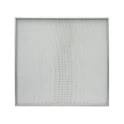
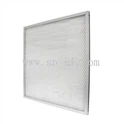
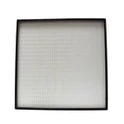
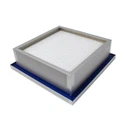
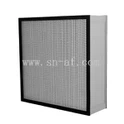
Hey there! As a supplier of U16 Mini - Pleat ULPA Filters, I often get asked if these filters can be used in industrial applications. Well, let's dive right into it and find out.
First off, let's understand what a U16 Mini - Pleat ULPA Filter is. ULPA stands for Ultra - Low Penetration Air. These filters are designed to trap extremely small particles, and the U16 rating means they can remove at least 99.9995% of particles that are 0.12 microns in size or larger. The mini - pleat design is a game - changer. It allows for more filter media to be packed into a smaller space, which increases the filter's surface area and its overall efficiency.
Now, when it comes to industrial applications, there are a ton of factors to consider. Industries like electronics manufacturing, pharmaceutical production, and aerospace often have strict air quality requirements. In these settings, even the tiniest particle can cause big problems. For example, in semiconductor manufacturing, a single dust particle can ruin an entire silicon wafer, leading to significant financial losses.
So, can the U16 Mini - Pleat ULPA Filter step up to the plate? Absolutely! Its high - efficiency particle removal capabilities make it a great fit for industries where clean air is non - negotiable. The mini - pleat design not only increases the filter's capacity to hold particles but also reduces the pressure drop across the filter. This means that the ventilation system doesn't have to work as hard, which can save on energy costs in the long run.
In the pharmaceutical industry, maintaining a sterile environment is crucial. U16 Mini - Pleat ULPA Filters can help achieve this by removing bacteria, viruses, and other contaminants from the air. This is essential for preventing cross - contamination during the production of drugs and vaccines.
Another advantage of using U16 Mini - Pleat ULPA Filters in industrial applications is their durability. These filters are built to last, with a robust construction that can withstand the rigors of industrial use. They are also resistant to moisture and chemicals, which is important in environments where there may be exposure to various substances.
But it's not all sunshine and rainbows. There are some challenges to using U16 Mini - Pleat ULPA Filters in industrial settings. One of the main issues is the initial cost. These filters are more expensive than standard filters, and the installation process can also be more complex. However, when you consider the long - term benefits, such as reduced downtime due to equipment failure and improved product quality, the investment is often worth it.
Another challenge is the maintenance. U16 Mini - Pleat ULPA Filters need to be regularly inspected and replaced to ensure they are working effectively. This requires a dedicated maintenance schedule and trained personnel. But again, the cost of maintenance is outweighed by the benefits of having a clean and safe working environment.
Now, let's talk about some alternatives. If the U16 Mini - Pleat ULPA Filter doesn't quite fit your needs, we also offer the U17 Mini - Pleat ULPA Filter and the U15 Mini - Pleat ULPA Filter. The U17 filter has an even higher efficiency rating, removing at least 99.99995% of particles 0.12 microns or larger. On the other hand, the U15 filter has a slightly lower efficiency but may be more cost - effective for some applications.
In conclusion, the U16 Mini - Pleat ULPA Filter is a great option for many industrial applications. Its high - efficiency particle removal, low pressure drop, and durability make it a valuable asset in industries where clean air is essential. While there are some challenges, such as the initial cost and maintenance requirements, the long - term benefits far outweigh these drawbacks.
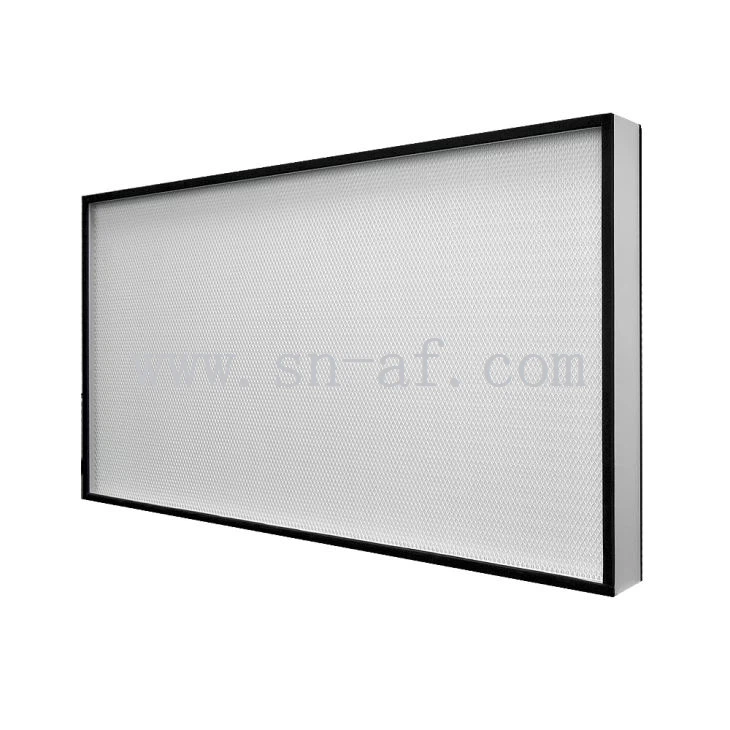

If you're interested in learning more about our U16 Mini - Pleat ULPA Filter or any of our other products, don't hesitate to reach out. We're here to help you find the best air filtration solution for your industrial needs. Let's have a chat and see how we can work together to improve your air quality and boost your productivity.
References:
- "Air Filtration Handbook" - A comprehensive guide on air filtration technologies and applications.
- Industry reports on cleanroom standards and air quality requirements in electronics, pharmaceutical, and aerospace industries.