Hey there! I'm an industrial filter supplier, and I often get asked this question: Can industrial filters remove all types of contaminants? Well, let's dive right into it.
First off, industrial filters are pretty amazing pieces of equipment. They play a crucial role in a wide range of industries, from manufacturing to food processing, and even in clean rooms. Their main job is to remove unwanted particles and substances from air, water, or other fluids, ensuring that the environment or the process remains clean and efficient.
But can they really remove all types of contaminants? The short answer is no. And here's why.
Different Types of Contaminants
Contaminants come in all shapes and sizes, and they can be classified into several categories.
-
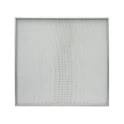
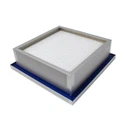
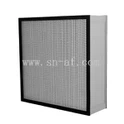
Particulate Contaminants: These are solid or liquid particles that are suspended in a fluid. They can range from large dust particles you can see with the naked eye to tiny microscopic particles like pollen, bacteria, and viruses. Industrial filters are generally quite good at removing particulate contaminants, especially if they are designed with the right filtration media and pore size. For example, our Single Flange V - type HEPA Filter Clean Room is specifically designed to capture very fine particles. High - Efficiency Particulate Air (HEPA) filters can trap at least 99.97% of particles that are 0.3 microns in diameter. That's pretty impressive, but it doesn't mean they can remove every single particle out there. There are always going to be some ultrafine particles that might slip through, either because of the limitations of the filter media or the way the fluid flows through the filter.


-
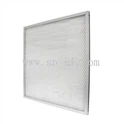
Chemical Contaminants: These are substances that can change the chemical properties of a fluid. They can include gases like carbon monoxide, sulfur dioxide, and volatile organic compounds (VOCs). Removing chemical contaminants is a whole different ballgame compared to particulate contaminants. Some industrial filters are designed to use activated carbon or other adsorbent materials to capture these chemicals. However, different chemicals have different affinities for the adsorbent materials. For instance, our Glass Fiber Bag Air Filter for Condition is great for particulate removal, but it may not be as effective in removing certain chemical contaminants. The effectiveness of a filter in removing chemical contaminants also depends on factors like the concentration of the chemicals, the contact time with the adsorbent, and the temperature and humidity of the environment.
-
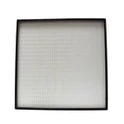
Biological Contaminants: This category includes living organisms such as bacteria, viruses, fungi, and mold. While some filters can physically trap these organisms, others need to be designed with additional features like anti - microbial coatings. For example, in a hospital or a pharmaceutical clean room, it's crucial to have filters that can effectively remove biological contaminants to prevent the spread of diseases. Our Gel Seal HEPA Filter for Side Tank can provide a good level of protection against particulate and some biological contaminants, but it may not be 100% effective against all types of bacteria and viruses, especially those that are extremely small or have unique survival mechanisms.
Limitations of Industrial Filters
There are several factors that limit the ability of industrial filters to remove all contaminants:
-
Filter Design and Construction: The design of a filter, including its shape, size, and the type of filtration media used, can have a big impact on its performance. A poorly designed filter may have areas where fluid can bypass the filtration media, allowing contaminants to pass through. Also, the pore size of the filter media is a critical factor. If the pores are too large, small contaminants will not be trapped. On the other hand, if the pores are too small, the filter may become clogged quickly, reducing its flow rate and efficiency.
-
Contaminant Concentration: If the concentration of contaminants in the fluid is very high, the filter may become saturated quickly. Once a filter is saturated, it loses its ability to effectively remove contaminants. For example, in a factory where there is a high volume of dust production, the filters may need to be replaced more frequently to maintain their performance.
-
Operating Conditions: Factors like temperature, pressure, and humidity can affect the performance of industrial filters. High temperatures can cause some filtration media to degrade, while high humidity can cause the filter to become wet and reduce its efficiency. In addition, changes in pressure can affect the flow rate of the fluid through the filter, which can also impact its filtration effectiveness.
What Can We Do?
Even though industrial filters can't remove all types of contaminants, they are still an essential part of any contamination control system. Here are some ways to make the most of industrial filters:
-
Proper Filter Selection: It's crucial to choose the right filter for the specific application. Consider the type of contaminants you need to remove, the flow rate of the fluid, and the operating conditions. Our team of experts can help you select the most suitable filter based on your requirements.
-
Regular Maintenance and Replacement: Filters need to be maintained and replaced regularly to ensure their optimal performance. This includes cleaning, inspecting for damage, and replacing the filter media when it reaches its end - of - life.
-
Combining Different Filtration Technologies: In many cases, using a combination of different types of filters can provide better overall contamination control. For example, you can use a pre - filter to remove larger particles before the fluid reaches a more fine - tuned filter.
If you're in the market for industrial filters and want to learn more about how we can help you with your contamination control needs, don't hesitate to reach out. We're here to answer all your questions and provide you with the best solutions for your business. Whether you need a filter for a small - scale operation or a large industrial facility, we've got you covered.
References
- "Fundamentals of Industrial Filtration", by the American Filtration and Separations Society
- "Filtration Handbook", edited by Christopher D. Dickenson