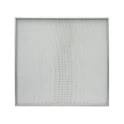
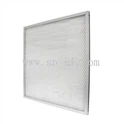
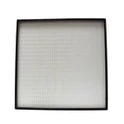
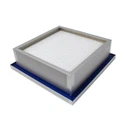
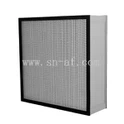
Hey there! As a supplier of Pleat Primary Filters, I often get asked about the pleat depth of these filters. So, I thought I'd take a few minutes to break it down for you.


First off, let's talk about what a Pleat Primary Filter is. These filters are the first line of defense in an air filtration system. They're designed to capture large particles like dust, lint, and hair, preventing them from getting deeper into the system and causing damage or reducing efficiency. They're commonly used in HVAC systems, industrial settings, and even in some residential applications.
Now, onto the pleat depth. The pleat depth of a Pleat Primary Filter refers to the distance from the top of the pleat to the bottom. It might seem like a small detail, but it actually plays a huge role in how well the filter works.
A deeper pleat generally means more surface area for the filter media. Think of it like this: if you have a piece of paper and you fold it into pleats, the more folds (or deeper the pleats), the more surface area you create. In the case of a filter, this extra surface area allows for more particles to be trapped. So, a filter with a greater pleat depth can capture more dirt and debris before it gets clogged.
On the other hand, if the pleat depth is too shallow, the filter might not have enough surface area to hold a significant amount of particles. This can lead to the filter clogging up quickly, which means it will need to be replaced more often. And let's face it, frequent filter replacements can be a hassle and an added expense.
But it's not just about capturing particles. The pleat depth also affects the airflow through the filter. A filter with an appropriate pleat depth will allow air to pass through easily while still effectively capturing contaminants. If the pleats are too deep, the air might have a harder time getting through, which can put extra strain on the HVAC system or other equipment using the filter. This can lead to increased energy consumption and potentially even damage to the system over time.
So, how do you determine the right pleat depth for your needs? Well, it depends on a few factors.
One of the main factors is the type of environment where the filter will be used. If you're in an area with a lot of dust or other large particles, like a construction site or a manufacturing plant, you might want a filter with a deeper pleat. This will help ensure that the filter can handle the high volume of contaminants without clogging too quickly.
On the other hand, if you're in a cleaner environment, like an office building or a residential home, a shallower pleat might be sufficient. You won't need as much surface area to capture particles, and a shallower pleat can still provide adequate filtration while allowing for better airflow.
Another factor to consider is the size of the particles you're trying to capture. If you're mainly dealing with large particles, a filter with a deeper pleat can be more effective. However, if you're also concerned about capturing smaller particles, you might need to look at other aspects of the filter, like the filter media itself.
At our company, we offer a variety of Pleat Primary Filters with different pleat depths to meet the needs of various applications. For example, our Synthetic Fiber Panel Pre Air Filter G4 is a great option for general HVAC applications. It has a well - designed pleat depth that provides a good balance between particle capture and airflow.
If you need a filter that can handle a higher volume of contaminants, our Pocket Primary Filter might be a better choice. The pockets in this filter effectively increase the surface area, and the pleat depth is optimized for maximum efficiency in industrial or high - dust environments.
And for those looking for a filter with an extended surface area, our V - form Extended Surface Panel Filter is a top - notch option. The V - form design, combined with the appropriate pleat depth, allows for excellent particle capture and smooth airflow.
When it comes to choosing the right pleat depth for your Pleat Primary Filter, it's important to do your research and consider your specific needs. Don't hesitate to reach out to us if you have any questions. We're here to help you find the perfect filter for your application. Whether you're a facility manager looking to improve the air quality in your building or an industrial operator in need of reliable filtration, we've got you covered.
If you're interested in purchasing our Pleat Primary Filters or want to discuss your filtration requirements in more detail, we'd love to hear from you. Contact us to start a conversation about how we can provide the best filtration solutions for you.
References
- HVAC Filtration Handbook: A guide to understanding the principles and applications of air filtration in heating, ventilation, and air conditioning systems.
- Industrial Filtration Standards: Documents outlining the requirements and best practices for filtration in industrial settings.
- Research Papers on Air Filtration Efficiency: Studies that explore the relationship between filter design, including pleat depth, and the effectiveness of particle capture.