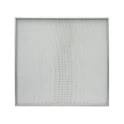
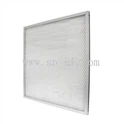
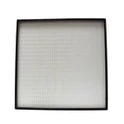
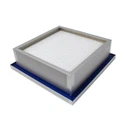
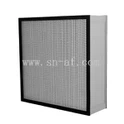
Hey there! As a supplier of Pleat Primary Filters, I often get asked about the pleat configuration of these filters. So, I thought I'd write a blog post to explain it all.
First off, let's talk about what a Pleat Primary Filter is. It's a type of air filter that's designed to capture large particles like dust, pollen, and lint. These filters are usually the first line of defense in an air filtration system, and they play a crucial role in protecting more expensive and sensitive filters downstream.
Now, onto the pleat configuration. The pleat configuration of a Pleat Primary Filter refers to the way the filter media is folded or pleated. This configuration has a big impact on the filter's performance, including its efficiency, dust-holding capacity, and pressure drop.
One of the most common pleat configurations is the traditional straight pleat. In this design, the filter media is folded into a series of parallel pleats. This simple and straightforward configuration is easy to manufacture and provides a relatively large surface area for capturing particles. The straight pleat design is great for applications where the air flow is relatively uniform and the particles are not too fine.
Another popular pleat configuration is the deep pleat. As the name suggests, the pleats in a deep pleat filter are deeper than those in a straight pleat filter. This increased depth allows for a greater surface area, which in turn means higher dust-holding capacity and longer filter life. Deep pleat filters are often used in applications where there is a high concentration of dust or where the filter needs to last for a long time without replacement.
There's also the V-pleat configuration. In a V-pleat filter, the pleats are arranged in a V-shaped pattern. This design helps to increase the surface area of the filter while also providing better air distribution. V-pleat filters are known for their high efficiency and low pressure drop, making them a great choice for applications where energy efficiency is important.


Now, let's talk about how the pleat configuration affects the filter's performance. The surface area of the filter is directly related to its dust-holding capacity. A filter with a larger surface area can hold more dust before it becomes clogged. This means that it will last longer and require less frequent replacement.
The pleat configuration also affects the pressure drop across the filter. Pressure drop is the difference in pressure between the upstream and downstream sides of the filter. A lower pressure drop means that the fan or blower in the air handling system doesn't have to work as hard to push air through the filter. This can result in energy savings and lower operating costs.
In addition to the traditional pleat configurations, there are also some specialized designs available. For example, some filters have a staggered pleat configuration, where the pleats are offset from each other. This design helps to improve the filter's efficiency by reducing the chances of particles bypassing the filter media.
Another specialized design is the pleated pocket filter. These filters have a series of pockets that are formed by the pleated media. The pockets provide additional surface area and help to capture larger particles. You can learn more about Pocket Primary Filter on our website.
If you're dealing with grease or oily particles, we also offer Grease Metal Panels Filter. These filters are designed to handle the unique challenges of filtering grease and oil, and they have a special pleat configuration that maximizes their performance in these applications.
For applications where you need an extended surface area, our V-form Extended Surface Panel Filter is a great option. The V-form design provides a large surface area in a compact space, making it ideal for installations where space is limited.
When choosing a Pleat Primary Filter, it's important to consider the specific requirements of your application. Factors such as the type and size of the particles you need to filter, the air flow rate, and the available space all play a role in determining the best pleat configuration for your needs.
If you're not sure which pleat configuration is right for you, don't worry! Our team of experts is here to help. We have years of experience in the air filtration industry, and we can provide you with personalized advice and recommendations based on your specific situation.
Whether you're looking for a filter for a commercial building, an industrial facility, or a residential application, we have the right solution for you. Our Pleat Primary Filters are made from high-quality materials and are designed to provide reliable performance and long service life.
So, if you're in the market for a Pleat Primary Filter, or if you have any questions about pleat configurations or air filtration in general, don't hesitate to get in touch. We'd love to have a chat with you and help you find the perfect filter for your needs. Just reach out, and we'll start the conversation.
References
- Air Filtration Handbook: A Guide to Air Filter Technology and Applications
- Industrial Ventilation: A Manual of Recommended Practice