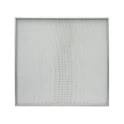
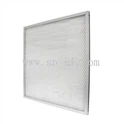
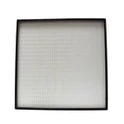
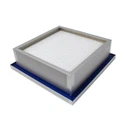
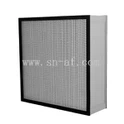
Hey there! As a supplier of Grease Metal Panels Filters, I've been getting a lot of questions lately about how these filters impact energy consumption. So, I thought I'd sit down and write a blog post to share some insights on this topic.
Let's start by understanding what a Grease Metal Panels Filter is. These filters are designed to capture grease and other contaminants from the air in commercial kitchens, industrial settings, and other places where there's a high risk of grease buildup. They're made of metal mesh or other materials that can withstand high temperatures and are often used in conjunction with other types of filters to provide comprehensive air filtration.
Now, let's talk about how these filters can affect energy consumption. One of the main ways is through their impact on air flow. When a filter becomes clogged with grease and other debris, it restricts the flow of air through the system. This means that the HVAC (heating, ventilation, and air conditioning) system has to work harder to move the same amount of air, which in turn increases energy consumption.
Think of it like trying to blow air through a straw that's partially blocked. It takes a lot more effort to get the air through, right? The same principle applies to your HVAC system. When the filter is dirty, the system has to use more energy to push the air through the ducts and into the rooms.
Another factor to consider is the efficiency of the filter itself. A high-quality Grease Metal Panels Filter is designed to capture a large amount of grease and other contaminants while still allowing for good air flow. This means that it can help to keep the HVAC system running smoothly and efficiently, reducing energy consumption in the process.
On the other hand, a low-quality filter may not be as effective at capturing contaminants, which can lead to more frequent filter changes and increased energy consumption. Additionally, a poorly designed filter may not fit properly in the HVAC system, which can also cause air flow problems and increase energy usage.
So, how can you tell if your Grease Metal Panels Filter is having a negative impact on energy consumption? One of the easiest ways is to monitor your energy bills. If you notice a significant increase in your energy usage, it could be a sign that your filter needs to be replaced. You can also check the filter itself to see if it's dirty or clogged. If it is, it's time to replace it.
In addition to monitoring your energy bills and checking the filter, there are a few other things you can do to reduce the impact of your Grease Metal Panels Filter on energy consumption. One is to choose a high-quality filter that's designed for your specific HVAC system. This will ensure that the filter fits properly and provides optimal filtration and air flow.
Another is to follow the manufacturer's recommendations for filter replacement. Most filters need to be replaced every 3 to 6 months, depending on the level of use and the amount of contaminants in the air. By replacing the filter on a regular basis, you can help to keep the HVAC system running efficiently and reduce energy consumption.
It's also a good idea to consider using other types of filters in conjunction with your Grease Metal Panels Filter. For example, you might want to use a Synthetic Fiber Flat Panel Filter or a Pocket Primary Filter to provide additional filtration and improve air quality. These filters can help to capture smaller particles and contaminants that the Grease Metal Panels Filter may miss, which can further reduce the workload on the HVAC system and save energy.
Finally, if you're looking for a more advanced solution, you might want to consider using a V-form Extended Surface Panel Filter. These filters have a larger surface area than traditional filters, which means they can capture more contaminants and provide better air flow. This can help to reduce energy consumption and improve the overall performance of your HVAC system.
In conclusion, a Grease Metal Panels Filter can have a significant impact on energy consumption. By choosing a high-quality filter, following the manufacturer's recommendations for replacement, and using other types of filters in conjunction with it, you can help to reduce the workload on your HVAC system and save energy.
If you're interested in learning more about our Grease Metal Panels Filters or other air filtration products, please don't hesitate to reach out. We'd be happy to answer any questions you have and help you find the right solution for your needs.


References
- ASHRAE Handbook - HVAC Systems and Equipment
- Energy Star Guidelines for Commercial Buildings
- Manufacturer's Specifications for Grease Metal Panels Filters