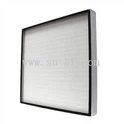
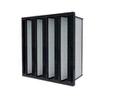
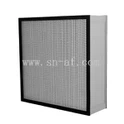
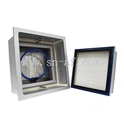
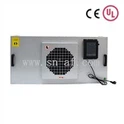
We here talk about HEPA filters in laminar air flow applications. Laminar flow is the indoor air layer. The clean room dust particles moving through the laminar flow, that means the dust particles moving through the air. In a clean room or dust-free workshop in an air conditioning system, the air inside the room is non-laminar. In the air entrainment of suspended particles quickly mixed, also can make indoor still particles flying again, part of the air can also appear stagnant state.
The following is the application of the HEPA filter to the laminar flow:
1. There is no eddy current in the air in the clean room, and the dust or the bacteria attached to the dust are not easy to spread and transfer to other places, but can only be eliminated.
2. Laminar flow in which the air has been filtered through the HEPA filter to meet the requirements of sterility.
3. The air moves in the form of laminar flow, so that all suspended particles in the room move in the laminar flow layer, which can avoid the aggregation of suspended particles into large particles.
4. For indoor newly generated pollutants, they can be quickly taken away by laminar air and discharged to the outdoor.
5. The relative increase of air flow rate enables particles to float in the air without accumulating and settling down. At the same time, the indoor air will not appear stagnant state, which can avoid cross-contamination of drug powder. That's how HEPA filters apply to laminar air flow.