A new study by Chinese and American scientists shows that placing air filters in bedrooms that can filter PM2.5 can significantly improve the breathing conditions of asthmatic children. PM2.5 refers to the particles with diameter less than or equal to 2.5 μm in the atmosphere.
This is the first study to show that air filters can improve the physiology of children's respiratory tract. The results show that continuous use of air filters can help prevent, not just alleviate, asthma attacks.
After daily use of air filters for two weeks, the asthmatic children experienced a number of improvements, including reduced airway resistance and lung inflammation, and increased airway elasticity.
Dr. Zhang Junfeng, Professor of global environmental health at Duke University, Nicholas School of environment and Duke University in Kunshan, pointed out that "pharmaceutical companies spend a lot of money to develop drugs that can work in the lower respiratory tract, but these drugs are very expensive. Our results show that using air filters to reduce exposure to pollutants in the lower respiratory tract can help asthmatic children breathe more smoothly without taking expensive drugs.”
"Clinical trials are still needed to confirm the findings," Professor Zhang said.
PM2.5 is a ubiquitous air pollution particle, which comes from fossil fuel emissions, wildfire and other biomass combustion, industrial production, gasoline and diesel vehicles. The diameter of 2.5 micron particles is 30 times smaller than that of human hair. It is easy to be inhaled and can penetrate into small airway or lower respiratory tract, causing or aggravating asthma symptoms. Asthma inhalers also don't help because they open the upper respiratory tract.
Professor Zhang Junfeng and his colleagues published the findings in the American Medical Association Journal "Pediatrics" on April 6.
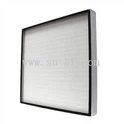
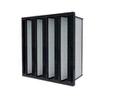
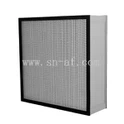
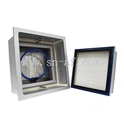
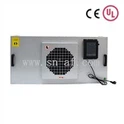
In 2017, the researchers conducted a double-blind cross-over experiment in a moderately polluted environment of PM2.5 in the suburbs of Shanghai. Forty three children with mild to moderate asthma had two air filters in their bedrooms. One is HEPA, which can remove PM2.5; the other is false filter. Each filter was randomly used for two weeks with an interval of two weeks. The children and their families did not know which filter was being used.
Michael H. Bergin, a professor of civil and environmental engineering at Duke University's Pratt School of engineering, said the results showed that PM2.5 concentrations in children's bedrooms were one-third to two-thirds lower with real air filters than with fake filters.
Professor Michael H. Bergin said the decrease of PM2.5 concentration was consistent with the significant improvement of the smooth degree of air in and out of small airway and lung of children. These improvements included an average decrease of 24% in total airway resistance, 43.5% in small airway resistance, 73.1% in airway elasticity and 27.6% in exhaled nitric oxide (a biomarker of pulmonary inflammation).
Although these improvements only occur when real air filters are used. But Professor Zhang believes that "if children use air filters every day, these improvements may be sustained."
If clinical trials confirm the new findings, he said, HEPA could be used as a practical preventive measure to alleviate asthma in polluted outdoor or indoor environments around the world.
HEPA can also be a lifesaver for areas near forest fires. Professor Zhang Junfeng pointed out that "the smoke from the California forest fire last year caused severe PM2.5 pollution in San Francisco, and this year's bush fire in Australia also caused air quality problems. People can really consider using HEPA during wildfires. "