Introduction
In an era where air quality is a mounting concern, understanding the mechanisms that ensure the purity of the air we breathe is crucial. Among the various air filtration technologies, High Efficiency Particulate Air (HEPA) filters stand out as a beacon of effectiveness and reliability. This article delves into the concept of HEPA filters, their working principles, and their primary applications.
The Concept of HEPA Filters
HEPA filters are a hallmark of air filtration technology, distinguished by their extraordinary ability to capture microscopic airborne particles. The defining characteristic of a HEPA filter is its capacity to trap at least 99.97% of particles that are 0.3 microns in diameter. This standard, which seems oddly specific, is rooted in the fact that 0.3-micron particles are the most challenging to filter, thus serving as a benchmark for the filter's efficiency.
The Working Principle of HEPA Filters
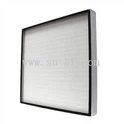
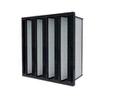
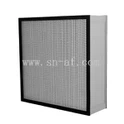
The core of a HEPA filter's operation lies in its intricate design and the materials used. Typically constructed from a dense mat of fine fiberglass fibers, these filters employ various mechanisms to trap particles:
Interception: Larger particles, due to inertia, adhere to the fibers as they pass through the filter.
Impaction: Medium-sized particles collide with the fibers and get trapped.
Diffusion: The smallest particles, often those below 0.1 microns, are ensnared through a process called diffusion, where they zigzag due to Brownian motion and eventually stick to the fibers.
This multi-faceted approach ensures that particles of various sizes, from pollen and dust mites to bacteria and viruses, are effectively captured, thereby purifying the air.
Main Applications of HEPA Filters
The versatility and efficiency of HEPA filters have made them indispensable in various sectors:
Healthcare: In environments where sterility and clean air are paramount, such as operating rooms and isolation wards, HEPA filters are essential in preventing airborne infections.
Residential: Allergy sufferers and those sensitive to air quality benefit greatly from HEPA filters in air purifiers and vacuum cleaners.
Industrial: In manufacturing settings, especially in pharmaceuticals and electronics, where even minute particles can compromise product quality, HEPA filters are crucial.
Transportation: Airplanes and other modes of public transport use HEPA filters to ensure a healthier and more comfortable journey for passengers.
Research Laboratories: To maintain controlled environments free from contaminants, HEPA filters are employed in various research facilities.
Conclusion
HEPA filters, with their unique combination of high efficiency, reliability, and versatility, have become an integral part of modern life. They not only improve air quality but also play a pivotal role in safeguarding health and enhancing the purity of products and environments across a multitude of sectors. As the world continues to grapple with air quality issues, the importance of HEPA filters is only set to increase, making them an indispensable component in the quest for cleaner, healthier air.